



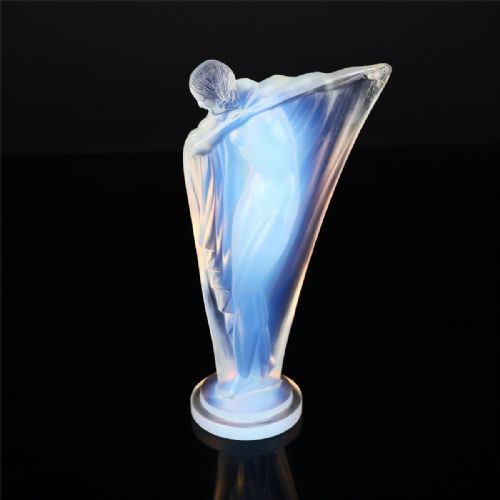


1930s Opalescent Glass
These pieces of 1930s opalescent glass catch the light with milky blue fires that change as you walk around the room.
1930s Opalescent Glass
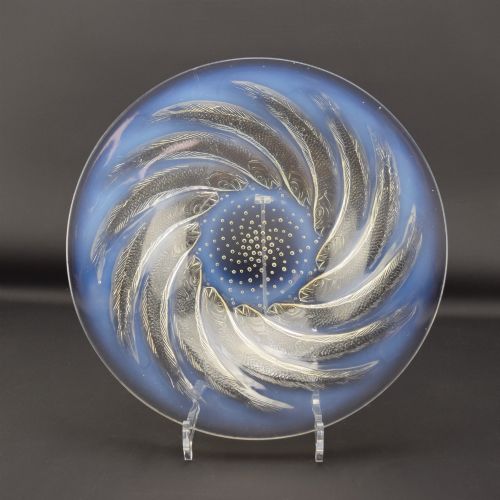
When buyers search for 1930s opalescent glass, they look at decorative bowls, chargers, perfume bottles, and table lamps from the Art Deco period. These objects capture milky blue and amber tones through the interplay of light on moulded surfaces.
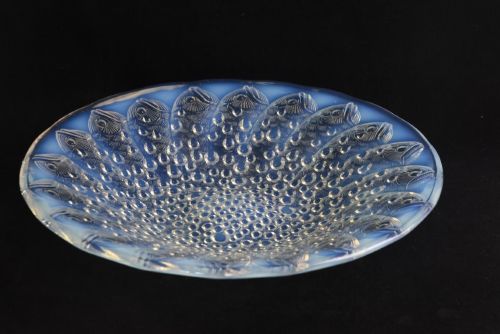
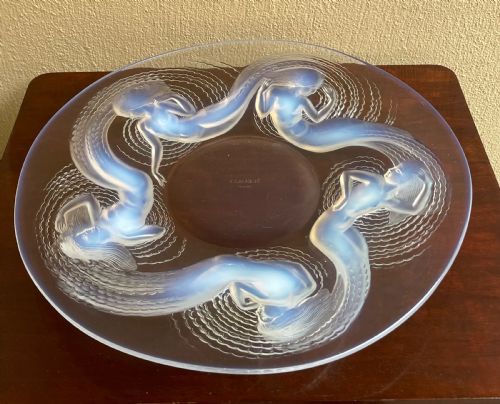
French makers dominate the form, producing heavy plates and vases moulded with fish, flowers, and female figures. British production also appears in pressed glass bowls bearing registered design numbers from the same decade.
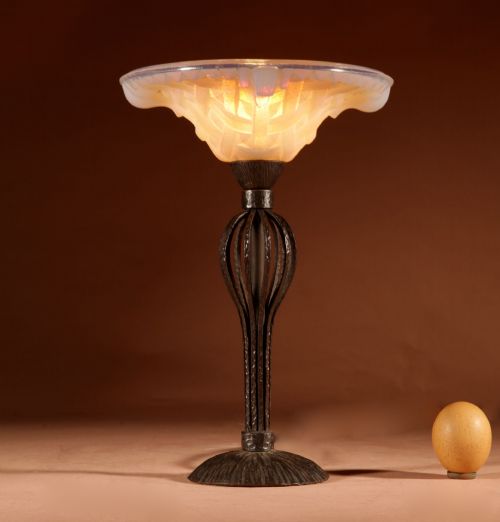
Table lamps combine the glowing material with wrought iron, chrome, or patinated brass bases. The surviving output spans large chargers down to small scent bottles.
How they were made
The objects rely on press-moulded and frosted glass techniques developed during the Art Deco era. Adding bone ash or arsenic to the molten batch creates the characteristic milky opalescence that shifts from white to pale blue in daylight.
Metal mounts in chrome, wrought iron, and patinated brass provide structural support for glass shades and lamp bodies. Surface frosting is achieved by acid etching or sandblasting specific areas to contrast with the polished highlights.
Listings feature opalescent glass, frosted glass, and pressed glass combined with chrome, wrought iron, and patinated brass.
What varies in quality
Quality rests on the depth of the opalescent fire within the glass and the crispness of the moulded relief. Stronger chemical reactions in the batch produce deeper blue highlights on high points like fish scales and petals.
The integration of metalwork dictates the success of lamps and mounted bowls, where patinated brass or wrought iron frames match the contours of the glass. Sharp definition in pressed figures and floral motifs separates standard vessels from finer studio output.
Rene Lalique·G Vallon·Etling·Julien Glass France·JOBLING·Marius Ernest SABINO
The 1930s Opalescent Glass Glossary
- Opalescent glass
- Glass containing agents that diffuse light, making it appear milky white with blue highlights when lit from the front and amber when backlit. This optical effect defines the entire category.
- Coupe ouverte
- An open bowl or shallow dish designed for display or serving. These pieces often feature wide rims moulded with repeating animal or botanical motifs.
- Charger
- A large decorative plate or shallow dish meant for display rather than dining. They showcase expansive moulded designs across the flat centre and sloping rim.
- Press-moulded glass
- Glass shaped by being pressed into a metal mould with a plunger. This technique allows for high-relief decoration and consistent production across batches.
- Epergne
- A centrepiece vessel featuring multiple arms or holders for flowers and fruit. In this context, glass horns or bowls fit into metal or glass frames.
1930s Opalescent Glass: Frequently Asked Questions
How do I clean 1930s opalescent glass?
Wash the glass gently in warm, soapy water using a soft cloth to protect the frosted and polished surfaces. Avoid harsh chemical cleaners that can damage the delicate patination on mounted metal parts.
Dry the pieces thoroughly with a lint-free towel to prevent water spots from forming on the textured areas.
Were these items used daily?
Perfume bottles and tableware saw actual use on dressing tables and dining rooms during the Art Deco period. Large chargers and figurines served primarily as decorative centrepieces in fashionable homes.
Today, collectors treat them as display objects rather than utilitarian household items.
How do I identify a signed piece?
Makers etched or moulded signatures directly into the base or rim of the glass during production. Signatures range from acid-stamped factory marks to signature engravings scratched into the cooling material.
Unsigned pieces still appear frequently, identified through distinct moulding styles and catalogue records.
Why does the colour change?
The optical phenomenon results from light scattering through microscopic particles suspended within the glass matrix. Direct frontal light reveals a milky blue shimmer, while transmitted light from behind turns amber or yellow.
This dual reaction is the chemical hallmark of genuine period opalescence.