


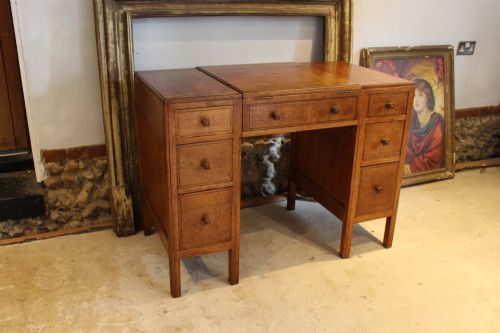


1930s Oak Chest
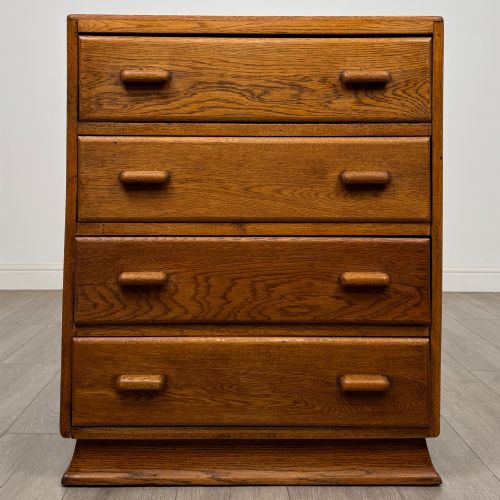
A 1930s oak chest brings sturdy interwar character and practical storage to a room through honest timber and clean geometry.
1930s Oak Chest
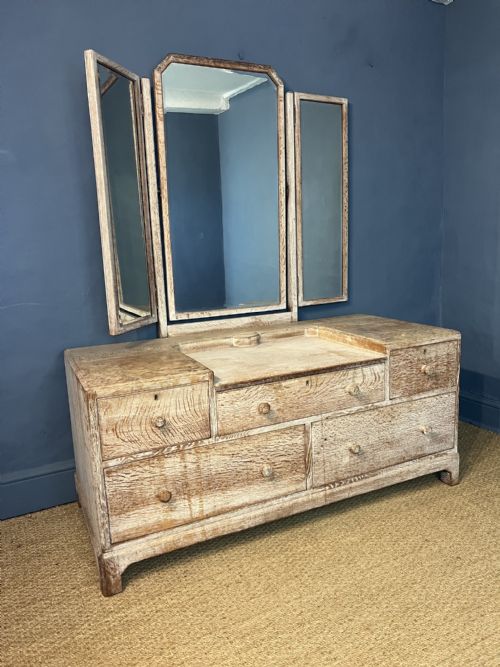
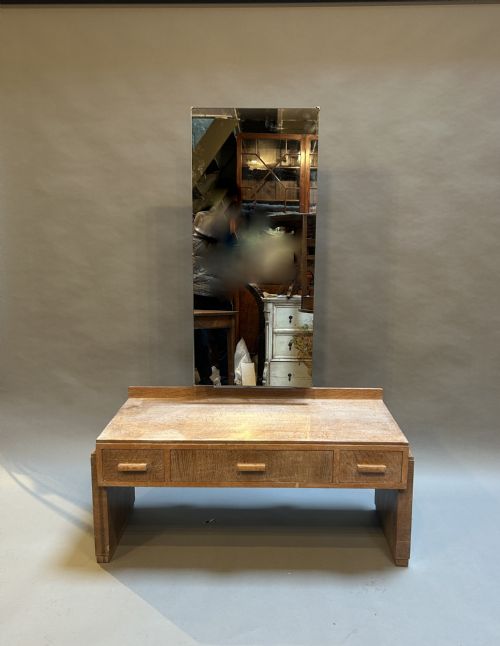
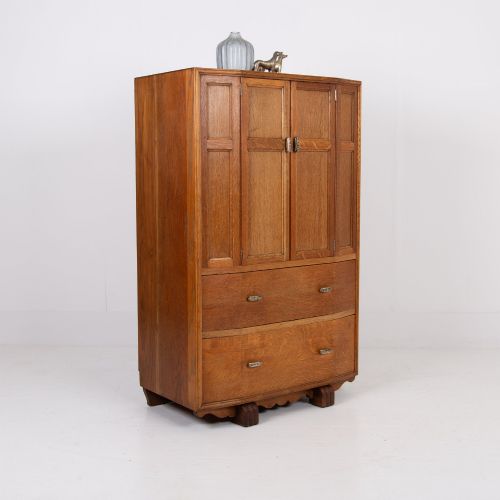
A 1930s oak chest encompasses utilitarian drawer units, tallboys, bedside cabinets, and dressing chests rooted in the interwar period. The versions most commonly met on this page span straightforward commercial drawer chests and distinctive limed finishes.
Makers and designers of the era deployed solid oak alongside veneered surfaces to create both clean modernist lines and traditional panelled storage. Pieces range from simple bedroom drawer units to specialised filing cabinets and watchmaker's drawers.
The aesthetic bridges late Arts and Crafts ideals with burgeoning Art Deco and modernist movements, often drawing on Cotswold school traditions. Buyers encounter everything from compact bedside tables to imposing tall chests.
Materials and construction
Makers relied primarily on oak, frequently treated with a limed finish to impart a pale, fashionable tone during the interwar decades. Additional accents of brass, metal, glass, and bakelite appear on handles, pulls, and specific cabinet fittings.
Construction techniques balanced traditional joinery with emerging commercial production methods of the 1930s interwar period. Cabinetmakers incorporated marquetry and contrasting timbers such as macassar ebony alongside carved panel details.
1930s Oak Chest Retail Price Guide 2026
Typical asking prices for 1930s oak chest among the pieces listed under this phrase on Sellingantiques today, from the lower quarter to the upper quarter. They describe what is for sale here now, not the wider market.
Listings feature oak alongside alternative materials including brass, bakelite, walnut, and macassar ebony.
Assessing quality in 1930s furniture
The distinction between standard commercial output and superior workshop pieces rests on timber selection and joinery precision. Works associated with known makers display more considered proportions and refined surface treatments.
Surface finish and hardware integration separate ordinary production from finer examples of the period. The handling of limed oak and the execution of subtle Art Deco or Cotswold school details reveal the maker's hand.
Gomme·Heal And Sons·B Cohen And Sons
The 1930s Oak Chest Glossary
- Limed oak
- Timber treated with a special pickling or liming compound to create a pale, whitish grain effect popular in interwar design. This finish protects the wood while highlighting its natural texture.
- Tallboy
- A tall chest of drawers, often comprising a smaller drawer configuration set above deeper compartments. It maximises vertical storage space in compact rooms.
- Cotswold School
- A regional design movement emphasising traditional craftsmanship, solid timber, and simple, honest construction. It heavily influenced Arts and Crafts furniture production.
- Marquetry
- The art of applying decorative veneer pieces to a structure to form intricate patterns or pictures. Craftsmen utilise different wood tones for visual depth.
- Tantalus
- A locking beverage cabinet that holds decanters securely while displaying their contents through a wooden and metal frame. It became a popular entertaining accessory during the period.
1930s Oak Chest: Frequently Asked Questions
How do I identify a 1930s oak chest?
Look for characteristic interwar design markers such as limed oak finishes, stepped geometric pulls, and clean rectangular proportions.
Construction details often combine traditional drawer dovetailing with modern metal or bakelite hardware typical of the decade.
Where were these chests used?
These pieces served primarily in domestic bedrooms as dressing chests, tallboys, and bedside cabinets, alongside office filing roles.
Specialist variants like watchmaker's cabinets and cutlery canteens also catered to specific workshop and dining room storage needs.
What is limed oak?
Limed oak is a treated timber finish that leaves a white or pale pigment settled within the open grain of the wood.
This technique lightened heavy oak furniture to suit contemporary interwar tastes for brighter, airier domestic interiors.
How do I care for vintage oak?
Maintain the wood by dusting with a dry cloth and avoiding direct exposure to strong sunlight or excessive heat sources.
Occasional application of appropriate wax polish helps preserve the finish and nourish the vintage timber surface.