


1930s Mechanical Wrist Watch
A 1930s mechanical wrist watch offers a genuine piece of early twentieth-century design, bringing distinctive Art Deco lines and traditional manual winding straight to the wrist.
1930s Mechanical Wrist Watch
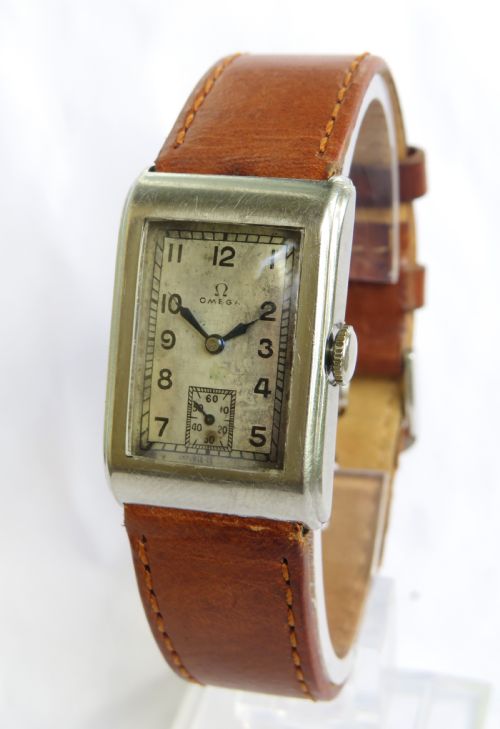
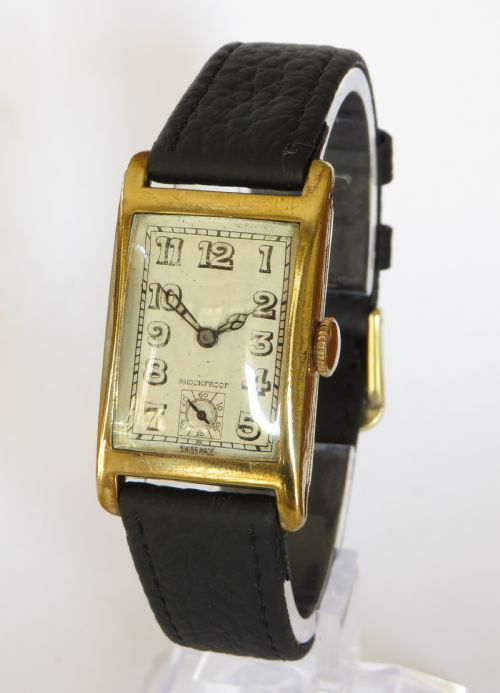
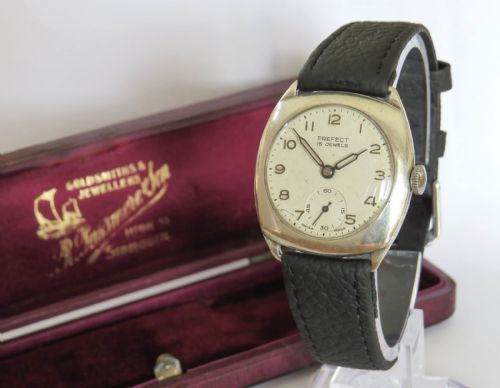
When you search for a 1930s mechanical wrist watch, you encounter timepieces produced during a transformative decade for horology, moving away from pocket watches into purposeful wristwear. The pieces on this page span gentleman's and ladies' variations, encompassing tank styles, curved rectangular forms, and square dials.
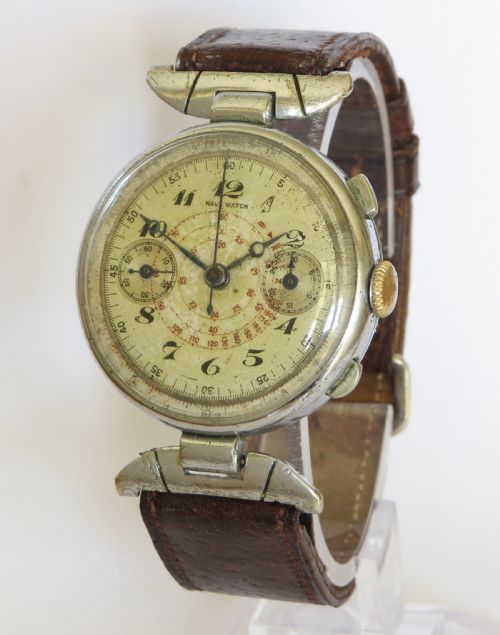
The aesthetic of a 1930s mechanical wrist watch is heavily influenced by Art Deco design, evident in geometric case shapes, stylised numerals, and sector or black dials. Examples range from military-associated aviator chronographs to refined dress watches housed in silver, gold plate, rolled gold, or solid white gold.
Makers represented in these selections include established Swiss and international houses such as Omega, Zenith, Rotary, Elgin, Larex, and Le Coultre. These watches rely entirely on manual mechanical movements rather than quartz power, requiring daily winding by hand to keep time.
How they were made
Cases for a 1930s mechanical wrist watch were fashioned from durable metals like stainless steel and chrome, alongside precious or plated alternatives including silver, gold plate, rolled gold, and 14k white gold. These metals were shaped into tonneau, square, tank, or curved curvex profiles, often featuring fixed or hinged wire lugs for leather straps.
Dial execution involved enamel finishes, contrasting chapter rings, and subsidiary seconds dials, protected by fitted glass crystals. Movements inside were precision mechanical assemblies of tiny brass gears, springs, and escapements, designed to fit compactly within slender rectangular or round forms.
Some vintage stock remains completely unworn, preserving decades-old ticking history inside pristine steel and gold-plated housings.
What varies in quality
The standard of a 1930s mechanical wrist watch depends heavily on the grade and provenance of its movement, with specialist Swiss calibres by makers like Omega or Zenith commanding greater horological interest. Better pieces retain unpolished case geometry, sharp hallmarks, and original dial printing rather than poorly repainted surfaces.
Material choice and complexity elevate certain specimens, shifting from basic chrome-plated brass to solid silver, gold, or complicated chronograph mechanisms like the Landeron. Preserved details such as original hands, signed crowns, and well-documented servicing histories further distinguish the finer examples.
Omega·Zenith·Rotary·Elgin·Larex·Le Coultre
The 1930s Mechanical Wrist Watch Glossary
- Art Deco
- A prominent design style of the 1920s and 1930s characterised by streamlined geometric shapes, symmetry, and modern industrial motifs. It heavily influences the rectangular and square case silhouettes seen on these watches.
- Tank watch
- A rectangular wristwatch style with vertical brancards or case sides that extend to form the lugs, originating during the First World War and popular throughout the 1930s. The geometry echoes the tread pattern of military tanks from above.
- Rolled gold
- A manufacturing method where a layer of gold is mechanically bonded to a base metal core, offering durability and the appearance of solid gold at a lower cost. It is frequently found on watches from this era.
- Chronograph
- A watch equipped with a stopwatch function alongside its standard timekeeping display. 1930s examples often utilise column-wheel movements like those by Landeron.
- Hermetic
- A water-resistant case design popular in the early and mid-twentieth century, often featuring an inner case sealed inside an outer housing. These were built to protect delicate movements from dust and moisture.
1930s Mechanical Wrist Watch: Frequently Asked Questions
Are 1930s wristwatches waterproof?
Most watches from this period lack modern rubber gaskets and modern water resistance standards, even if marked as hermetic or dustproof. Exposure to moisture can rust the steel components and ruin the dial.
It is best to keep a 1930s mechanical wrist watch entirely away from water, rain, and hand-washing.
How accurate are watches from the 1930s?
A well-serviced vintage watch can keep respectable time, but it will rarely match the precision of a modern quartz movement. Gaining or losing a minute or two per day is typical for mechanical calibres of this age.
Temperature changes, wear on the gear train, and magnetic fields all influence daily performance.
Can I wear a 1930s watch daily?
Many collectors wear their vintage pieces regularly, provided the watch has been recently serviced by a professional watchmaker. Regular wear distributes lubricants evenly across the tiny moving parts.
However, due to their age and delicate glass crystals, they are best kept away from rough physical activities or heavy manual work.