


1930s Maple Cupboards
These 1930s maple cupboards bring the clean lines and striking grain of Art Deco design directly into modern bedrooms.
1930s Maple Cupboards
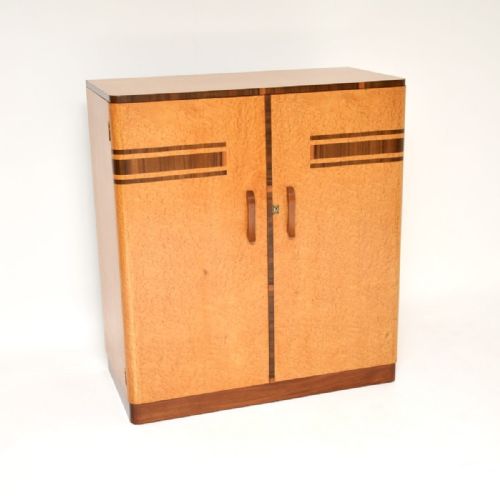
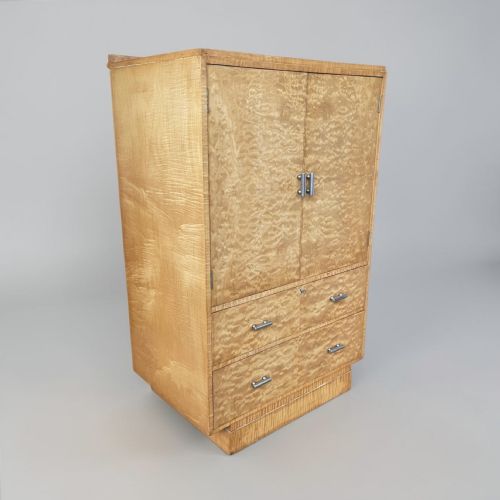
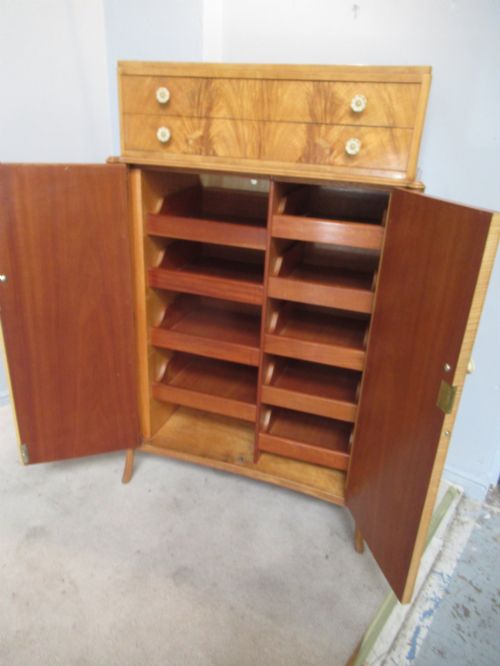
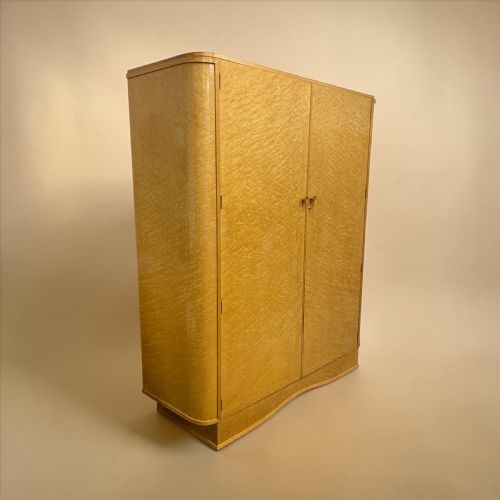
These 1930s maple cupboards encompass a functional range of bedroom and living room storage, dominated by bedside cabinets, tallboys, compactums, and wardrobes. Pieces frequently emerge in pale or blonde birdseye maple, often contrasted with darker timbers such as walnut and mahogany.
Makers of the period favoured symmetrical door arrangements and streamlined silhouettes typical of the Art Deco style. Buyers meeting these pieces on this page will most commonly find matching pairs of bedside tables or single tall storage cabinets.
Origins span English and French workshops, capturing the transatlantic spread of modernist furniture design. The scale ranges from compact nightstands to large triple wardrobes intended for fitted bedroom suites.
Materials and Construction
Cabinetmakers utilised selected veneers of birdseye maple and plain maple over sturdy softwood or hardwood carcass foundations. The distinctive swirling patterns of the maple grain were carefully matched across drawer fronts and cupboard doors to create symmetrical visual effects.
Secondary timbers like walnut and mahogany provided dark contrastingbanding, plinths, and geometric inlay details. Hardware typically involved cast metal handles and pulls designed in understated geometric shapes suited to the period aesthetic.
Some bedside cupboards feature hidden slide-out trays originally intended for pocket watches.
Assessing Quality and Craftsmanship
Superior examples display meticulous book-matching of the maple veneer across multiple doors and drawers, creating a continuous natural pattern. The depth of the grain and the clarity of the blonde finish distinguish finer decorative cabinetwork from simpler utility pieces.
Construction integrity reveals itself in the weight of the doors, the smoothness of drawer action, and the retention of original metal hardware. Finer pieces maintain crisp geometric lines without distortion in the timber or fading in the pale maple tones.
Harry and Lou Epstein
The 1930s Maple Cupboards Glossary
- Birds Eye Maple
- A figure in maple wood that resembles tiny, swirling eyes, highly prized by cabinetmakers for decorative veneer panels.
- Compactum
- A multi-functional wardrobe combining hanging space, shelves, and internal drawers within a single carcass.
- Tallboy
- A case piece standing taller than a standard chest of drawers, often featuring cupboards or smaller drawers at the upper section.
- Serpentine
- A furniture front curving outward at the ends and inward at the centre, creating a gentle undulating shape common in French pieces.
- Veneer
- A thin layer of figured wood applied over a stable secondary wood base to provide a decorative exterior surface.
1930s Maple Cupboards: Frequently Asked Questions
What rooms suit these cupboards?
These cupboards integrate naturally into contemporary bedrooms as bedside storage or statement wardrobes. Their pale wood tones also suit bright hallways or living spaces requiring compact storage.
Matching pairs provide balance beside a low bed frame, while single tallboys fit narrower alcoves without overwhelming the floor area.
How do I clean maple surfaces?
Dust regularly with a dry, soft cloth to prevent grit accumulation on the polished veneer. Avoid silicone sprays and abrasive cleaners that can damage the historical finish.
Occasional application of a mild beeswax paste helps nourish the wood and maintain a gentle, protective lustre across the grain.
Are these pieces French or English?
The selection includes both English and French examples from the interwar period. French pieces frequently incorporate serpentine shapes and richer contrasting woods like mahogany alongside the maple.
English designs tend towards straighter architectural lines and geometric walnut banding typical of London workshops.
How do I identify Art Deco furniture?
Look for streamlined forms, symmetrical door panels, and the absence of heavy Victorian ornamentation. The aesthetic relies on the natural beauty of contrasting wood grains rather than carved decoration.
Geometric handles and stepped cornices further signal the modernist influence of the 1920s and 1930s.