


1930s Mantel Timepiece
A 1930s mantel timepiece brings geometric modernism and functional design to a shelf or desk.
1930s Mantel Timepiece
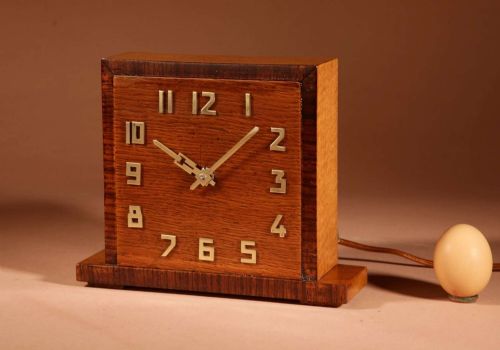
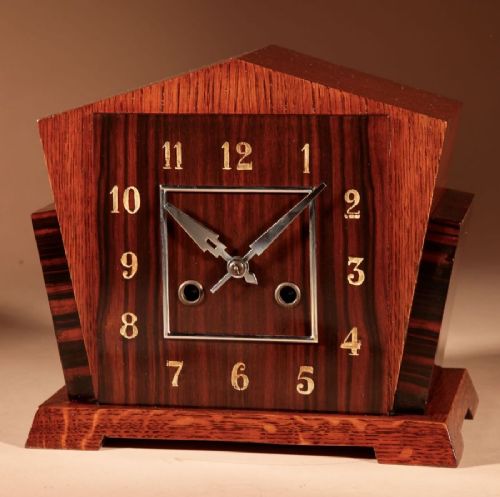
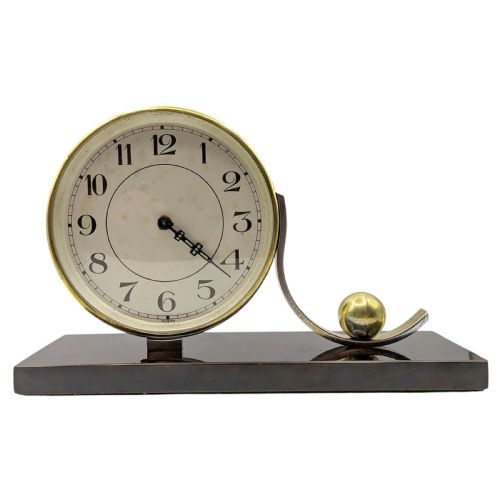
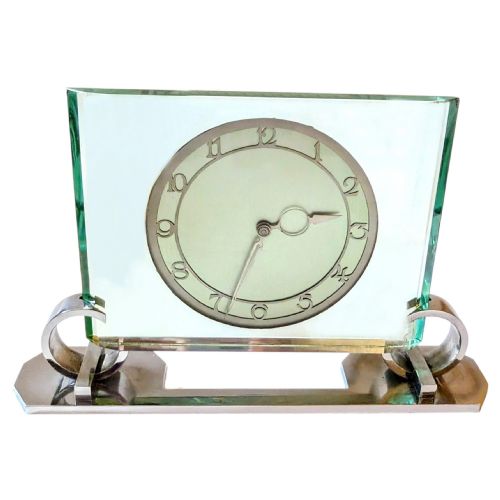
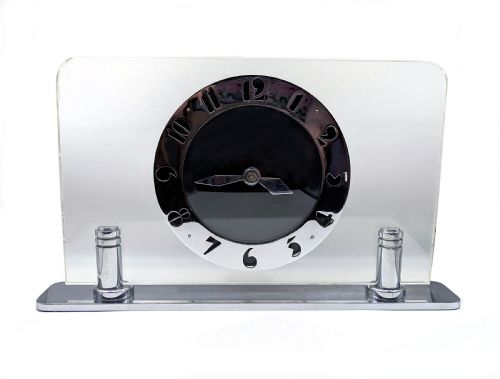
When searching for a 1930s mantel timepiece, collectors encounter clocks that embody the distinct aesthetic of the interwar period, often categorised under Art Deco and Amsterdam School styles. These pieces function primarily as desk or mantel clocks, sometimes accompanied by matching garnitures or sculptural elements.
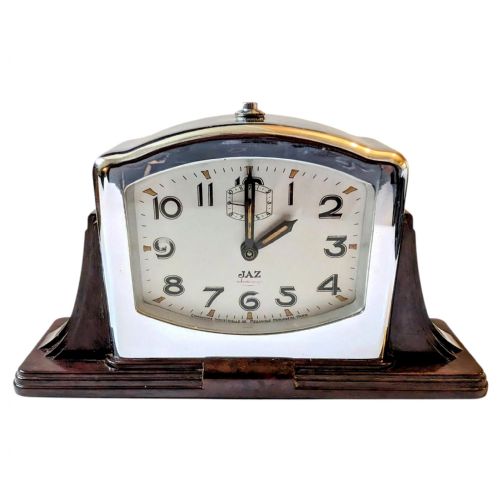
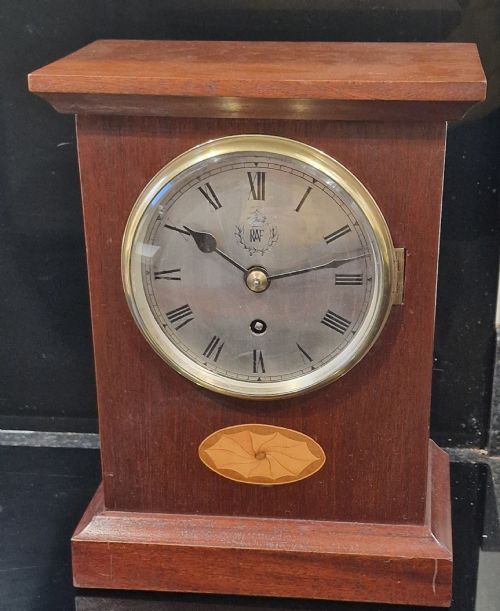
The objects span from compact desk clocks housed on bakelite bases to larger architectural wooden mantel clocks. English and French makers dominate the selection, producing works that range from streamlined chrome instruments to elaborate marble and onyx housings.
Materials and construction
Movements vary from standard 30-hour and 8-day mechanical wind-up mechanisms to early electrical systems like Bulle patents. Artisans paired these movements with geometric dials, bakelite housings, and stone bases of marble or green onyx.
Assessing quality and execution
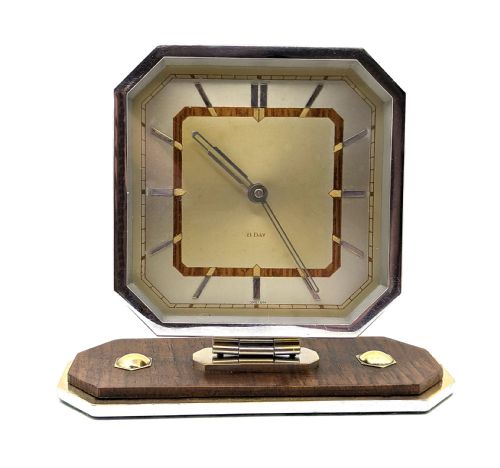
Quality in these clocks rests upon the sophistication of the architectural form and the integration of materials, such as the precision of skyscraper chrome casings or the grain alignment in Macassar ebony and walnut veneers. Finer examples display signed movements by established makers and coordinated garniture sets.
The distinction between standard commercial output and superior work involves the complexity of the dial design, the presence of specialised movements like 8-day calibres, and the condition of delicate glass or enamel components.
Jaz France·Smiths Clockmakers·Mappin & Webb·Asprey
The 1930s Mantel Timepiece Glossary
- Art Deco
- A design style characterised by sleek geometric shapes, streamlined forms, and modern industrial materials popular during the interwar period.
- Bakelite
- An early form of synthetic plastic utilised for clock bases and housings due to its durability and mouldability.
- Garniture
- A set consisting of a central clock flanked by matching decorative objects intended for display on a mantelpiece.
- Mystery clock
- A timepiece where the mechanism driving the hands is concealed, creating a visual puzzle for the observer.
- Onyx
- A banded variety of chalcedony used frequently for solid stone clock bodies and bases.
1930s Mantel Timepiece: Frequently Asked Questions
How do I wind a mechanical desk clock?
Mechanical desk clocks require a key or an attached winder to tension the mainspring inside the movement. Care must be taken not to over-wind the mechanism.
Most interwar mechanical pieces utilise either a 30-hour or an 8-day movement, determining how frequently the winding process needs repeating.
What is an Amsterdam School mantel clock?
The Amsterdam School style is an architectural and decorative movement originating in the Netherlands, prominent during the 1920s and 1930s. These clocks feature expressive brickwork-inspired joinery, dynamic wood grain patterns, and heavy use of exotic timbers.
Such pieces often incorporate dark woods like macassar ebony and rosewood, contrasting with lighter oak structures.
Are glass clocks fragile?
Glass clocks utilise heavy plate glass, mirrored panels, or opaline glass for their structural bodies rather than fragile blown vessels. They require stable placement on level surfaces away from edge hazards.
Handling should involve supporting the base while avoiding pressure on protruding metal bezels or delicate electrical components.
How do electrical movements work in these clocks?
Early electrical movements from this era, such as Bulle systems, utilise electromagnetic impulses to drive the pendulum or balance wheel. These setups often require specific low-voltage batteries to operate.
Servicing by a specialist familiar with vintage electrical horology ensures the wiring and magnetic coils remain functional.