


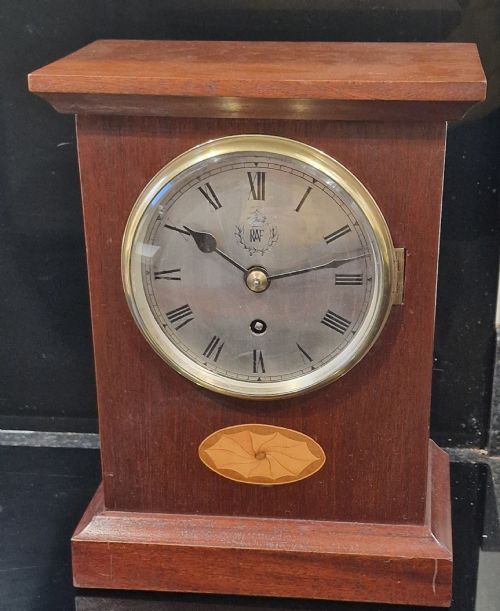
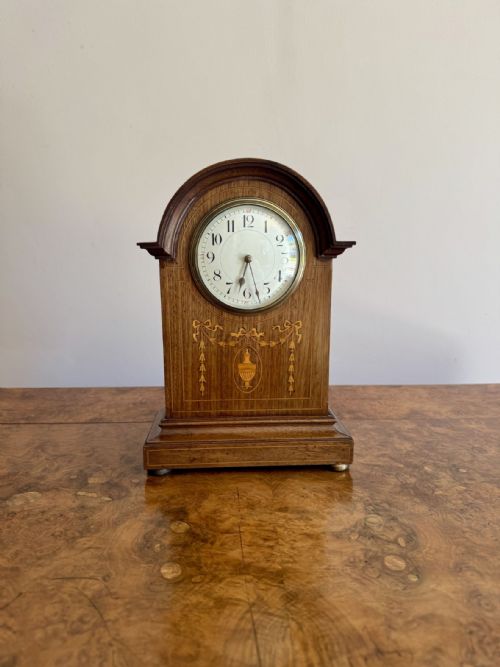


Brown Wood Desk Clock
These brown wood desk clocks bring warmth and reliable timekeeping to a room, ranging from carved Black Forest pieces to refined mahogany bracket designs.
Brown Wood Desk Clock
You will frequently encounter Edwardian mahogany inlaid mantel clocks and 19th-century Black Forest carved linden wood examples on this page. Formats vary from small table clocks to large striking bracket clocks and dome top designs.
Origins stretch across English workshops, German makers, French makers, and Swiss carvers, reflecting diverse regional cabinet-making traditions. Many house eight-day movements or specialised striking mechanisms for functional utility.
Materials and Construction
Cabinet makers utilised solid and veneered timbers such as mahogany, walnut, coromandel, and pollard oak, frequently incorporating delicate wood inlay and satinwood stringing. Carved variants employ linden wood shaped with hand tools in regional workshops.
Clock housings integrate brass bezels, silvered dials, and protective glass panels to enclose intricate mechanical movements powered by fusee or spring mechanisms. Enamel dials and cast brass fittings complete the structural assembly.
Periods represented span the Regency era, 19th Century, Victorian, Edwardian, and Art Deco intervals.
Assessing Quality
Quality rests upon the precision of the cabinet work, the crispness of the wood inlay, and the refinement of the carved details. Fine proportions and well-figured timber distinguish superior examples from simpler production pieces.
The sophistication of the internal movement, whether a simple timekeeper or a striking bracket movement by a known maker, elevates the standing of a clock. Original dials, intact glass, and clean brass components preserve the integrity of the piece.
Mappin and Webb·Bergen and Co·Piggin Norwich·Pennington of Camberwell
The Brown Wood Desk Clock Glossary
- Bracket Clock
- A portable clock originally designed to sit on a wall bracket or a table. These often feature striking movements and architectural wooden cases.
- Fusee
- A conical pulley used in mechanical clocks to maintain even power delivery as the mainspring unwinds. This mechanism improves timekeeping accuracy.
- Inlay
- Decorative pieces of wood, brass, or shell inserted into the timber surface to create patterns. Edwardian and Victorian makers utilised this technique extensively.
- Black Forest
- A mountainous region in Germany renowned for intricate wood carving. Clocks from this area typically display detailed foliage and animal motifs in linden wood.
Brown Wood Desk Clock: Frequently Asked Questions
How do I wind an eight day clock?
Insert the winding key into the designated dial holes and turn gently until resistance increases. Avoid over-winding to protect the internal spring mechanism.
Ensure you support the clock case steadily during the process, particularly with heavier mahogany or carved wooden models.
Where should I place a bracket clock?
Select a sturdy mantelpiece, desk, or dedicated wall bracket away from direct sunlight and damp environments. Stable surfaces prevent vibrations that can disrupt the pendulum or escapement.
Position the clock where the dial remains easily readable and accessible for regular winding.
How do I identify an Edwardian inlaid clock?
Look for symmetrical wood inlay, satinwood stringing, and lighter mahogany frames characteristic of the early 20th century. Edwardian pieces often feature restrained classical motifs and polished brass feet.
Examine the interior label or movement markings for maker stamps that confirm the production period.
What is a fusee movement?
A fusee movement uses a conical drum and a cord or chain to equalise the declining power of the mainspring. This traditional mechanism ensures consistent energy reaches the escapement.
Clocks with fusee movements are often housed in high-quality mahogany or coromandel bracket cases.