



Vintage English Timekeeper
A vintage English timekeeper brings the precision of past centuries into a room, offering both mechanical craft and daily utility.
Vintage English Timekeeper
A vintage English timekeeper encompasses wall clocks, mantel clocks, carriage clocks, and pocket watches originating from British workshops. Buyers searching for a vintage English timekeeper encounter pieces ranging from early nineteenth-century fusee dial clocks to mid-twentieth-century pocket watches.
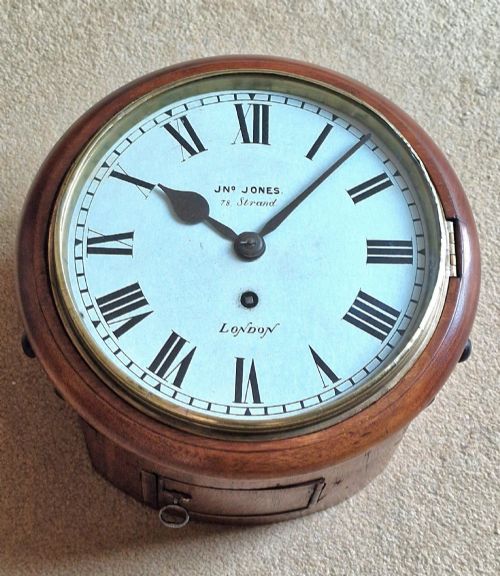
Domestic spaces frequently accommodated wall clocks and bracket clocks, whilst travellers and professionals carried pocket watches and carriage clocks. The selection on this page demonstrates how these objects served both public institutions and private homes across various eras.
The periods represented span from the Regency and Victorian epochs through to mid-century British production. Makers and manufacturers adapted their designs to suit changing interior fashions, utilising brass, mahogany, glass, and chrome.
How they were made
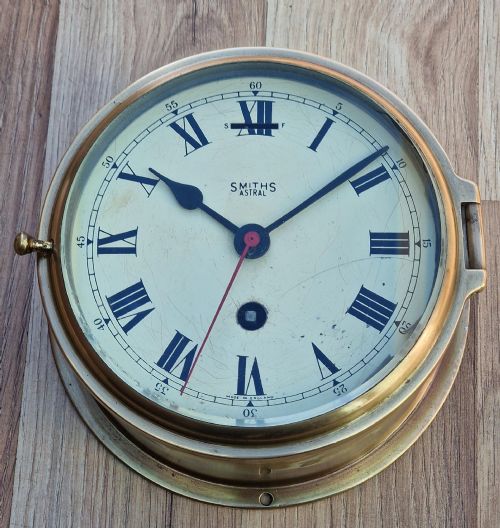
Horologists constructed these mechanisms using brass for gears and plates, housing them in timber cases such as mahogany, rosewood, and satinwood. Dial faces frequently featured silvered metal or enamel with painted numerals, protected by fitted glass bezels.
Fusee movements utilised a conical pulley and chain to ensure even tension as the mainspring unwound, delivering steady accuracy. Cabinetmakers built architectural bracket and wall clock cases using traditional joinery and brass inlay.
Later mid-century examples incorporated industrial materials like chrome and plastic alongside traditional metals. Pocket watches integrated gold plate and eighteen-karat gold housings to protect delicate internal verge escapements.
Vintage English Timekeeper Retail Price Guide 2026
Typical asking prices for vintage english timekeeper among the pieces listed under this phrase on Sellingantiques today, from the lower quarter to the upper quarter. They describe what is for sale here now, not the wider market.
Materials across these listings range from traditional mahogany, brass, and glass to mid-century chrome, gold plate, and plastic.
What varies in quality
The distinction between standard commercial timepieces and exceptional examples lies in the refinement of the movement and the execution of the case. Master horologists signed their dial faces and engraved their backplates, marking out superior workshops from regional jobbing makers.
Cabinetwork quality separates ordinary production from high-grade commissions. Figured mahogany, precise brass stringing, and well-proportioned mouldings elevate a bracket or library clock.
The preservation of original components, from the dial enamel to the fusee chain, determines the integrity of the piece. Untouched dials and matching movement serial numbers reflect higher grade manufacture.
Pickford of London·John Morley·Seller of Reading·J Batson and Son·Piggin Norwich·J Lyndsey Antique·Dent of London
The Vintage English Timekeeper Glossary
- Fusee
- A conical pulley used in mechanical clocks to maintain equal force on the gear train as the mainspring loses tension. This device improved timekeeping accuracy throughout the running cycle.
- Verge escapement
- An early type of escapement mechanism that controls the release of power in a clock or pocket watch. It works in conjunction with a balance wheel or pendulum.
- Bracket clock
- A portable spring-driven clock originally designed to sit on a bracket affixed to a wall. Later examples served as prominent mantel or desk ornaments.
- Carriage clock
- A small, spring-driven timekeeper equipped with a handle, originally built for travellers in the nineteenth century. They often featured glass panels that revealed the internal mechanism.
- Drop-dial wall clock
- A wall-mounted clock featuring an extended wooden case below the circular dial to house a longer pendulum. These were common in railway stations, offices, and large domestic halls.
Vintage English Timekeeper: Frequently Asked Questions
How do fusee clocks work?
A fusee movement uses a specialised conical drum and chain to regulate the pull of the mainspring. As the spring unwinds and loses strength, the chain moves to a wider part of the cone, maintaining constant torque.
This clever mechanical compensation prevents the clock from losing speed as the power runs down. It remains a hallmark of better British clockmaking.
Where were wall clocks used?
Dial wall clocks were standard fixtures in railway stations, post offices, schools, and commercial offices where dependable timekeeping was essential. Large public spaces relied on clear white enamel faces and bold numerals for visibility.
Domestic hallways and kitchens also adopted these sturdy pieces for daily household management. Their robust mahogany or oak frames withstood busy environments.
How do I wind a mechanical clock?
Winding requires a matching key inserted into the winding square on the dial face, turned gently until resistance is felt. Care must be taken not to overwind the mainspring, which can cause internal damage.
Most eight-day movements require attention once a week to maintain consistent operation. Keeping a regular schedule helps preserve the tension of the springs.
What is a carriage clock?
Carriage clocks are portable spring-driven timekeepers fitted with folding carrying handles and glazed panels. Originating in France, they were widely adopted in Britain for domestic travel and bedroom use.
Their brass cases protected delicate lever escapements from the bumps of travel. Today they sit easily on desks and mantelpieces.