
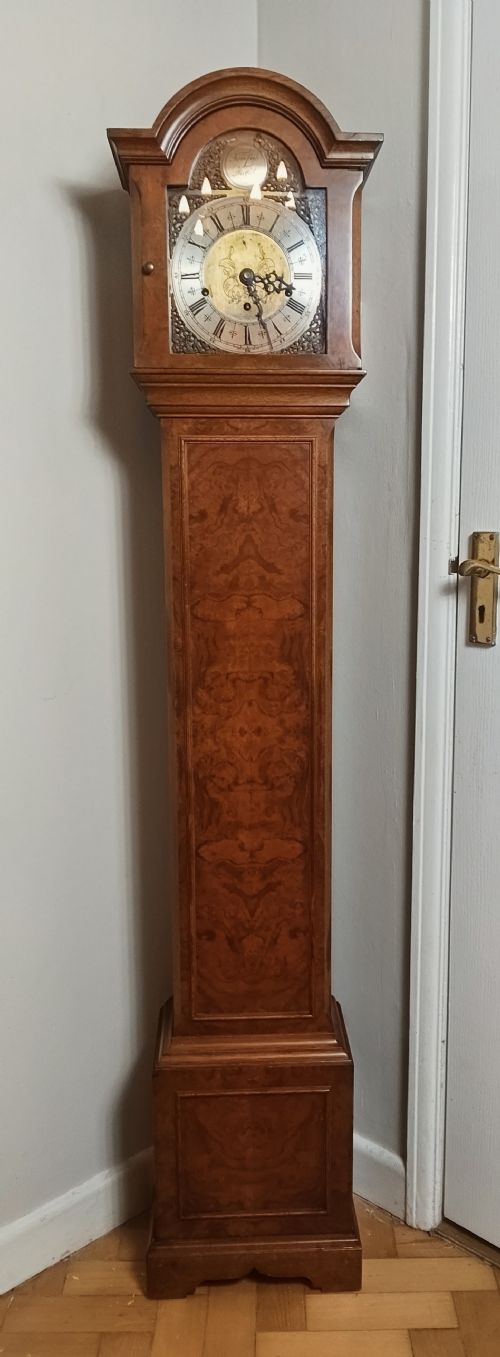


English Walnut Clock
An english walnut clock carries the warmth of centuries of joinery and timekeeping into any room.
English Walnut Clock
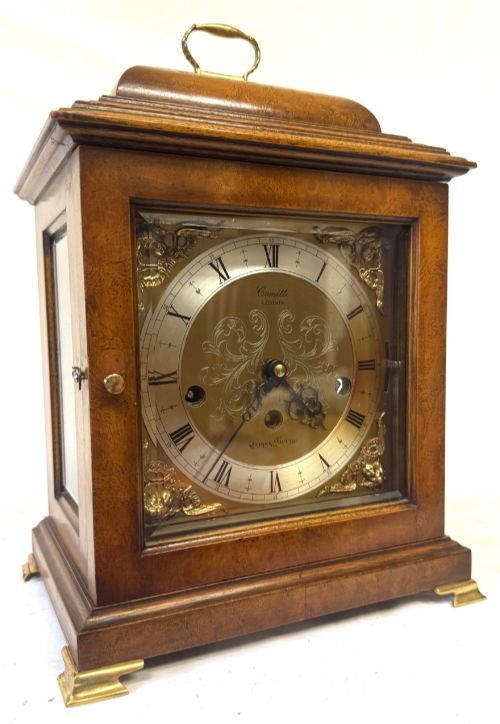
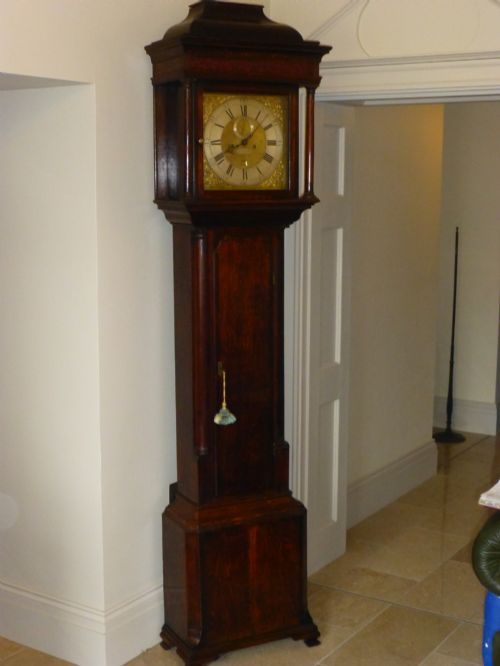
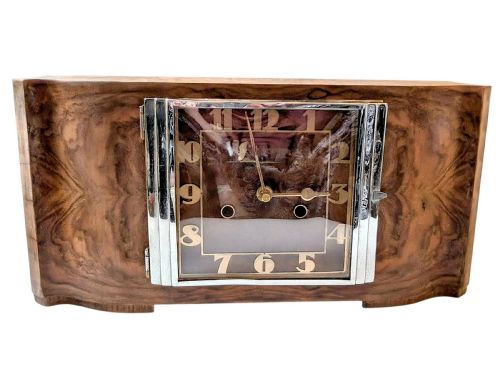
An english walnut clock spans grand tall forms and compact wall pieces, capturing centuries of domestic horology. The selection ranges from 17th-century marquetry longcases to 1930s Art Deco mantel pieces.
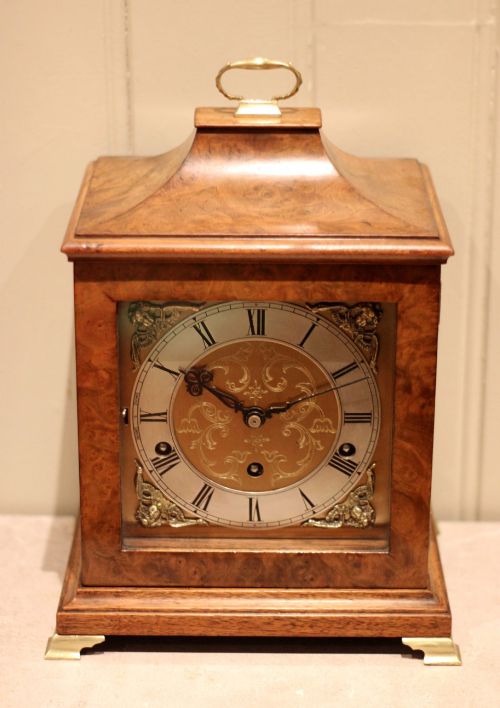
Tall longcase examples dominate the earlier periods, whilst bracket clocks, dial clocks and wall clocks fill the later Victorian and 20th-century brackets. Buyers meet both stately London-made floor clocks and geometric chrome-accented desk pieces on these pages.
Materials and Construction
Cabinet makers utilised solid walnut, burr walnut veneers, and marquetry inlay over secondary woods like oak, pairing timber cases with brass dials and glass panels. Metal movements, including chrome accents in later decades, regulate the mechanical gear trains.
Joiners selected figured burr timber for dramatic grain patterns on longcase doors and bracket clock panels, often combining plain walnut mouldings with intricate floral marquetry details.
Listings span from the 17th century through the Georgian and Victorian eras up to 1930s Art Deco designs.
Evaluating Craftsmanship
Quality rests in the precision of the brass dial engraving, the depth and figuring of the burr walnut veneer, and the original integrity of the clock movement. Maker signatures from notable London workshops elevate the standing of a piece.
Earlier examples display meticulous hand-cut marquetry and slender proportions, whereas 20th-century items rely on clean geometric lines, contrasting wood tones, and polished chrome integration.
Richard Corless of Stockport·Thomas Vernon London·Henry Massy·Nathaniel Pyne·Edin Burgis London·Connell of London·Henry Deykin Worcester·Edward Upjohn Exon·Edward East·Joseph Knibb·Payne of Tunbridge Wells·Joseph Saer London·Jonathan Marsh London·Peter Wise London·John Taylor of London·James Drury of London·Richard Baker London·Joseph Oxley Norwich·Comitti Of London·Mappin & Webb·ELLIOTT·Perivale
The English Walnut Clock Glossary
- Burr Walnut
- A figured wood grain formed from a tree growth or root, highly prized for decorative veneer panels on clock doors.
- Longcase Clock
- A tall floor-standing timepiece housed in a wooden case, commonly known as a grandfather clock.
- Bracket Clock
- A portable table or shelf clock, originally designed to sit on a wall bracket.
- Marquetry Inlay
- Decorative patterns created by fitting thin pieces of wood veneer into a prepared surface.
- Fusee
- A conical pulley used in clock movements to equalize the declining power of a mainspring as it unwinds.
English Walnut Clock: Frequently Asked Questions
What is an english walnut clock?
An english walnut clock is a mechanical timepiece housed in a cabinet made from walnut timber, originating from workshops across Britain over several centuries.
These timepieces encompass floor-standing longcases, wall dials, and smaller shelf clocks utilising brass movements and wooden cases.
How were longcase clocks used?
Longcase clocks served as the primary timekeeper in domestic halls and living spaces, requiring regular manual winding via weights and pendulums.
Their striking mechanisms also provided audible hourly or quarter-hourly time markers for households before widespread personal timekeeping.
How do I identify a 17th-century clock?
Seventeenth-century examples frequently feature square brass dials, narrow trunk proportions, and intricate floral marquetry or early walnut veneers.
Signatures from makers such as Joseph Knibb or Edward East inscribed on the dial plate often confirm this early period.
Where should I place a bracket clock?
Bracket clocks suit stable wooden mantelpieces, sideboards, or dedicated wall shelves where the mechanical movement remains level.
Keeping them away from direct heat sources helps preserve the delicate burr walnut veneer and wooden case structure.