




1930s Leather Armchair Pair
A 1930s leather armchair pair brings together period comfort and striking modernist design, offering both deep seating and matched symmetry.
1930s Leather Armchair Pair
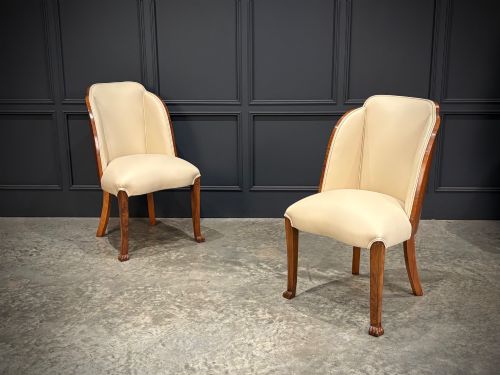
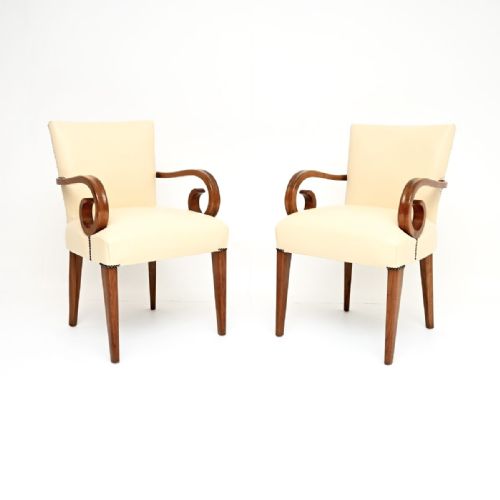
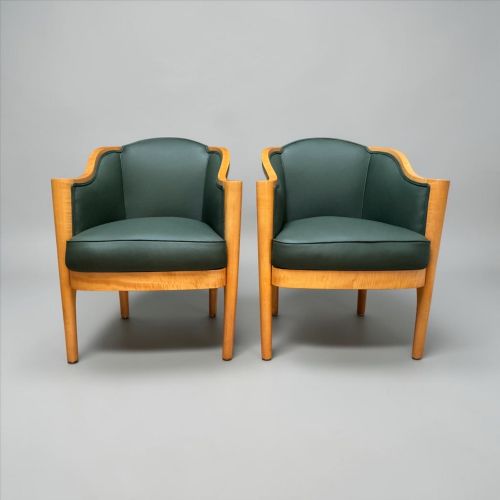
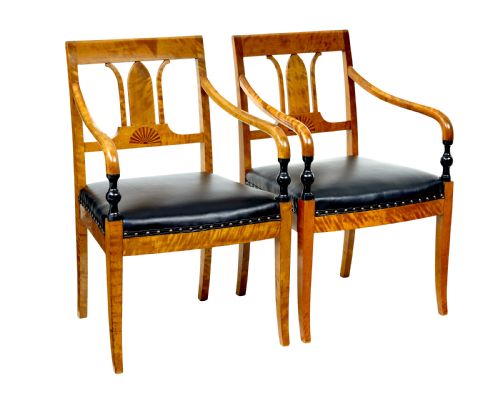
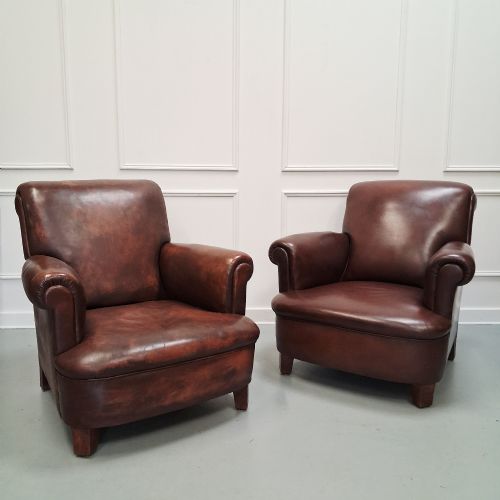
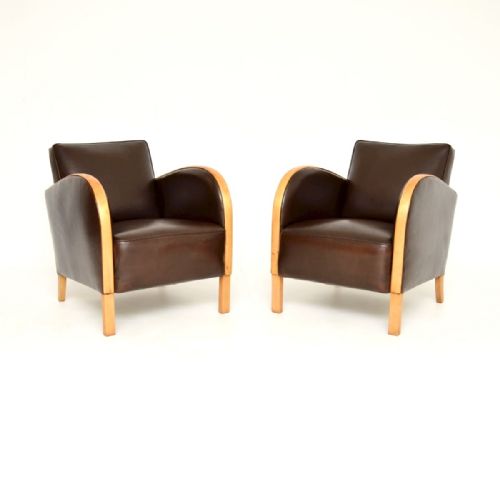
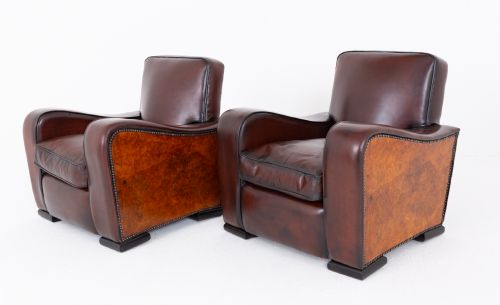
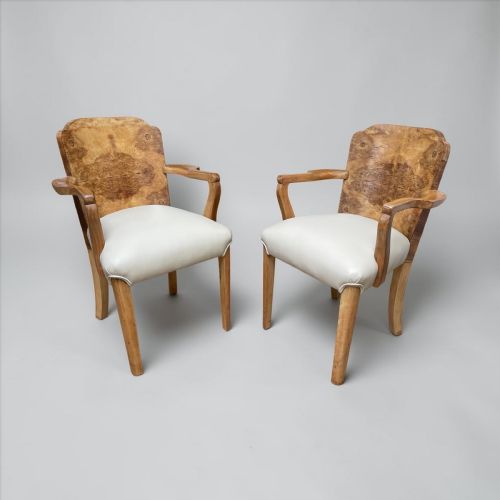
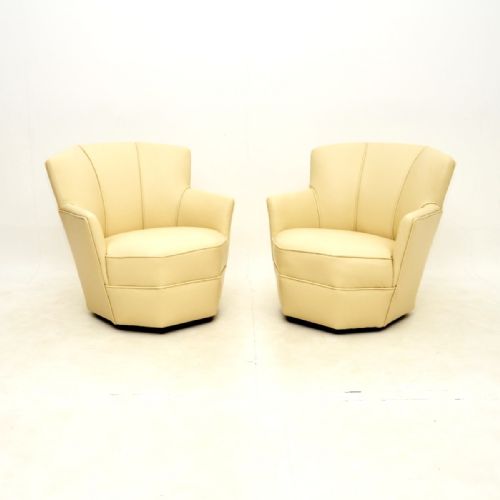
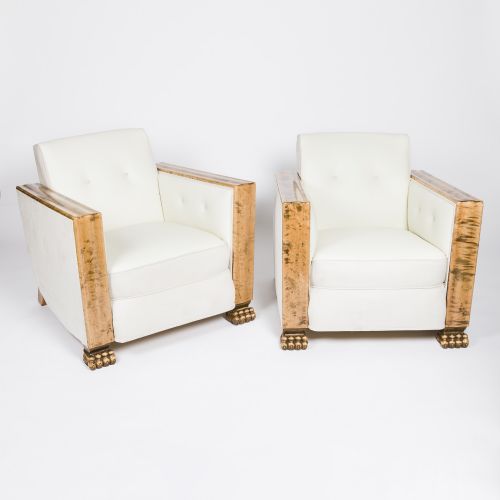
A 1930s leather armchair pair comprises two matching seats created during the interwar years, taking forms such as club chairs, bridge chairs, and occasional chairs. These sets frequently emerge from the Art Deco movement, alongside revival designs that reference earlier historical periods.
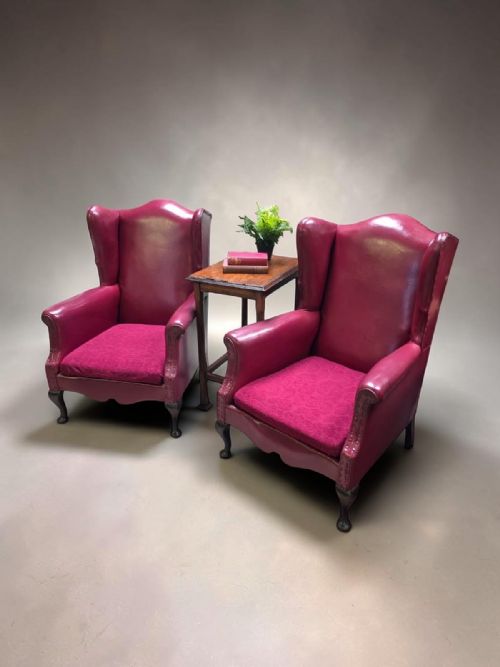
The silhouettes range from generous, low club shapes to wingback frames and rounded cloud forms. This variety allows collectors to select seating that matches specific interior scales while maintaining the cohesive symmetry of a paired set.
How they were made
Frames rely on sturdy timbers such as hardwood and walnut, often enhanced with decorative veneers including burr walnut, satinwood, and flame birch. These woods provide the structural rigidity needed for substantial upholstered seating.
Upholstery combines traditional springing with high-grade leather coverings, tailored to fit smooth curves, cloud shapes, and structured wingback profiles. The combination of dense wood framing and supple leather defines the durability of the period.
1930s Leather Armchair Pair Retail Price Guide 2026
Typical asking prices for 1930s leather armchair pair among the pieces listed under this phrase on Sellingantiques today, from the lower quarter to the upper quarter. They describe what is for sale here now, not the wider market.
Listings demonstrate cabinetwork in walnut, burr walnut, satinwood, and hardwood, alongside French and Scandinavian design influences from the interwar period.
What varies in quality
Quality rests in the precision of the woodwork and the selection of cabinet timbers, distinguishing standard frames from those featuring figured burr walnut, satin birch, or flame birch veneers. The ambition of the design, whether a restrained bridge chair or a sculptural club shape, dictates the maker's hand.
The treatment of the leather upholstery and the integrity of the underlying frame shape establish the visual weight of the pair. Finer examples maintain crisp lines and balanced proportions that reflect the distinct design philosophies of the interwar decades.
Maurice Adams·Hille·Harry and Lou Epstein
The 1930s Leather Armchair Pair Glossary
- Art Deco
- A design style characterised by sleek lines, geometric forms, and modern materials popular during the interwar period. It influences many of the chairs seen in this selection.
- Club chair
- A deep, comfortable armchair featuring upholstered arms and a low back. French examples from this era are particularly sought after for their enveloping proportions.
- Burr walnut
- A prized timber veneer showing intricate, swirling grain patterns formed from tree growths. Cabinetmakers utilise it to add decorative richness to chair frames.
- Wingback
- An armchair style featuring protective side panels attached to the backrest. Period revivals adapt this traditional form with the curved lines of the interwar years.
- Bridge chair
- A compact, lightweight armchair designed for card games or occasional seating. These pieces offer smaller footprints while retaining period character.
1930s Leather Armchair Pair: Frequently Asked Questions
Are these pairs always matching?
The pieces listed as pairs are designed and built together as matched sets, sharing identical materials, frames, and upholstery.
Buyers receive two corresponding armchairs that share the same period style and proportions, ensuring visual symmetry in a room.
What is a club chair?
A club chair is a heavily upholstered, deep-seated armchair designed for relaxed lounging. The style originated in France and gained popularity during the interwar decades.
These chairs feature low backs and broad arms, offering substantial comfort compared to formal occasional seating.
How do I identify Art Deco chairs?
Art Deco chairs typically display streamlined silhouettes, rounded cloud shapes, or geometric veneered frames in walnut or birch. The design avoids excessive ornamentation in favour of clean, modern lines.
Makers often paired these smooth wooden frames with rich leather upholstery to create a balanced, luxurious aesthetic.
Where were these armchairs used?
These armchairs served in domestic living rooms, studies, and smoking rooms as comfortable lounging seats. Bridge chairs additionally furnished game rooms and casual seating areas.
Pairs allowed homeowners to create balanced seating arrangements around fireplaces or central living spaces.