



1930s Lalique Bowl
A 1930s Lalique bowl brings iconic Art Deco design and striking opalescent glass into a room through moulded vessels made for display.
1930s Lalique Bowl
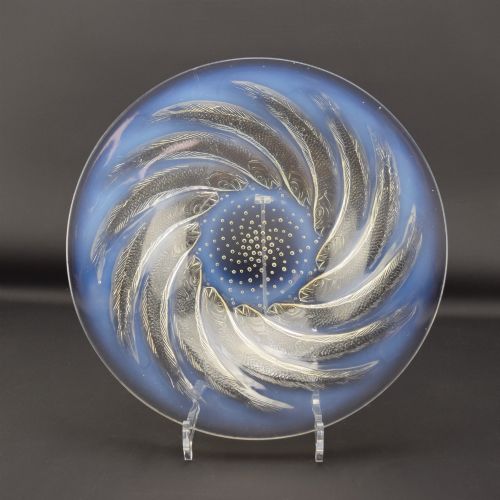
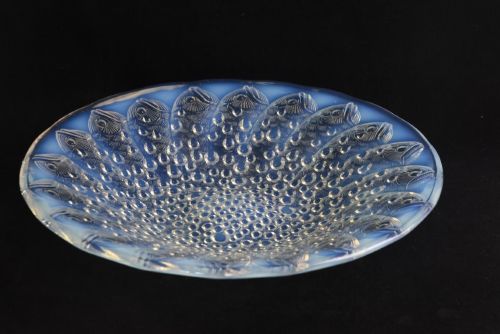
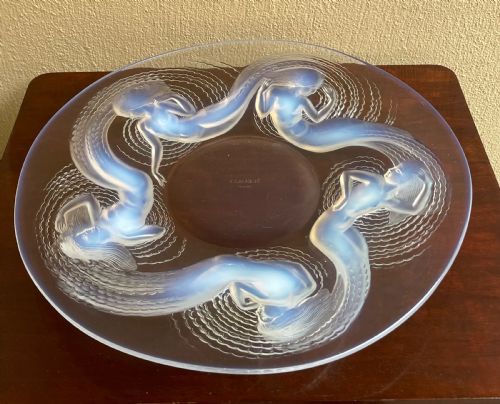
When you search for a 1930s lalique bowl, you encounter moulded glass vessels created during the height of the Art Deco period. These objects take the form of decorative bowls, coupe ouverte pieces, shallow bowls, chargers, and decorative plates.
The versions you meet most frequently on this page originate from the 1930 era, showcasing named designs such as Poissons, Roscoff, Oeillets, Calypso, Campanules, Perruches, Plume de Paon, Bulbes, and Fleurons.
How they were made
Makers utilised glass and moulded glass techniques to shape these substantial vessels into decorative bowls and plates. The process required pressing hot glass into moulds to achieve defined relief patterns across the surface.
The characteristic opalescent glass finish was achieved during production, catching the light to shift between milky blue and warm amber tones depending on the angle and illumination.
Several bowls are named after garden pinks, cornflowers, and bluebells, bringing a botanical splash of flora straight to the dining table.
What varies in quality
The distinction between examples rests in the crispness of the moulded relief and the depth of the opalescence within the glass. Stronger contrast across the raised motifs creates greater visual dimension when the piece catches the light.
Design complexity also sets pieces apart, with naturalistic motifs like fish, birds, and flora showing varying degrees of fine sculptural detail across the surface of the bowl.
Rene Lalique
The 1930s Lalique Bowl Glossary
- Coupe ouverte
- An open bowl form commonly utilised in French glass production. These open vessels sit low and wide for display.
- Opalescent glass
- Glass containing agents that cause it to diffuse light and appear milky bluish-white in daylight and warm amber against direct light. This material defines the aesthetic of the era.
- Moulded glass
- Glass shaped by pressing molten material into a metal or wooden form. This technique allowed for repeatable, highly detailed relief decoration.
- Charger
- A large decorative plate or shallow basin intended for display rather than utility. These large pieces command visual space on a surface.
1930s Lalique Bowl: Frequently Asked Questions
What are 1930s lalique bowls made of?
These pieces are formed from glass and moulded glass, specifically utilising opalescent formulations that change appearance in the light.
The chemical composition scatters light to create characteristic milky blue and amber tones across the moulded surface.
How were these bowls used originally?
They functioned primarily as decorative bowls, chargers, and display plates rather than everyday tableware.
Their owners placed them on tables and sideboards to showcase the sculptural relief and opalescent qualities under interior lighting.
How do I identify a 1930s Lalique design?
Look for specific named motifs such as fish, birds, foliage, and geometric plant forms recorded in the period.
The titles often reference these exact subjects, including Oeillets, Poissons, and Perruches.
Are these pieces from the Art Deco period?
Yes, the recorded pieces date from the 1930 era and embody the characteristic style of Art Deco glass production.
The combination of moulded relief work and stylised natural motifs places them firmly in this design movement.