
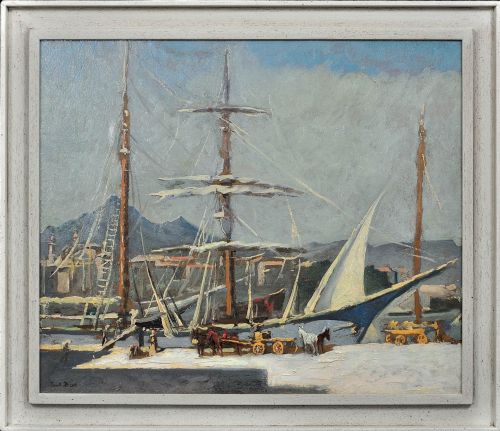


1930s Impressionist Landscape Painting
A 1930s impressionist landscape painting captures natural light and outdoor scenes through expressive brushwork, offering buyers a direct window into early twentieth-century rural and coastal life.
1930s Impressionist Landscape Painting
When you search for a 1930s impressionist landscape painting, you encounter works that record regional views, harbours, and rural farms across Britain and France. These pieces document countryside paths, coastal cliffs, and Mediterranean scenes created during a period of distinct artistic vitality.
The most frequent examples on this page are oil paintings executed on canvas or board, originating from British and French artists working in the 1930s. Such works frequently adopt post-impressionist or plein air methods to render the specific atmosphere of a location.
Materials and construction methods
Artists painted primarily using oil paint applied to stretched canvas, wooden board, or stiff paper supports. These materials allowed painters to build texture and manage the heavy pigment loads characteristic of the period.
Makers employed direct plein air methods outdoors to capture shifting light, utilising visible brushstrokes and unblended colours to suggest movement in water, foliage, and skies.
Several canvases record ducks, farmyard chickens, and darting ponies interrupting otherwise serene rural studies.
Elements that distinguish individual works
Quality rests on the precision of tonal relationships and the confidence of the brushwork, which together determine whether a landscape holds visual depth or feels flat. Works that successfully capture the intensity of Mediterranean sunlight or the quiet grey of northern British skies display superior handling of paint.
Compositional balance also separates standard decorative pieces from more compelling artistic studies. The strongest examples use structural elements like paths, walls, or shorelines to guide the eye across the canvas with purpose.
Paul Bret·Charles Walter Simpson·Gustave Vidal·William JB Jenkins·Fred Lawson·Claude Jousset·Donald Wood
The 1930s Impressionist Landscape Painting Glossary
- Plein air
- Painting outdoors directly from nature to capture transient effects of light and weather. This method defined much of the landscape work produced across Europe during the period.
- Post-Impressionism
- An artistic development following impressionism that retains luminous colour while exploring heavier structure and expressive form. Works in this style emphasise personal interpretation over literal transcription.
- Fauve
- A style characterised by bold, non-naturalistic use of colour applied straight from the tube. These paintings prioritise energetic pigment over strict realism.
- Board
- A rigid wooden or fibrous support used as an alternative to stretched canvas. It provides a firm surface favoured by artists working quickly outdoors.
1930s Impressionist Landscape Painting: Frequently Asked Questions
What subjects appear in these paintings?
The subjects include coastal harbours, agricultural farmyards, rolling hills, and riverbanks across England and France. Artists frequently recorded scenes involving local figures, boats, and Mediterranean retreats.
Rural paths and country gates also feature prominently, reflecting a widespread interest in quiet pastoral environments during the decade.
How do I identify a 1930s work?
Dating relies on stylistic markers such as post-impressionist brushwork, distinctive colour palettes, and framing typical of the era. Many pieces carry inscriptions, signatures, or exhibition provenances from the period.
Materials like oil paint on canvas or board further anchor these pieces in early twentieth-century production methods.
Where were these artists working?
Makers operated across various regional hubs in Britain, such as Yorkshire and Devon, as well as French locations including Provence, Brittany, and the Côte d'Azur. Travel to Mediterranean coasts and rural villages inspired many of the compositions seen here.
Artists frequently set up their easels outdoors to study specific light conditions in these regional landscapes.
How should I frame an oil on board?
Oil paintings on board benefit from sturdy wooden frames that protect the edges and provide stable housing without exerting pressure on the painted surface. A suitable moulding prevents warping and accommodates the slight movement of the support.
Traditional frames from the period often complement the aesthetic of these works while maintaining structural integrity.