


1930s Glass Pendant Shade
A 1930s glass pendant shade brings direct period illumination and architectural form to a ceiling.
1930s Glass Pendant Shade
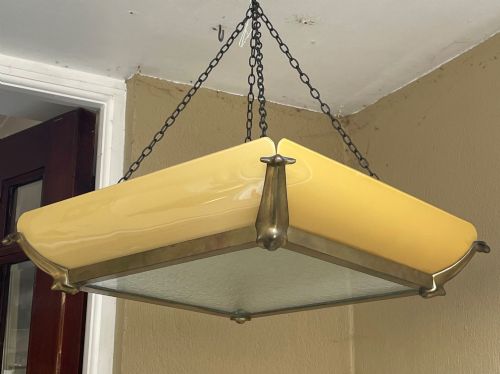
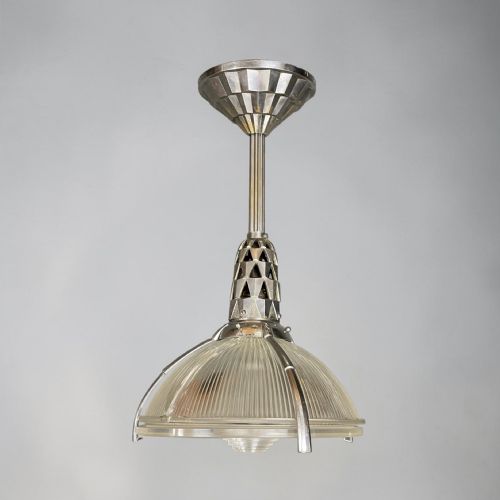
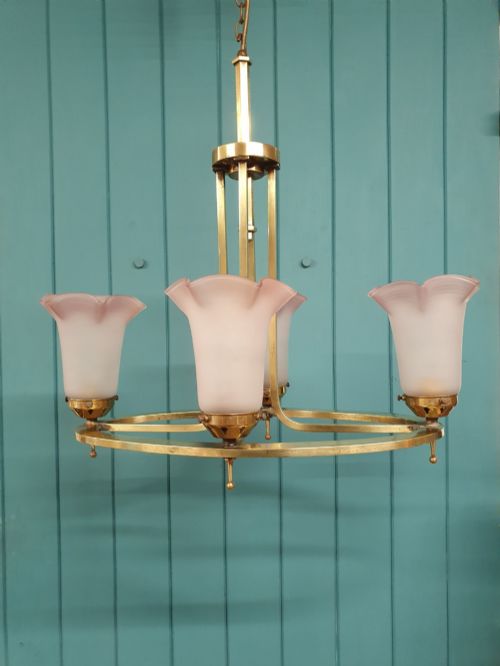
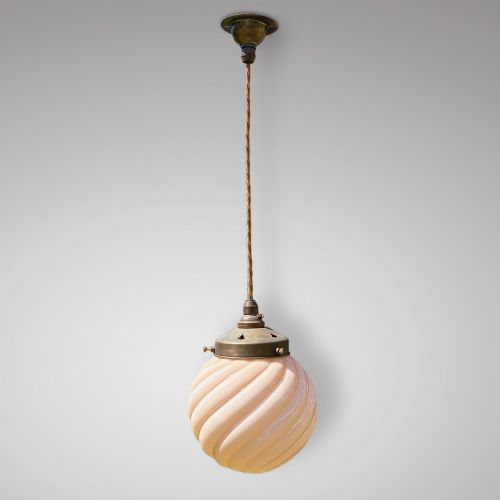
A 1930s glass pendant shade directs light downward from ceilings using moulded, frosted, or opaline glass forms shaped into bowls, globes, and shells. Most examples emerge from the Art Deco period, spanning ceiling lights, chandeliers, and single lampshades.
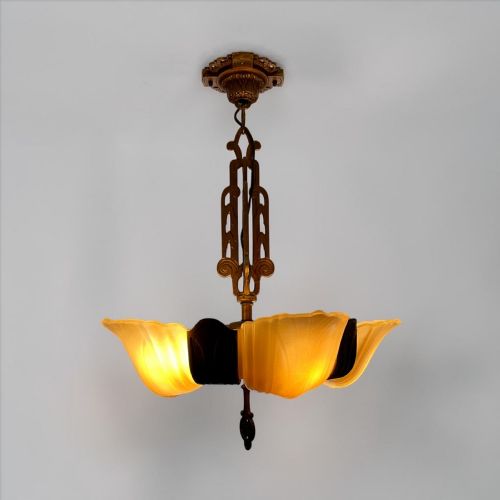
Buyers encounter French and American designs that employ slip shades, frills, and geometric profiles. Suspended arrangements frequently combine glass shades with metal hanging mounts.
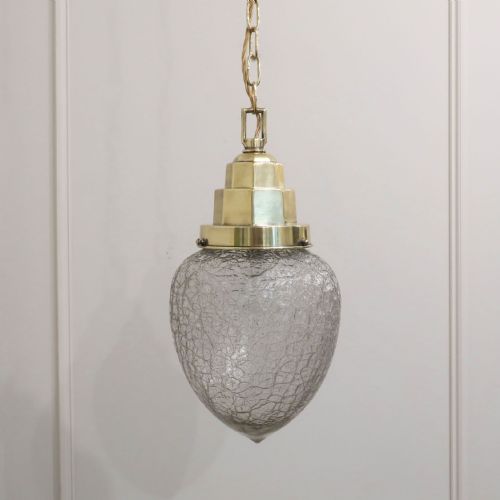
The prevalent forms range from simple pear-shaped opaline bodies to complex multi-light chandeliers and heavy hall lanterns. These pieces serve as functional overhead lighting while retaining distinct period geometry.
Materials and construction methods
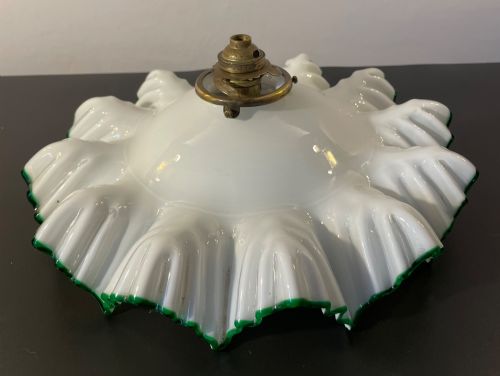
Makers formed the shades using frosted, opaline, opalescent, crackle, pink, green, and cut glass. These glass bodies diffuse light through textured surfaces, etched crystal, and opaque finishes.
Mounts and structural frames utilise brass, chrome, copper, nickel plated metal, bronze, and wrought iron. Metal components secure the glass shades via galleries, screws, and suspension chains.
Fish scale opaline glass brings an unexpected aquatic texture to otherwise severe industrial geometries.
Distinctions in manufacture and assembly
Superior examples display precise glass moulding with even thickness, crisp surface etching, and harmonious integration between the glass shade and its metal mount. Lesser items exhibit simpler, thinner glass forms with basic functional hardware.
The quality of a piece often rests on the weight and finish of the supporting metalwork, where solid brass or detailed bronze work outlasts lighter plated alternatives.
Émile-Jacques Ruhlmann·Jean Gauthier
The 1930s Glass Pendant Shade Glossary
- Slip shade
- A moulded glass panel that slots directly into a metal frame or chandelier basket. These shades form distinct geometric arrays around a central light source.
- Opaline glass
- A milky, semi-translucent white glass that softens and diffuses light evenly. It appears frequently in pear-shaped and fish scale pendant lights.
- Plafonnier
- A shallow ceiling light fixture where the glass shade sits flush against or close to the ceiling mount. These direct illumination outward and downward.
- Odeon style
- A stepped, cascading arrangement of glass panels reminiscent of cinema architecture from the period. This design creates layered reflections from interior bulbs.
1930s Glass Pendant Shade: Frequently Asked Questions
How do I hang a pendant shade?
These fixtures suspend from ceilings using original or adapted metal chains, rods, and ceiling roses. Wiring requires professional integration with modern electrical standards.
Ensure the ceiling structure supports the combined weight of the glass shade and metal framing, particularly for larger chandeliers and multi-light lanterns.
What rooms suit these ceiling lights?
Pendant shades provide primary or ambient illumination in hallways, living rooms, and dining spaces. Their downward light pattern suits central ceiling placements.
Smaller opaline and frosted shades work well in compact corridors, while larger multi-light chandeliers occupy high-ceilinged principal rooms.
How do I identify Art Deco lighting?
Art Deco lighting relies on symmetrical geometry, stepped forms, and stylized motifs executed in glass and metal. Look for moulded slip shades, frosted surfaces, and metal frames in brass or chrome.
The materials combine industrial metals with tactile glass treatments to create distinct period silhouettes.
Can I replace a broken glass shade?
Replacing a damaged shade requires matching the precise period style, fitter size, and glass opacity. Standard modern replacements rarely fit vintage galleries correctly.
Sourcing exact period replacements involves matching forms such as clam shells, slip shades, or opaline globes to existing hardware.