
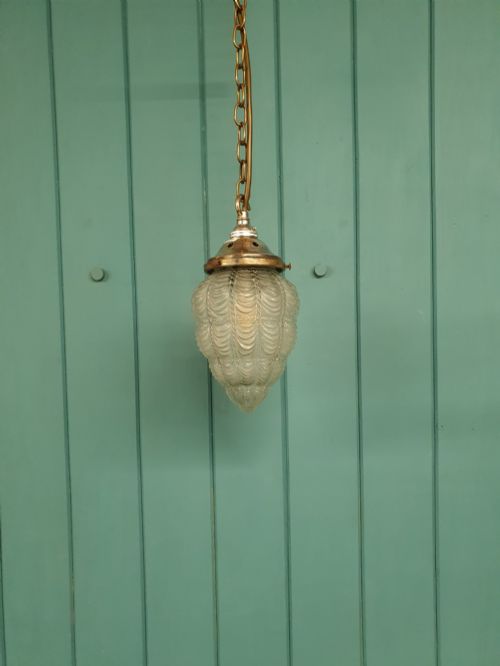


Moulded Glass Ceiling Light
A moulded glass ceiling light brings bright illumination and distinct period character to a room, drawing the eye upwards with textured bowls and shades.
Moulded Glass Ceiling Light
A moulded glass ceiling light spans several decades of domestic illumination, taking the form of pendants, flush plafonniers, and small hanging lamps. When you search for moulded glass ceiling light, you encounter fixtures designed to diffuse light evenly while adding architectural interest to a room.
The pieces represented here primarily date from the early twentieth century, taking shape through Edwardian and Art Deco movements. You meet everything from simple opaline fish scale pendants to elaborate slip shade designs and multi-arm chandeliers.
Forms range from compact single-bulb pendants to grand French multi-light fixtures bearing frosted, satin, and moulded floral motifs. Each version offers a distinct silhouette shaped by the prevailing taste of its decade of origin.
How they were made
Glass was shaped using pressing and moulding techniques to achieve thick, diffusing bowls and shades that softened harsh bulb glare. Makers utilised opaline, frosted, and satin glass surfaces to catch and scatter light across decorative patterns.
Metal components such as brass, chrome, copper, and bronze formed the structural galleries, fixings, and suspension chains that supported the heavy glass shades. Enamelling was also applied to select Edwardian pieces to add surface colour and pattern.
Materials recorded across the inventory include brass, chrome, copper, bronze, opaline glass, frosted glass, and satin glass.
What varies in quality
Quality rests in the crispness of the glass moulding and the depth of the decorative relief, where sharper details separate finer works from plain production. The weight and finish of the metal mounts, whether bronze, brass, or chrome, indicate the original standard of manufacture.
Named designs and works associated with specific glasshouses display superior artistic ambition through complex botanical or geometric motifs. The overall harmony between the glass shade and its original metal suspension hardware determines the integrity of the piece.
René Lalique·Jean Gauthier·Ezanville Ezan
The Moulded Glass Ceiling Light Glossary
- Plafonnier
- A ceiling light fixture mounted flush or close to the ceiling, typically featuring a large moulded glass bowl. These direct illumination outwards and downwards while sitting snugly against the plaster.
- Slip shade
- A moulded glass panel that slides into a metal frame on a ceiling fixture. Multiple shades usually fit together around a central frame to form the complete shade.
- Opaline glass
- A milky, semi-translucent glass that diffuses light softly without harsh glare. It was widely utilised for pendant lights during the early twentieth century.
- Satin glass
- Glass treated to achieve a velvety, non-reflective surface finish resembling satin fabric. This texture scatters light gently across moulded decorative motifs.
- Frosted glass
- Glass rendered opaque through acid-etching or sandblasting to obscure the bulb and soften illumination. It forms the primary medium for many Art Deco lighting designs.
Moulded Glass Ceiling Light: Frequently Asked Questions
What is a moulded glass ceiling light?
A moulded glass ceiling light is a hanging or flush-mounted lighting fixture featuring a decorative glass bowl or shade shaped in a mould. These pieces were designed to illuminate rooms while providing architectural and artistic detail overhead.
They appear in various forms, including simple pendants, slip shade fixtures, and multi-arm chandeliers from the early twentieth century.
How do I date a glass ceiling light?
Dating relies on stylistic clues, manufacturing techniques, and materials associated with specific decades like the 1910s, 1920s, or 1930s. Edwardian pieces often incorporate enamelling and traditional brass mounts, whereas Art Deco examples display geometric lines or stylised natural motifs.
Examining the type of glass, such as satin or opaline, alongside the metal alloys used in the hardware helps narrow down the period of production.
Were these lights used in specific rooms?
These fixtures hung in hallways, dining rooms, and principal living spaces where decorative overhead lighting was desired. Their diffusing glass shades provided practical illumination without exposing the bright lightbulb directly to view.
Smaller pendant versions suited compact spaces, while larger chandeliers and plafonniers illuminated expansive reception rooms.
How do I live with antique glass lighting?
Living with antique glass lighting involves pairing period fixtures with modern electrical wiring and appropriate bulb wattages for safety and ambiance. Regular dusting with a soft cloth keeps the moulded glass surfaces clear and maintains their light-diffusing properties.
Consider the hanging height carefully to ensure the fixture complements the proportions and traffic flow of your room.
What distinguishes Art Deco ceiling lights?
Art Deco ceiling lights feature bold geometric patterns, stylised floral motifs like clamshells and dahlias, and symmetrical arrangements. The glass is frequently heavy, frosted, or moulded into slip shades held within metal frames of bronze, chrome, or copper.
These designs reflect the modern industrial and artistic tastes of the 1920s and 1930s.