




Opaline Glass Hanging Shade
These opaline glass hanging shade pieces bring diffused, milky light and clean period character to a room.
Opaline Glass Hanging Shade
An opaline glass hanging shade is a ceiling-suspended lighting fixture designed to diffuse illumination evenly across a space. Buyers searching for an opaline glass hanging shade encounter pendant lights and ceiling lights dating from the early twentieth century, specifically the 1910s, 1920s and 1930s.
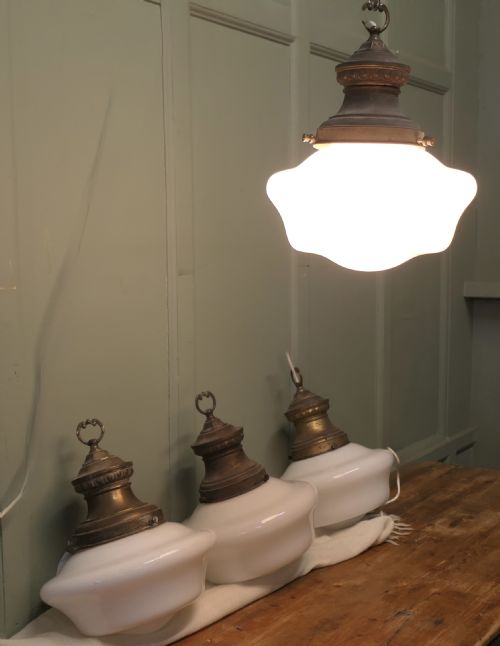
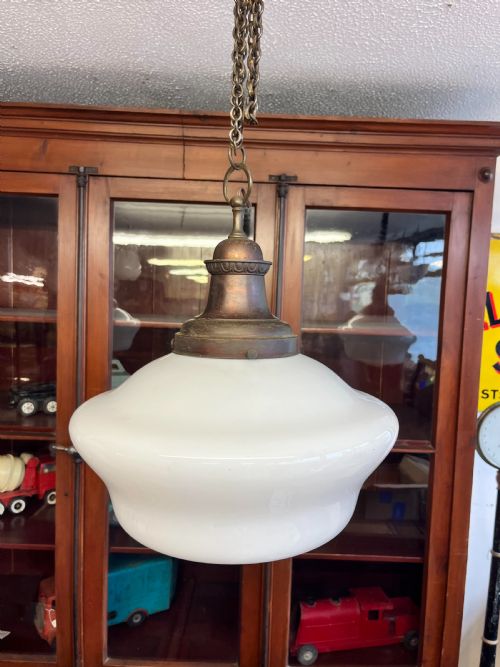
The most common forms on this page include conical, pear-shaped and reeded pendants alongside larger industrial and chapel fixtures. These pieces originate from distinct design movements, incorporating Victorian, Edwardian, Art Nouveau, Art Deco and Mid-Century Modern styles.
How they were made
The shades are formed from opaline glass, prized for its dense, opaque quality that softens the glare of a bulb. This glass is paired with hardware fashioned from brass, bronze, chrome, and painted metal.
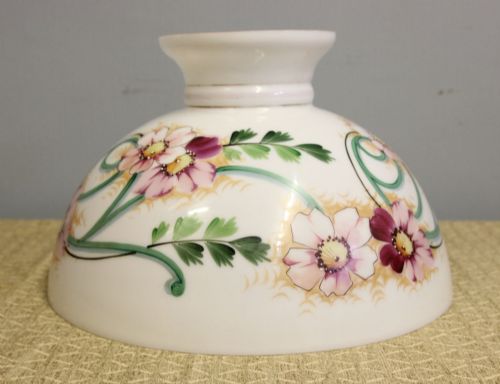
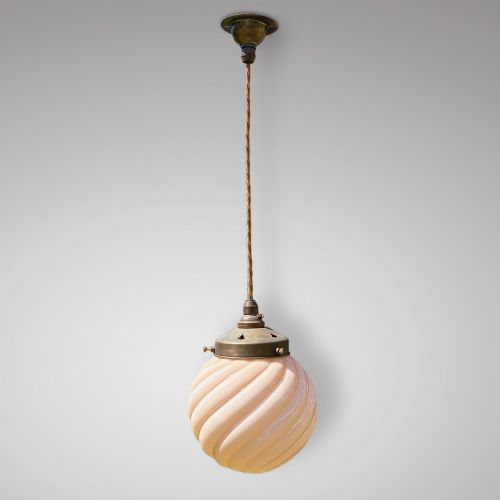
Some examples feature applied enamel decoration or hand-painted details on the glass surface. Wiring components often utilise fabric flex to suspend the shade from the ceiling.
Listings span the 1910s, 1920s and 1930s, uniting Art Deco, Victorian, Industrial and Art Nouveau styles under opaline glass and brass.
What varies in quality
Quality in an opaline glass hanging shade is found in the weight and consistency of the glass itself, where an even density ensures a uniform glow when illuminated. The refinement of the glass moulding, whether smooth, reeded, or fish-scale, dictates the sophistication of the piece.
The secondary materials also define the standard of the object, with solid brass or bronze galleries and fitters marking a higher tier of production than standard metal or chrome alternatives. Painted or enamelled decoration executed with precise brushwork elevates the piece above simpler, plain glass versions.
The Opaline Glass Hanging Shade Glossary
- Opaline glass
- A milky, translucent glass developed to diffuse light without harsh glare. It contains bone ash or other agents to achieve its characteristic opaque appearance.
- Pendant light
- A solitary light fixture suspended from the ceiling by a cord, chain, or metal rod. This form directs illumination downward into the space.
- Reeded
- Surface decoration consisting of parallel, raised ridges running vertically along the glass or metal. This technique adds texture and catches the light.
- Plafonnier
- A ceiling-mounted light fixture where the shade sits flush or very close to the ceiling surface. It originates from French interior design vocabulary.
- Gallery
- The metal ring or collar that grips the top of the glass shade and connects it to the suspension wiring. Better examples utilise cast brass or bronze.
Opaline Glass Hanging Shade: Frequently Asked Questions
What is an opaline glass hanging shade?
An opaline glass hanging shade is a ceiling light featuring an opaque, milky glass diffuser suspended by flex, chain or metal. These fixtures soften interior lighting while adding distinct period character.
They appear in various silhouettes, including conical, pear-shaped and reeded designs, spanning the early decades of the twentieth century.
How were these shades used?
These fixtures served as functional overhead lighting in homes, hallways, chapels and industrial spaces. Their primary role was to cast a diffused, glare-free glow across domestic and commercial interiors.
Over time, many were adapted from oil or early electric fittings to modern standard electrical suspensions while retaining their original glass shades.
How do I style an opaline pendant?
Opaline pendants suit both traditional and contemporary interiors due to their clean, neutral white glass and simple geometric forms. They work particularly well suspended over kitchen islands, dining tables or within hallways.
Pairing them with period metalwork like brass or bronze enhances their historical aesthetic, whereas chrome creates a cleaner look.
How do I date an opaline shade?
Dating relies on stylistic clues and construction methods inherent to specific decades between 1910 and 1930. Art Nouveau and Edwardian examples often feature softer, organic forms, while 1920s and 1930s pieces lean towards Art Deco geometry and industrial utility.
Hardware materials such as fabric flex, brass galleries, and painted details also offer chronological markers for each piece.