




Vintage Opaline Light Fixture
A vintage opaline light fixture brings a soft, diffused glow to a room through milky glass paired with brass, bronze, chrome, or metal.
Vintage Opaline Light Fixture
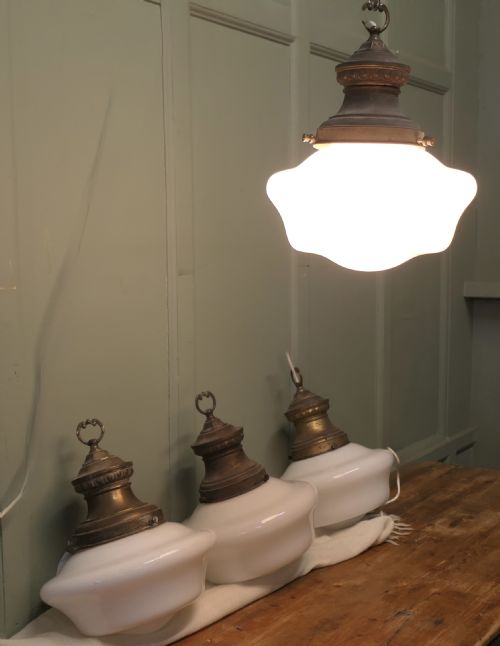
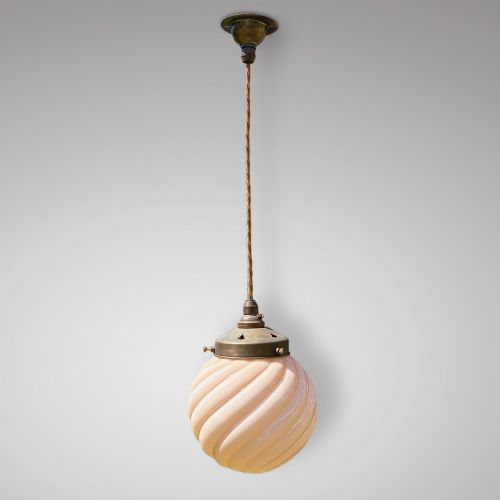
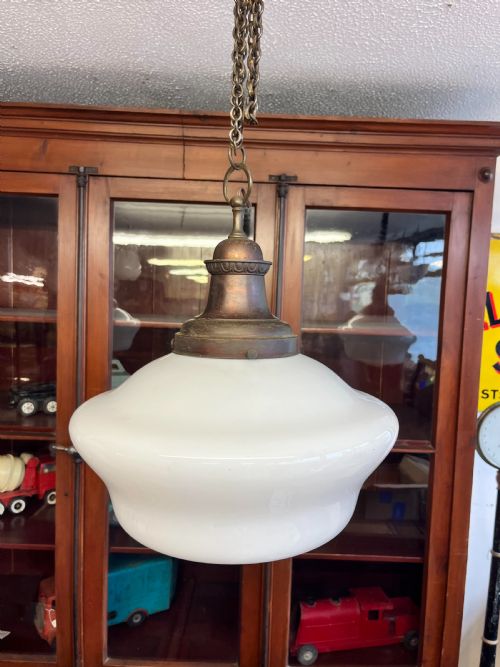
When you search for a vintage opaline light fixture, you look at pendant lights, ceiling lights, table lamps, and chandeliers spanning the Victorian era through the 1930s. The selection on this page shows pieces ranging from the 1860s to 1930, taking forms such as chapel lights, fish scale pendants, reeded designs, and pear shapes.
The version you are most likely to meet on this page is a pendant light or ceiling light from the 1920s or 1930s. These industrial and Art Deco pieces use milk glass shades paired with brass or metal components, reflecting the utility and style of early twentieth-century lighting.
Earlier examples also appear among the listings, including Victorian and Edwardian pieces like tall brass-mounted table lamps and enameled ceiling lamps. Styles stretch from Gothic Revival and Art Nouveau to industrial and mid-century modern interpretations.
How they were made
The construction of these fixtures relies primarily on opaline glass formed into shades, globes, and pendants, sometimes featuring hand-painted decoration or reeded and fish scale surface patterns. Glassmakers achieved the opaque, milky quality of opaline through specific mineral additions during production.
Metal components such as brass, bronze, chrome, and iron provide the structural support, galleries, and mounts for the glass shades. Wiring and suspension utilise materials like fabric flex to connect the fixtures safely to ceilings and tables.
Listings span from Victorian 1860 pieces to 1930 industrial designs, utilising opaline glass, brass, bronze, chrome, and fabric flex.
What varies in quality
The standard of a fixture rests on the weight and uniformity of the opaline glass shade, alongside the casting and finish of the metal mounts in brass, bronze, or chrome. Thicker glass with even opacities and crisply moulded details sit at the higher end.
The complexity of the design also separates examples, such as hand-painted details on Victorian oil lamps or reeded and fish scale surface mouldings on Art Deco pendants compared to plain utility shades.
The Vintage Opaline Light Fixture Glossary
- Opaline glass
- A type of semi-opaque glass with a milky appearance, used extensively for lighting shades and globes to diffuse light evenly. It can appear in white or tinted variations.
- Pendant light
- A hanging light fixture suspended from the ceiling by a cord, chain, or metal rod. These often feature a single opaline shade directing light downwards.
- Reeded design
- A surface pattern of parallel raised ridges running vertically along the glass shade. This technique adds texture and refracts the light.
- Art Deco
- A design style prevalent in the 1920s and 1930s characterised by geometric shapes, clean lines, and stylised motifs. Fixtures from this period often balance industrial utility with decorative elegance.
Vintage Opaline Light Fixture: Frequently Asked Questions
What periods do these lights come from?
The listings span from the Victorian period in the 1860s through the Edwardian era, 1910, 1920, and up to 1930. Art Deco, industrial, and Gothic Revival styles appear across these decades.
Earlier examples include mid-Victorian oil lamps, while the later pieces lean towards industrial pendant lighting and chapel lights.
How were opaline fixtures used originally?
These fixtures served practical lighting needs in homes, institutions, and industrial spaces. Pendant lights illuminated large rooms and workspaces, while chapel lights provided functional illumination for high ceilings.
Table lamps and paraffin oil lamps lit smaller domestic spaces before widespread electrical conversion, sitting on desks and side tables.
What metals are paired with the glass?
Brass and bronze are the most common metals used for mounts, galleries, and bases. Chrome and standard metal finishes also appear on industrial and later period pieces.
Fabric flex is utilised for the suspension cords on hanging pendant lights and ceiling fixtures.
How do I identify an Art Deco pendant?
Art Deco pendants typically date from the 1920s and feature geometric forms, stepped shapes, or clean lines. They often combine opaline glass shades with metal or chrome galleries.
Specific patterns like fish scale or reeded designs also point towards this era's decorative preferences.