



1930s Glass Desk Lamp
A 1930s glass desk lamp brings distinct period illumination to a workspace, combining functional light with striking modernist design.
1930s Glass Desk Lamp
When you search for a 1930s glass desk lamp, you encounter task lighting shaped by the dominant Art Deco aesthetic of the era. The pieces available here span table and desk forms created across the 1920s, 1930s and 1940s, originating primarily from British and continental European workshops.
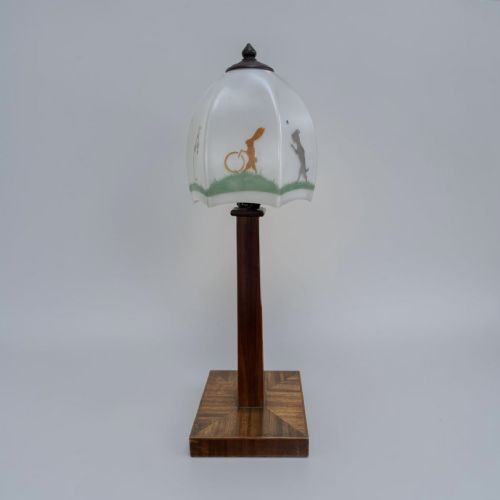
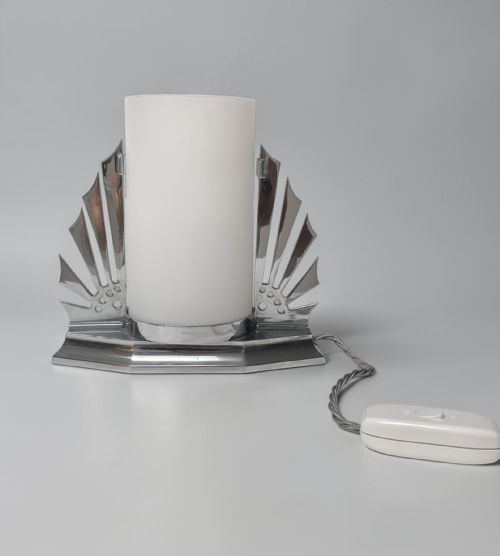
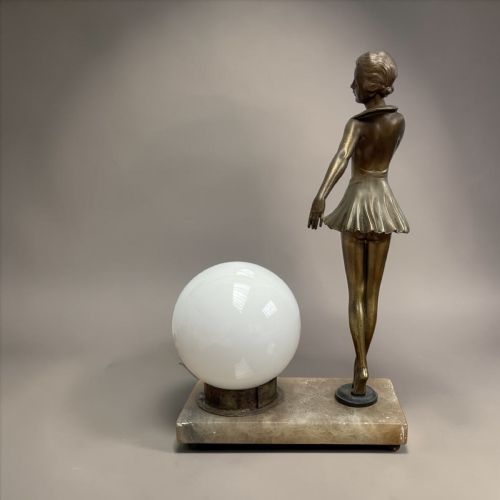
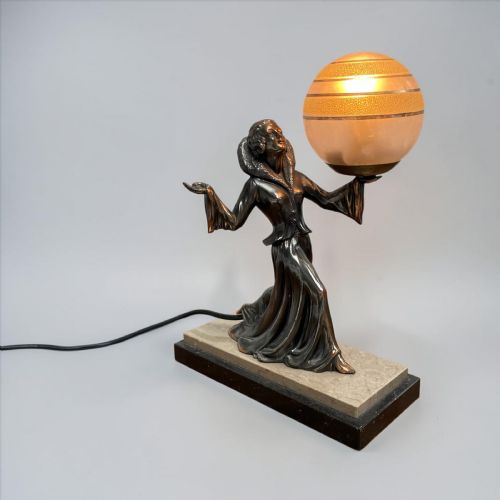
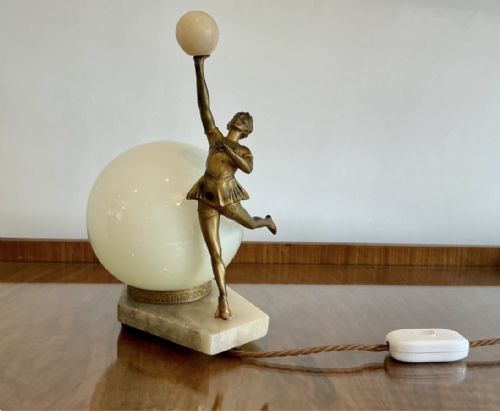
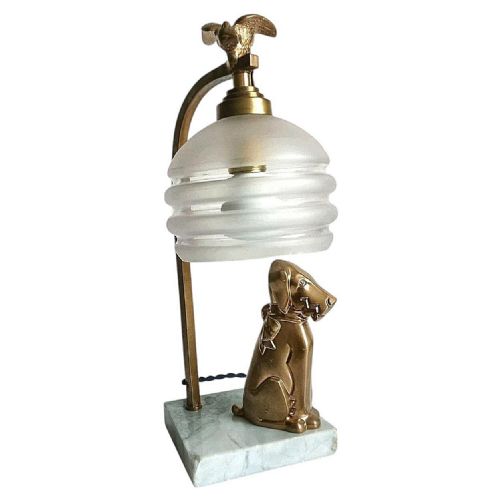
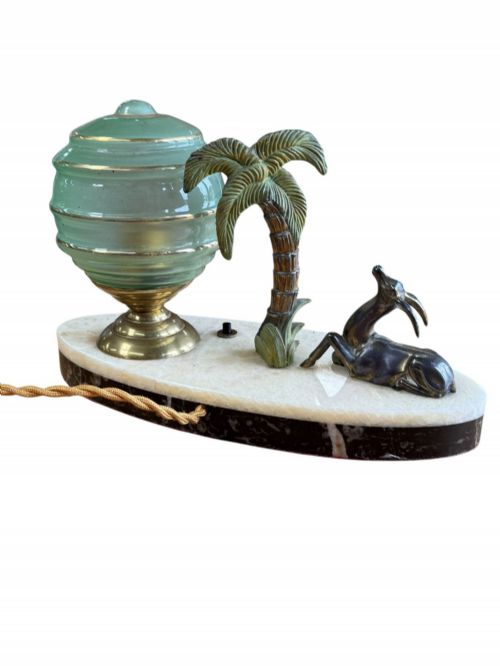
The most frequent variations combine glass shades with substantial bases of marble, chrome, brass or wrought iron. You will regularly find figural designs featuring nude ladies, athletes or animals integrated into the structure, alongside geometric pieces with stepped or zig zag lighting flash motifs.
Materials and construction
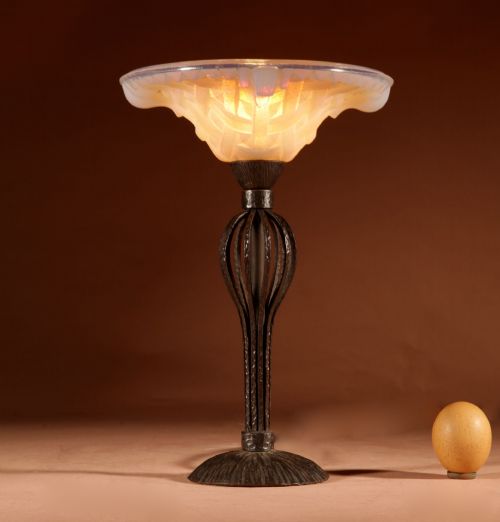
Makers utilised moulded, opalescent, frosted, cut crystal and peach glass for the shades and bodies, often pairing them with heavy metal fittings. Bases were cast in bronze, spelter or brass, or carved from solid marble to anchor the weight of the glass components.
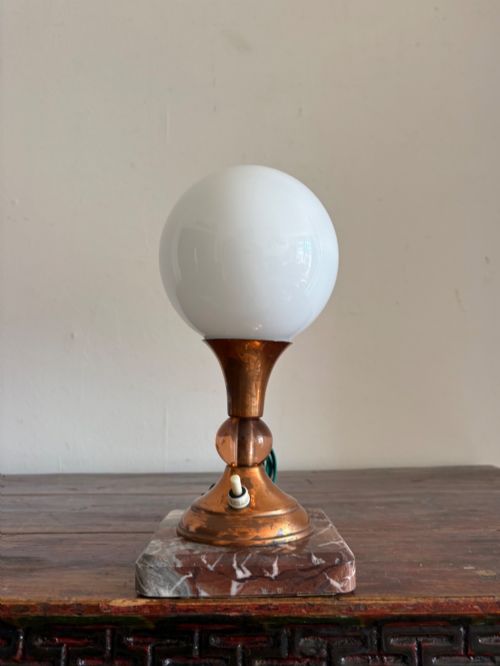
Structural elements frequently incorporated polished chrome, nickel and bakelite, particularly in the later French and English designs. Wrought iron and copper also appear extensively as supporting armatures for specialised opaline and coloured glass diffusers.
Listings feature glass, chrome, marble, brass, spelter, metal and bronze across table lamps, desk lamps and novelty figural designs.
Assessing quality in period lighting
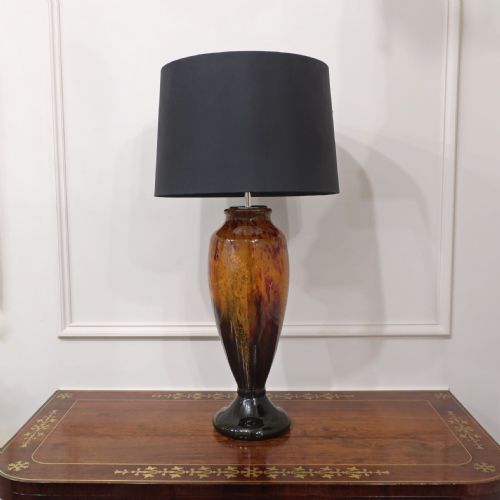
Quality rests upon the purity and depth of the glasswork, particularly in pieces featuring specialised coloured, opalescent or mottled treatments from major glasshouses. The substance of the base materials - such as dense veined marble versus lighter metals - determines the overall stability and proportion of the lamp.
The refinement of the casting in figural and geometric metal elements separates standard production items from finer studio pieces. Precision in the joinery between metal mounts and glass components indicates the original maker's standard of execution.
Fratelli Toso·Charles Schneider·Lacroix·Lalique·Eileen Grey·Daum·Muller Bros·Degue·Karl Palda·Walther and Sohne
The 1930s Glass Desk Lamp Glossary
- Opalescent glass
- Glass containing agents that create a milky, translucent appearance with subtle colour shifts when lit. This technique was favoured by leading French makers to diffuse task lighting softly.
- Spelter
- A zinc alloy commonly utilised as a cost-effective substitute for bronze in decorative base castings. It accepts patination well to simulate heavier metals.
- Mottled glass
- Glass displaying a patchy or speckled multicoloured surface pattern. It creates a warm, uneven glow characteristic of interwar interior lighting.
- Bakelite
- An early synthetic thermosetting plastic frequently employed for switches, bases and body accents. Its deep dark lustre defines mid-century electrical fittings.
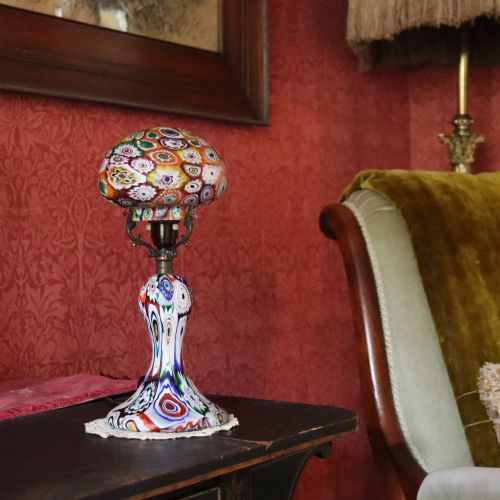
- Millefiori
- Glasswork featuring multicoloured flower-like patterns embedded within the material. This traditional technique appears in specialised Italian studio lamps.
1930s Glass Desk Lamp: Frequently Asked Questions
Are these vintage lamps safe for daily desk use?
Many surviving pieces retain their original internal wiring, which often requires professional rewiring to meet modern safety standards before regular daily use. A qualified electrician can update the cord and plug while preserving the historical lamp housing and switch.
Consider using low-heat LED bulbs to protect delicate antique glass shades from thermal stress over extended periods of illumination.
How can I tell a French Art Deco lamp apart?
French pieces from this era frequently emphasise artistic glass shades paired with wrought iron, nickel or marble supports. Look for signature signatures or attribution marks on the glass body or metal mounts from prominent studios.
Subject matter often includes sophisticated figural studies, such as dancers and animals, executed with a high degree of stylised abstraction.
What is the difference between a table lamp and a desk lamp?
Desk lamps from this period were specifically engineered to project focused light downward onto a workspace surface. They often feature adjustable arms or directional shades designed for reading and writing tasks.
Table lamps generally provide ambient illumination across a wider room area, utilising decorative bases and symmetrical shades rather than directional task mechanisms.