


Vintage Geometric Light Fixture
These vintage geometric light fixture examples bring bold lines and striking silhouettes straight from the early twentieth century into modern spaces.
Vintage Geometric Light Fixture
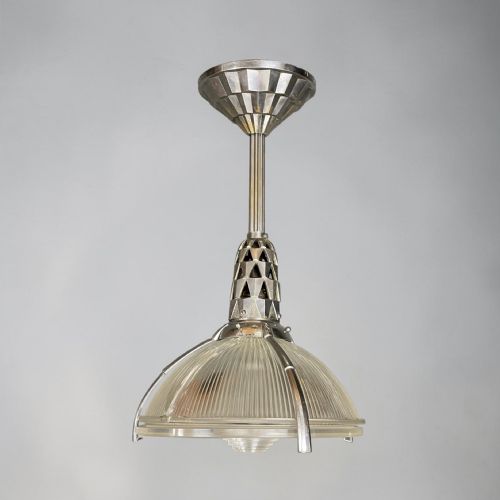
When you search for a vintage geometric light fixture, you are looking at lighting from the early twentieth century, particularly the 1900s, 1920s, and 1930s. The selection on this page leans heavily into the Art Deco period alongside Amsterdam School and early twentieth century styles, presenting strong angular forms and symmetry.
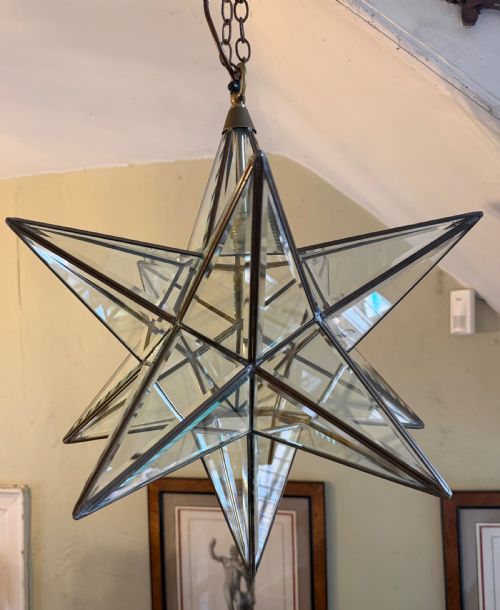
The objects take various functional forms across the inventory, ranging from pendant lights and ceiling lighting to wall lights, table lamps, and chandeliers. Hanging lanterns and multi-point star lanterns also appear frequently among the options.
How they were made
Maker construction relies heavily on metal framing paired with glass elements. Brass, chrome, copper, steel, bronze, wrought iron, and nickel-plated metal form the structural cages and wall mounts.
Lighting components utilise frosted glass, bevelled glass, and opaque glass panes. Fabric also appears as an element, while hand-chased copper demonstrates detailed metalwork techniques.
What varies in quality
Quality separates along the precision of the metalwork and the finish of the glass components. Hand-chased copper and heavy cast bronze or wrought iron indicate superior craftsmanship compared to simpler folded metal.
The integration of specialist glass, such as bevelled or heavily frosted panels within a brass or chrome frame, defines the upper tier of these lighting designs.
Émile-Jacques Ruhlmann·Karl Palda
The Vintage Geometric Light Fixture Glossary
- Art Deco
- A design style dominant in the 1920s and 1930s characterised by sleek geometric shapes and stylised motifs. It forms the backbone of the geometric lighting aesthetic.
- Amsterdam School
- An architectural and design movement from the early twentieth century known for expressionist brickwork and elaborate metal detailing. It contributes handcrafted copper elements to this category.
- Frosted glass
- Glass treated to create a translucent surface that diffuses light evenly. It provides a soft glow while concealing the bulb within geometric lanterns.
- Chandelier
- A branched ornamental light fixture suspended from a ceiling. Smaller examples in chrome appear within the Art Deco selections.
Vintage Geometric Light Fixture: Frequently Asked Questions
What periods do these geometric lights come from?
The pieces originate from the early twentieth century, spanning the 1900s, 1920s, and 1930s. This era covers the rise of Art Deco and Amsterdam School design.
Most items date specifically from the interwar decades when geometric symmetry and industrial materials defined interior lighting.
What materials were used for these fixtures?
Constructors built these lights using a combination of metals and glass. Common structural materials include brass, chrome, copper, steel, bronze, wrought iron, and nickel-plated metal.
These metal frames house frosted, opaque, or bevelled glass panels to diffuse the illumination.
How do I choose between a pendant and a wall light?
Pendant lights and chandeliers hang from the ceiling to serve as central room illumination. They work best in spaces with adequate vertical clearance.
Wall lights mount directly to vertical surfaces, providing directional or ambient accent lighting along hallways and living areas.
How do I identify an Art Deco geometric light?
Art Deco lighting relies on strict symmetry, stepped forms, and clean angular lines. You will see strong shapes like triangles, polygons, and star formations.
The combination of polished chrome or brass with frosted glass panels is a reliable indicator of this aesthetic.