
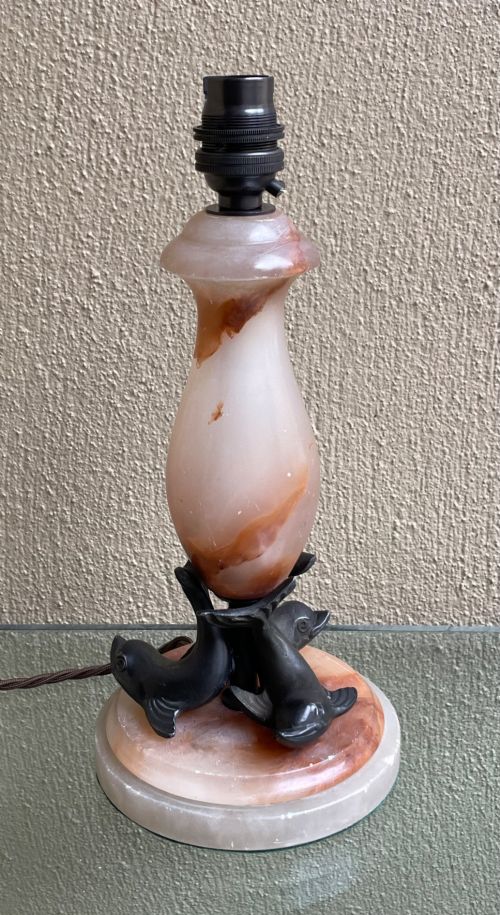


Pink Art Deco Table Lamp
These pink art deco table lamps bring period colour and geometric light to interiors through glass, chrome and marble.
Pink Art Deco Table Lamp
A pink art deco table lamp brings period colour and form to an interior, drawing on designs from the nineteen-twenties and nineteen-thirties. You will most frequently meet pieces combining pink glass shades with chrome or marble bases.
The selection includes dining carriage lights, mood lamps, and perfume lamps alongside standard table configurations. Materials range from frosted peach glass to polished alabaster and patinated metal.
Origin points span French workshops and British homes, capturing the international reach of the style. Each example utilises the characteristic geometric lines and industrial metals of the interwar period.
Materials and construction
Makers combined pressed or frosted glass with structural metals like chrome, brass, and patinated spelter. Glass shades delivered the pink hue through mineral additives in the melt, producing peach and rose tones.
Heavy stone bases in marble, onyx, and alabaster provided stability for the upward-reaching lamp bodies. Metal components were cast, turned, and plated to achieve the sleek metallic finishes demanded by the style.
The archive records pieces featuring animal figures such as elephants alongside geometric dining carriage lights.
Assessing quality
Quality rests on the integrity of the materials and the sophistication of the moulding. Heavy marble bases and thick, evenly tinted glass shades demonstrate superior manufacturing over lighter alternatives.
The harmony between the metal mounts and the glass elements dictates the success of the design. Original surface patination on chrome and bronze parts distinguishes untouched examples from later alterations.
Argilor Paris·Walther and Sohne
The Pink Art Deco Table Lamp Glossary
- Spelter
- A zinc alloy frequently used as a base metal for cast figures and decorative mounts in interwar lighting. It was often electroplated to resemble bronze or brass.
- Alabaster
- A fine-grained translucent stone used for carved lamp bases and shades. It diffuses light with a soft, warm glow.
- Onyx
- A banded variety of chalcedony employed for heavy, decorative plinths. Its natural striping provides varied colour and pattern.
- Frosted glass
- Glass treated by acid-etching or sandblasting to create a matte surface. This technique softens the glare from the bulb and enhances pink colouration.
- Patinated metal
- Metal surfaces showing a natural or chemical ageing process. This coloration adds depth and character to the lamp components.
Pink Art Deco Table Lamp: Frequently Asked Questions
How do I date a pink art deco table lamp?
Dating relies on stylistic markers and material combinations typical of the interwar decades. Lamps from this era utilise specific mould profiles and metal platings characteristic of the period.
Examination of the wiring methods, lamp holders, and base construction helps narrow the production window between the nineteen-twenties and nineteen-thirties.
Are these lamps wired for modern use?
Many surviving examples undergo professional rewiring to meet contemporary safety standards. This ensures the internal components function correctly with modern plug sockets.
Rewired pieces often retain their original bulb holders and switches to preserve historical integrity while offering safe daily operation.
What rooms suit a pink glass lamp?
The warm pink tones and geometric silhouettes suit living spaces, bedrooms, and studies requiring accent lighting. They function effectively on sideboards, desks, and bedside tables.
These lamps provide both functional task light and decorative ambient colour, anchoring an interior scheme inspired by interwar design.
How should I clean a vintage glass shade?
Cleaning requires gentle washing with lukewarm water and mild soap to protect the delicate tinted surface. A soft cloth prevents scratching on pressed or frosted glass elements.
Harsh chemical cleaners must be avoided, particularly around painted or patinated metal mounts attached to the glass.