



1930s French Metal Figure
These 1930s French metal figure works capture the sleek spirit of Art Deco through dancers, animals, and mythological subjects.
1930s French Metal Figure
A 1930s French metal figure brings the bold geometries and fluid movement of the Art Deco style straight into domestic spaces. Collectors searching this phrase encounter sculptural objects, bookends, mantel clocks, and table lamps that merge decorative arts with figurative design.
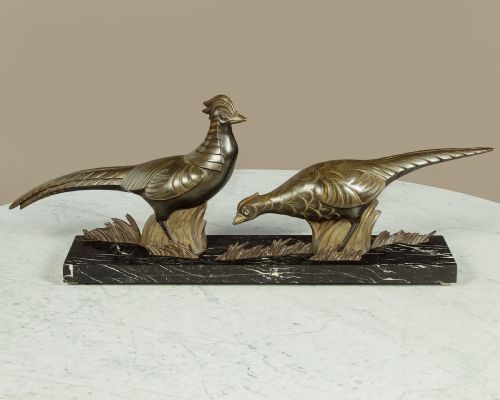
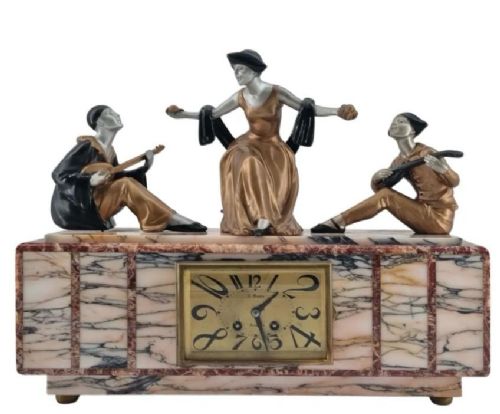
The version most commonly met on this page is the spelter figure mounted on a heavy marble or onyx base. These pieces typically depict dancers, wild animals such as panthers and pheasants, or figurative groups like Diana the Huntress and Pierrot and Columbine.
Makers and sculptors of the period utilised base metals to create affordable luxury for the modern interior. The resulting sculptures and bookends rely on contrasting textures between the patinated metal subject and the stone plinth underneath.
Materials and Construction
Foundry workers cast these figures primarily in spelter, a zinc alloy often finished with patination or metallic paint to resemble bronze. Bronze pieces also appear alongside rarer chrome finishes, while glass and brass serve as secondary elements in lamps and night lights.
Foundations rely on dense natural stone, with polished marble and onyx cut into geometric slabs to support the weight of the metal figures. Wooden elements occasionally provide structural plinths or bases for figurative groups.
Casting techniques allowed workshops to capture intricate details in dancers' garments and animal pelts before mounting the metal components securely to their stone bases.
Golden pheasants and prowling panthers prove that 1930s French metalworkers loved exotic wildlife just as much as elegant dancing ladies.
Distinguishing Quality
Quality rests upon the crispness of the metal casting and the depth of the original patination. Finer examples retain complex surface textures and subtle polychrome finishes rather than flat, uniform paint.
The choice and execution of the base distinguish higher grade pieces from standard productions. Thick, beautifully grained marble and onyx plinths cut to complement the silhouette of the sculpture elevate the overall presence of the object.
P. Sega·H. Bal·Michel Decoux·Geo Maxim
The 1930s French Metal Figure Glossary
- Spelter
- A zinc-based alloy commonly used as a cost-effective alternative to bronze in the creation of decorative sculptures and bookends. It accepts patination and metallic paint readily.
- Patina
- The surface sheen or coloration developed naturally over time or applied chemically during manufacture to enhance the visual depth of metal figures.
- Onyx
- A banded variety of chalcedony utilised extensively as a heavy, decorative base material for Art Deco clocks, lamps, and bookends.
- Art Deco
- The dominant design style of the interwar period characterised by streamlined shapes, stylized figurative forms, and modern geometric patterns.
- Plinth
- The heavy stone or marble block upon which a metal figure or bookend pair is securely mounted for display.
1930s French Metal Figure: Frequently Asked Questions
What metals are these figures made from?
The listings predominantly feature spelter, a zinc alloy favoured by interwar French foundries for its ability to hold fine casting details. Bronze and chromed metal also appear among the selections.
Founders applied patination, paint, or metallic finishes to the surface of these metals to simulate the appearance of precious materials and provide contrast against the stone bases.
How were these figures used originally?
Many of these metal works served practical domestic functions alongside their decorative appeal. They were incorporated into bookends, mantel clocks, and table lamps to bring modern design into sitting rooms.
Larger standalone sculptures and figural groups functioned purely as focal points for sideboards and mantelpieces during the interwar period.
How do I identify Art Deco style?
Art Deco design emphasises stylized proportions, dynamic movement, and clean geometric lines. Figures often depict dancers, slender female archetypes, or sleek predatory animals like panthers.
The materials themselves, particularly the combination of patinated metal with contrasting marble or onyx plinths, define the aesthetic of the era.
Why are marble and onyx used for bases?
Heavy stone bases provided essential structural stability for top-heavy metal sculptures and functional bookends. Marble and onyx also offered a luxurious weight and polished finish that complemented industrial metalwork.
Cutting the stone into geometric slabs reinforced the modern architectural themes popular in French interior design during the period.