



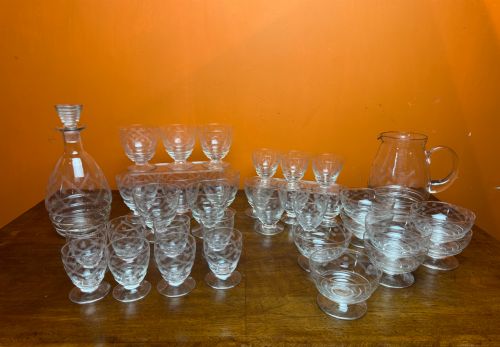
1930s French Art Glass
These pieces of 1930s french art glass bring tactile moulded forms and opalescent depth to any interior through period lighting, vases and bowls.
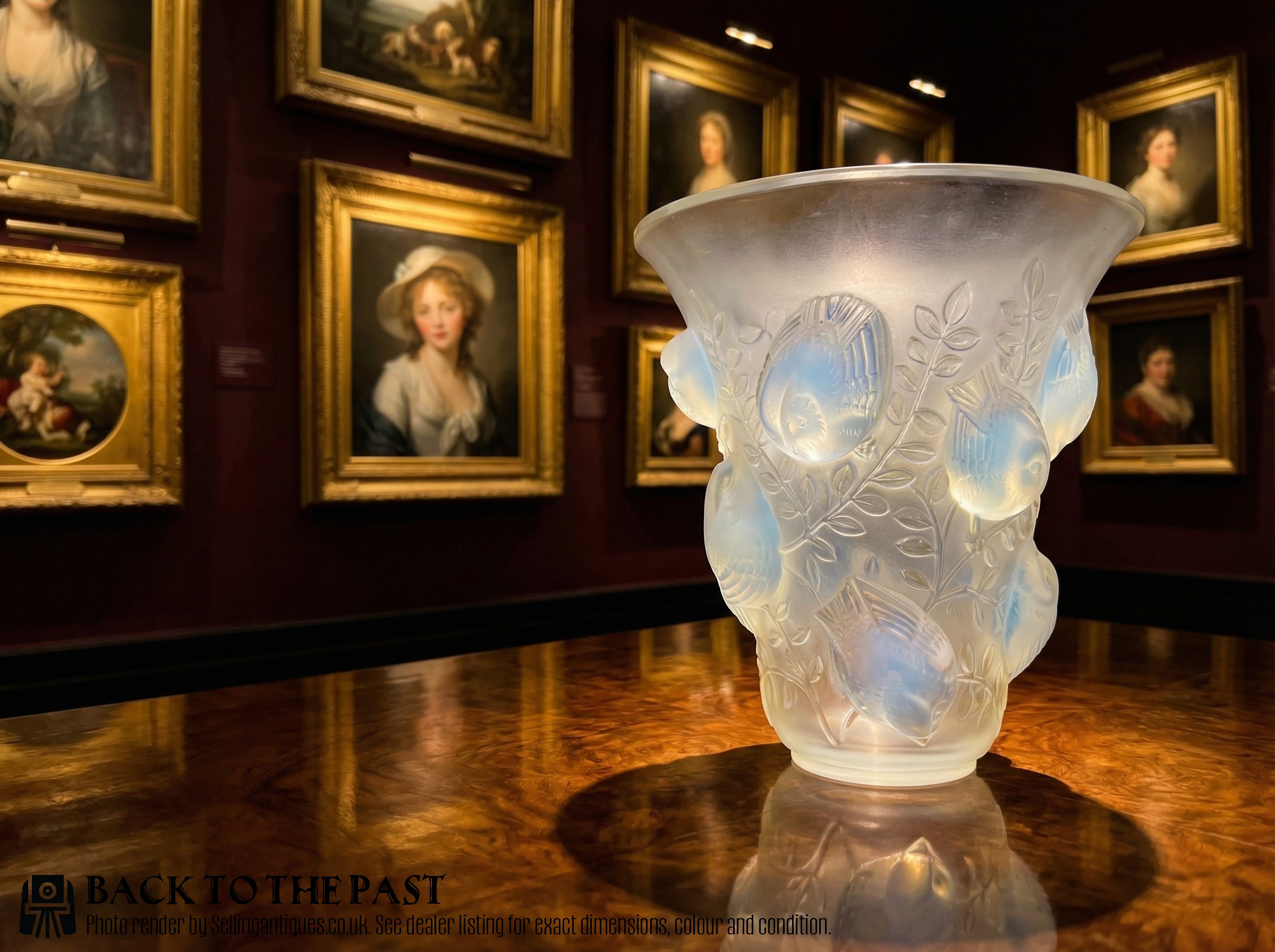
1930s French Art Glass
When you search for 1930s french art glass, you encounter functional and decorative vessels from an era defined by bold geometric silhouettes and sculptural glassmaking. The selection spans heavy opalescent bowls, deeply etched vases and delicate perfume bottles created during the height of the Art Deco movement.
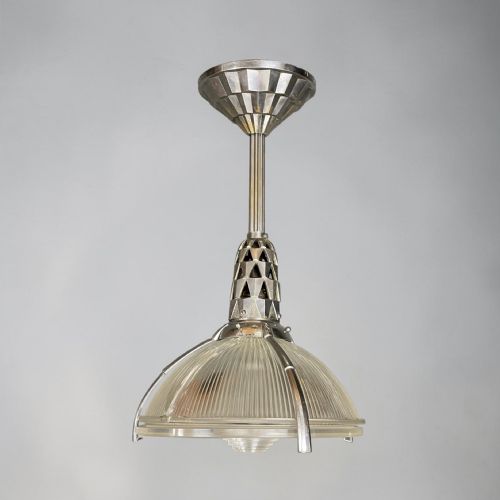
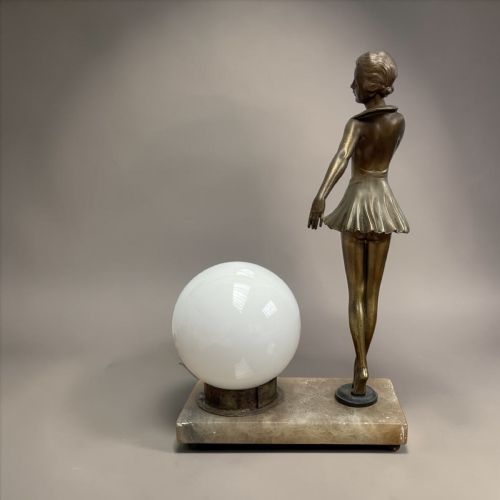
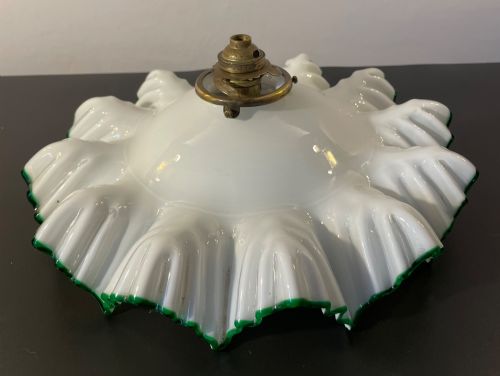
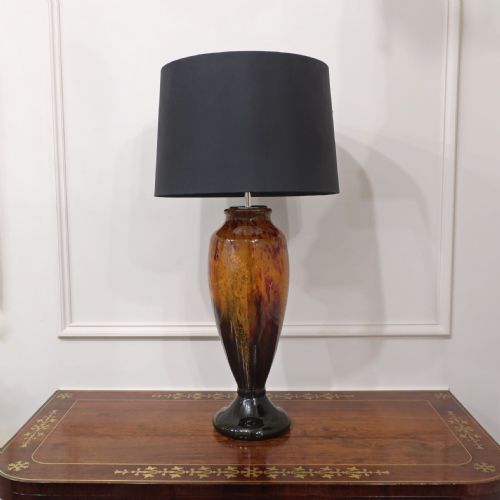
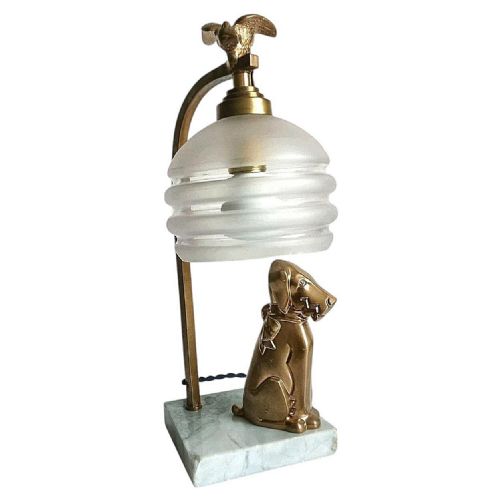
Vases, chargers and figurines form the core of these listings, often paired with mounts of wrought iron, brass or marble. Table lamps and wall lights also appear frequently, combining coloured glass shades with metal bases.
Originating predominantly from French workshops and major glasshouses, these objects reflect the transition from ornate floral motifs to streamlined modernism. The forms demonstrate a heavy reliance on moulded and frosted techniques designed to catch light.
Materials and Technique
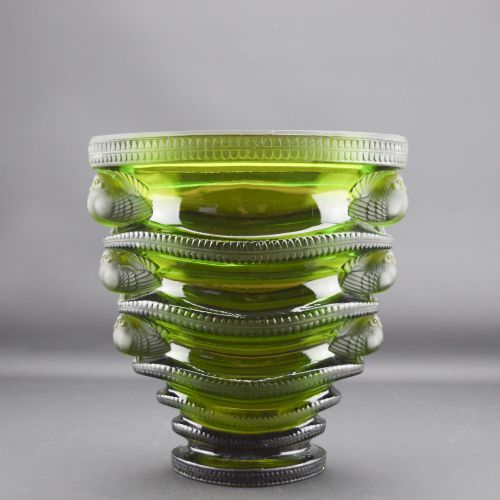
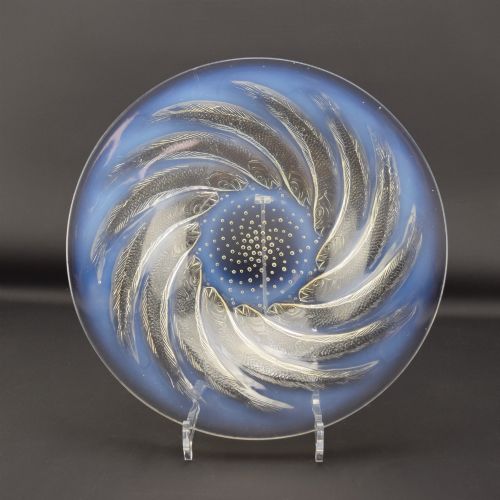
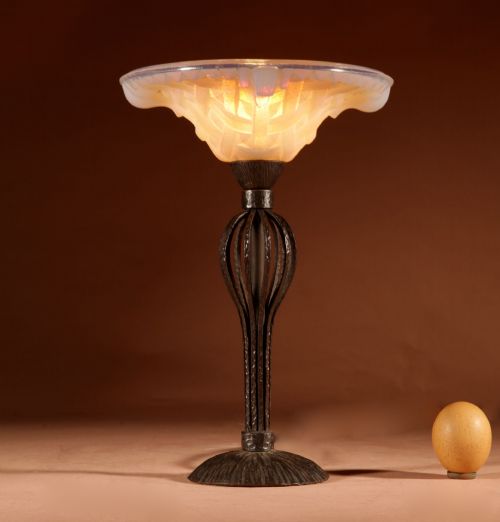
Makers utilised heavy moulding processes to achieve thick-walled vessels with high relief decoration, often finishing the pieces with acid etching, hand cutting or staining. Opalescent glass dominates the medium, scattering light to shift between milky white and pale blue depending on the angle.
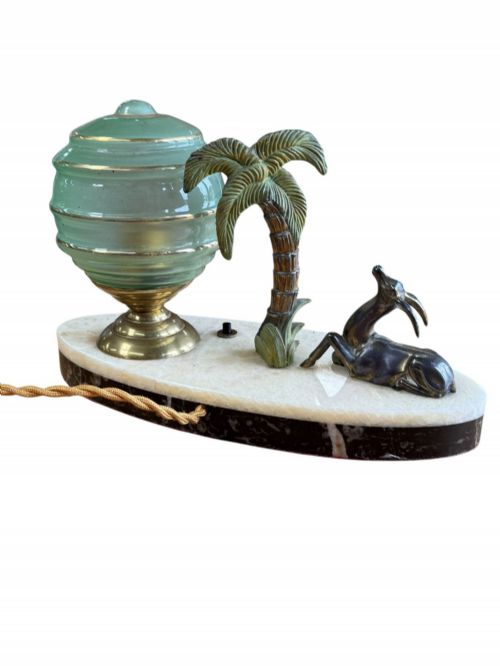
Wrought iron and brass serve as structural supports for many of the glass shades and bowls, anchoring the fragile vessels in robust metal armatures. Marble bases provide weight and contrast to the lustrous surfaces of the glass and metal components.
Listings feature items spanning the 1920s to the 1940s, with moulded glass, frosted glass and wrought iron appearing as dominant materials.
Factors of Quality
Depth of relief and clarity of the moulding separate standard production items from masterworks. Superior pieces display crisp undercutting in the glass design and subtle manipulation of colour gradients rather than flat opacity.
The integration of mixed media dictates the standard of the whole object, where the joinery of wrought iron or brass mounts matches the artistic ambition of the glass vessel itself. Well-preserved original surfaces without extensive wear on the high points of the relief indicate careful preservation.
Rene Lalique·Daum·Jean Luce·G Vallon·Etling·Jaz
The 1930s French Art Glass Glossary
- Opalescent glass
- Glass that diffuses light and appears milky with highlights of blue or amber. This visual effect relies on chemical agents added during the melting process.
- Coupe ouverte
- An open bowl or shallow vessel designed for display or table use. These pieces often feature high-relief moulding along the exterior rim.
- Frosted glass
- Glass treated to achieve a matte, non-reflective surface texture through acid etching or sandblasting. The technique accentuates sculptural details by softening harsh light.
- Etched glass
- Glass decorated by applying acid to carve designs into the smooth surface. Deeper cutting creates dramatic shadow contrasts across the pattern.
1930s French Art Glass: Frequently Asked Questions
What is opalescent glass?
Opalescent glass contains ingredients that scatter light, creating a milky translucent appearance with distinct blue or amber highlights when illuminated from the front.
This optical quality made it a favourite material for French designers seeking to add depth and movement to sculptural vessels and lighting shades.
How do I clean these glass items?
Clean these pieces gently using warm water and a mild detergent, avoiding harsh abrasives that can damage frosted or stained surfaces.
Dry them immediately with a soft lint-free cloth to prevent water spots from forming on the textured or etched areas.
Were these pieces signed?
Many major makers etched, moulded or stamped their signatures directly into the base or side of the glass during production.
Signatures range from engraved script to raised block lettering, though smaller or anonymous workshops often left their pieces unmarked.
How were table lamps constructed?
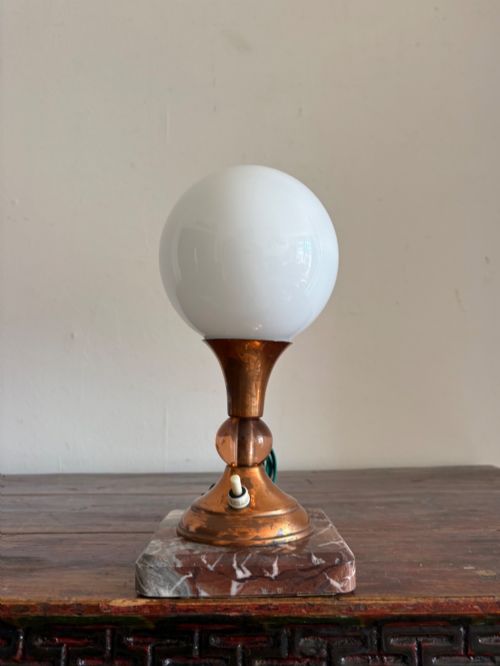
Table lamps combined moulded glass shades with heavy bases made from materials like wrought iron, brass, marble or patinated spelter.
The sturdy metal and stone foundations provided the necessary counterweight to support the thick glass diffusers.