


1930s Figural Lamp
A 1930s figural lamp brings distinct sculptural presence to a room, pairing period figures with functional illumination.
1930s Figural Lamp
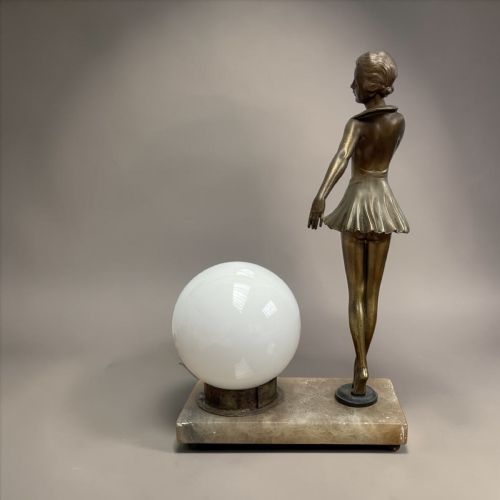
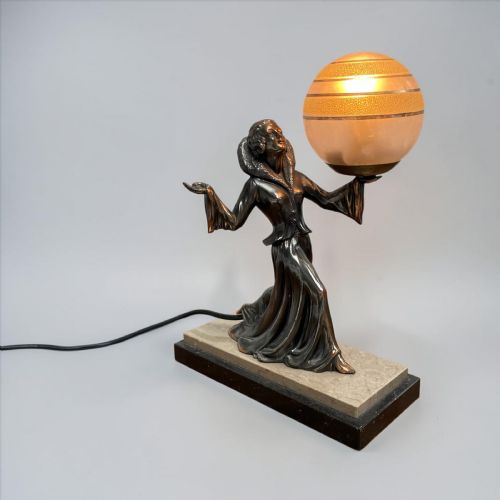
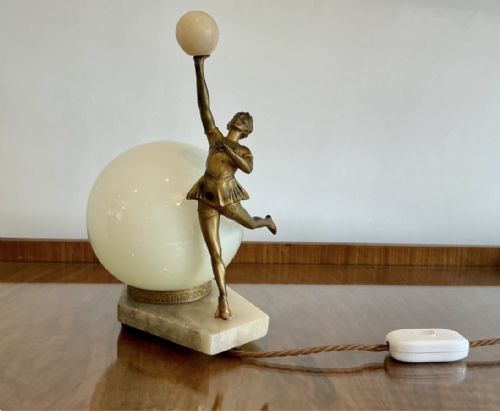
A 1930s figural lamp combines lighting with sculpted human or allegorical forms, dominated by the Art Deco style. These table lamps frequently feature female figures, nudes, or thematic subjects integrated into the design.
The version most commonly met on this page is the Art Deco lady lamp, often standing upon a base or holding a shade. Figures range from single studies to twin figures and athletic motifs like tennis players.
Originating predominantly from Britain and France, these pieces capture the sculptural priorities of the interwar decades. They function primarily as table or desk lamps, serving as both ambient lighting and sculptural ornaments.
Materials and construction methods
Makers utilised a combination of cast metals, patinated metal, spelter, and bronze for the figurative components. These metal figures are frequently mounted upon heavy marble or stone bases to provide stability.
Glass elements, particularly frosted and peach glass associated with makers like Walther and Sohne, form the shades and glowing components. Chrome plating and brass accents provide the reflective surfaces characteristic of the period.
Tennis enthusiasts can illuminate their desks with a dedicated player figure gripping a racket instead of the usual classical maiden.
Distinctions in quality and execution
The choice of secondary materials dictates the weight and balance of the object, with genuine marble bases and substantial glass shades marking superior production. Signed pieces or works attributable to specific designers demonstrate higher artistic ambition than anonymous workshop output.
Walther and Sohne·P.Sega
The 1930s Figural Lamp Glossary
- Spelter
- A zinc alloy commonly utilised as a substitute for bronze in decorative figures of this era. It accepts patination well but requires careful handling due to its relative softness.
- Art Deco
- The dominant design style of the 1920s and 1930s characterised by streamlined geometries and stylised forms. It influences both the figures and the supporting structures of these lamps.
- Patinated metal
- Metal treated with chemical solutions to produce a specific surface colour and aged finish. This technique enhances the depth and visual contrast of the figural sculpture.
- Frosted glass
- Glass treated by acid-etching or sandblasting to diffuse light evenly across the surface. It softens the illumination emitted by the lamp.
1930s Figural Lamp: Frequently Asked Questions
Where were these lamps made?
The listings show examples originating from workshops and makers in Britain and France during the interwar period. Continental output often favoured spelter figures paired with marble bases.
English examples also appear among the selections, demonstrating similar Art Deco design priorities adapted for domestic interiors.
How do I identify a 1930s figural lamp?
Authentication relies on identifying stylistic markers of the Art Deco period, including stylised human forms and geometric bases. Materials such as chrome, frosted glass, and patinated spelter are typical of the era.
Signatures or foundry marks stamped into the metal base occasionally identify specific designers or French studios.
What materials are most common?
Metal is the primary material for the figural components, with spelter, bronze, and chrome frequently recorded. Marble and brass form the structural bases and mounts.
Glass appears predominantly in the shades, utilising frosted or peach-tinted varieties to diffuse the light.
How should I place one in a room?
These pieces function effectively as table or desk lamps where their sculptural qualities remain visible when unlit. Placing them on a solid surface ensures the heavy marble or metal bases remain secure.
They suit spaces styled around mid-century or Art Deco aesthetics, acting as focal points on sideboards or living room tables.