
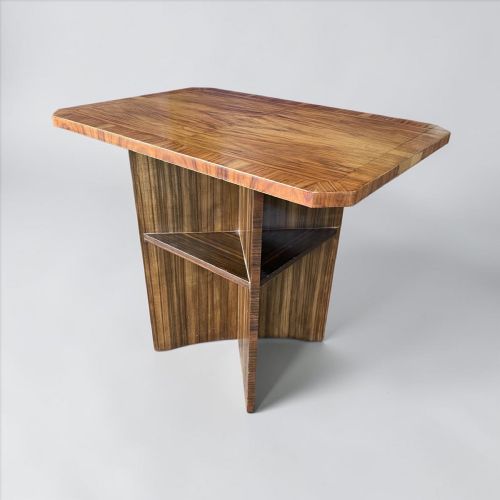
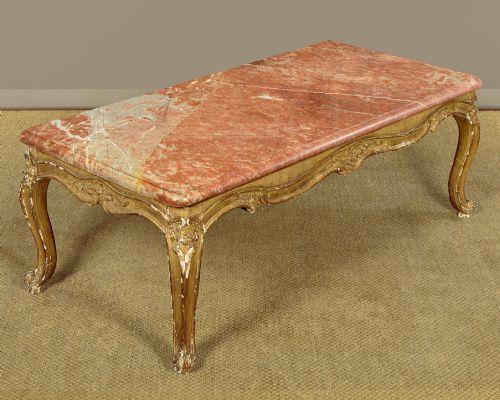
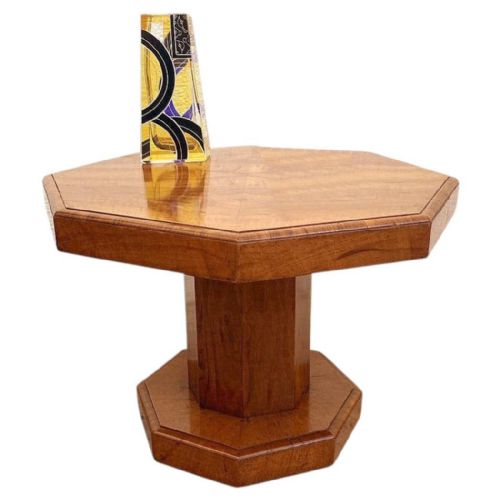


1930s Centre Table
These 1930s centre table pieces are striking surfaces in walnut, birch, and glass that anchor a room with period proportion.
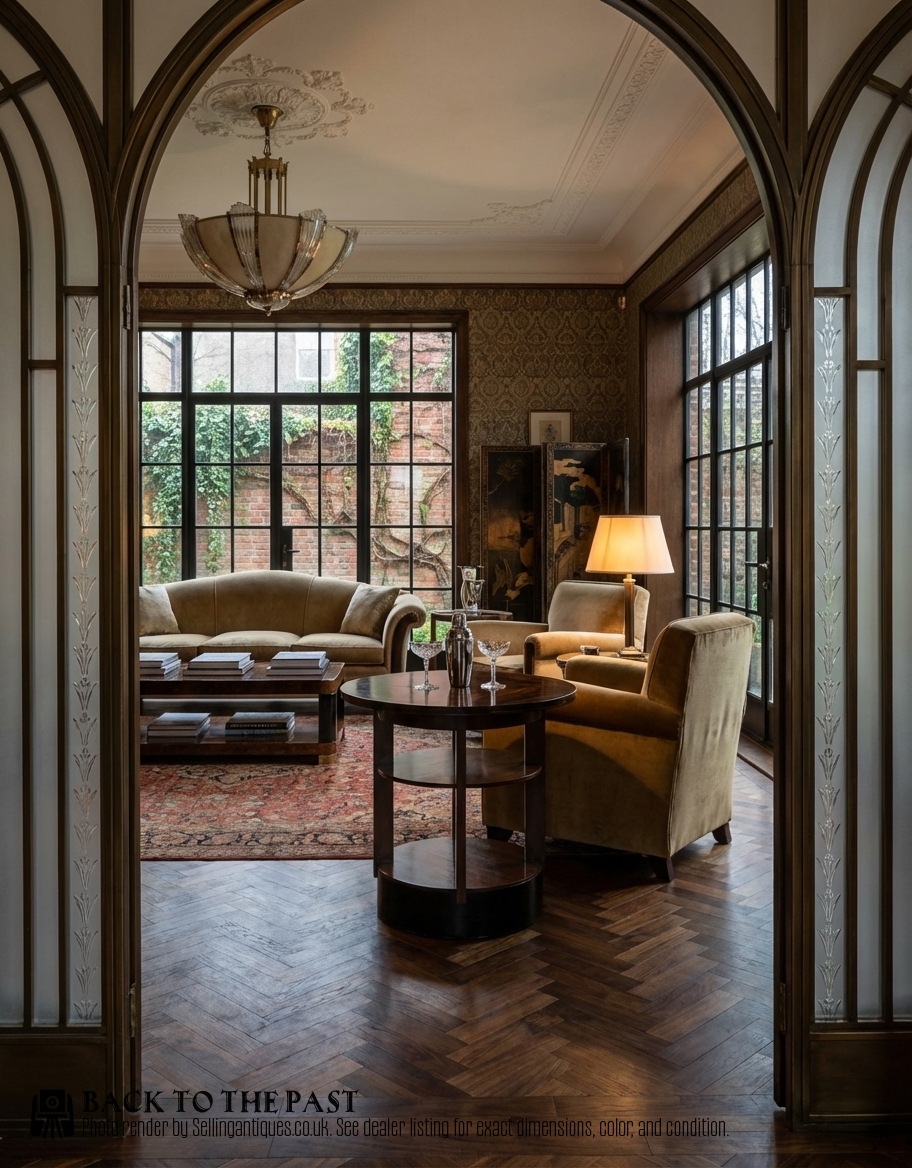
1930s Centre Table
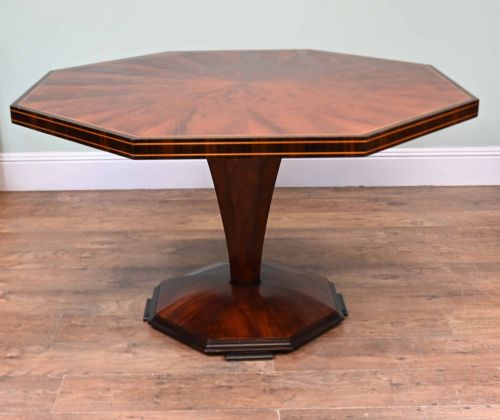
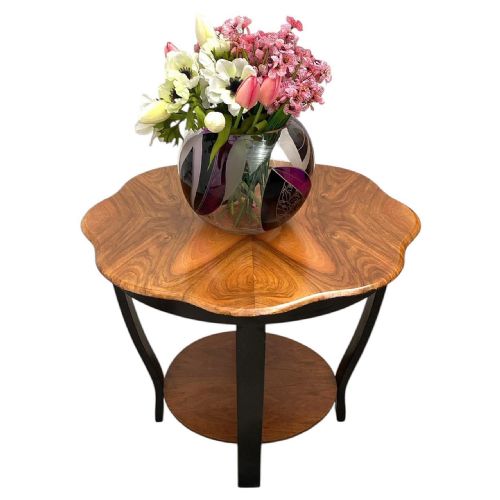
A 1930s centre table encompasses low coffee tables, tiered occasional tables, and formal centre tables stemming from the Art Deco, Scandinavian, and French revival movements. You meet multi-tiered walnut surfaces, birch structures with inlaid details, and occasional tables featuring glass tops or painted wood finishes.
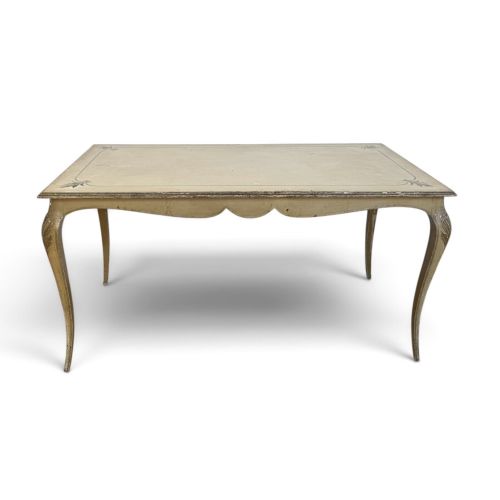
Makers and designers of this decade favoured geometric forms alongside the curved lines of French Louis XV revival pieces. The resulting forms function as functional centrepieces in a reception room, dining space, or hallway, often incorporating built-in storage shelves.
Materials and construction methods
Cabinet makers utilised choice timbers such as walnut, burr walnut, birch veneer, ebony Macassar, and birds eye maple over sturdy wood cores. Veneers allowed artisans to create symmetrical grain patterns across broad table tops, complemented by glass inserts and silvered details.
Construction relied on traditional joinery combined with advanced veneer pressing techniques to achieve smooth, curved tiers and cantilevered shelves. Giltwood, painted wood finishes, and carved elements appear on revival models, while modern pieces lean on clean lines and polished wood.
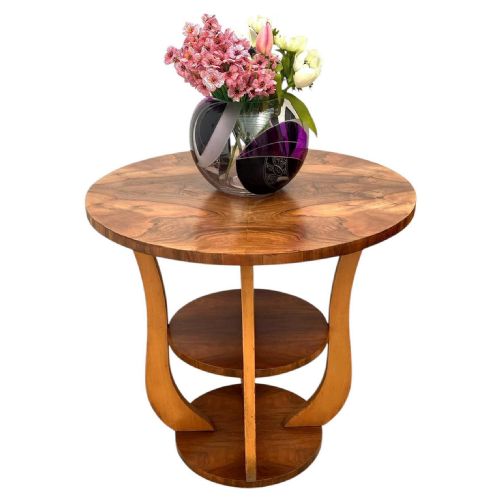
Some tables offer three tiers of walnut just in case your coffee table required its own multistorey housing estate.
Distinctions in construction and finish
The standard of a 1930s centre table depends on the selection and matching of wood veneers, particularly figured walnut, burr walnut, and birds eye maple. Superior examples display continuous, book-matched grain patterns across the top and tiers.
Joinery execution and the integration of secondary materials, such as inset glass or ebonised details, separate standard production items from finer workshop pieces. The handling of curved tiered structures and the stability of multi-tiered supports dictate the overall integrity of the piece.
The 1930s Centre Table Glossary
- Art Deco
- A design style characterised by sleek geometric shapes, streamlined forms, and modern industrial materials that dominated the interwar period.
- Burr Walnut
- A figured wood grain obtained from walnut tree growths, prized for its swirling, highly decorative pattern on table tops.
- Tiered Table
- A piece featuring multiple stacked surfaces supported by columns or panels, designed for display and practical placement.
- French Revival
- A historical revival style adopting the ornate curves and gilded details of Louis XV and Rococo furniture.
1930s Centre Table: Frequently Asked Questions
Where should I place a 1930s centre table?
These tables sit naturally in the middle of a drawing room or as a focal point before a sofa. Their finished surfaces and multi-tiered designs allow them to hold books, lamps, and decorative objects while remaining accessible from all sides.
Ensure there is adequate circulation space around the perimeter so the silhouette and wood grain can be appreciated properly.
How do I identify an Art Deco centre table?
Look for clean geometric lines, stepped tiers, and rich wood veneers such as walnut, maple, or birch. Many examples embrace a low profile intended for modern lounging.
Some pieces combine contrasting timbers like ebony Macassar with silvered glass to create a dramatic, streamlined visual impact.
Are these tables suitable for everyday use?
Most pieces are built from sturdy timber and veneer constructions designed for daily living. Using coasters and protective mats preserves the polished wood and glass surfaces from heat and moisture rings.
Regular dusting with a soft cloth keeps the finish healthy without requiring heavy chemical polishes.
What is the difference between a centre table and a coffee table?
Centre tables traditionally stand at a standard height in the middle of a room, whilst coffee tables are lower and proportioned for seating areas. The listings include both formats from the same decade, often sharing similar tiered architecture.
Check the height measurements to ensure the surface matches your intended seating or display requirements.