

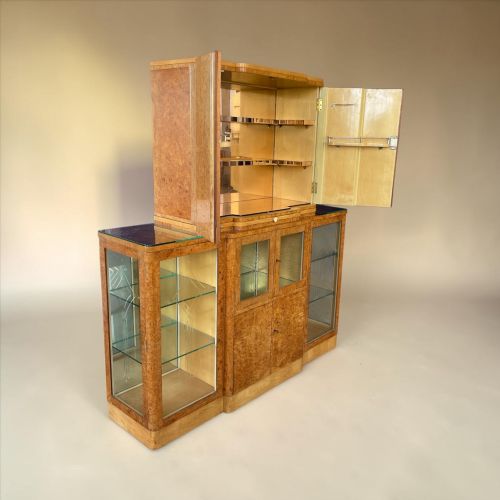
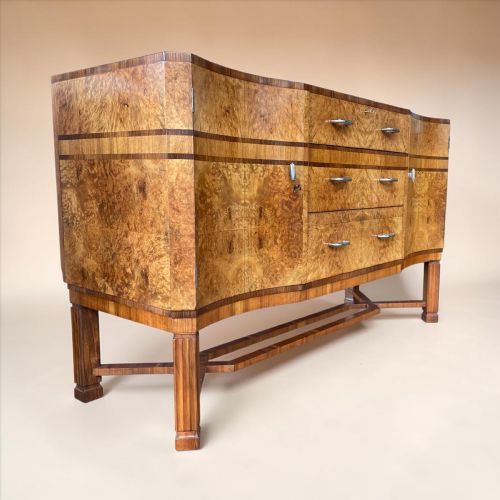
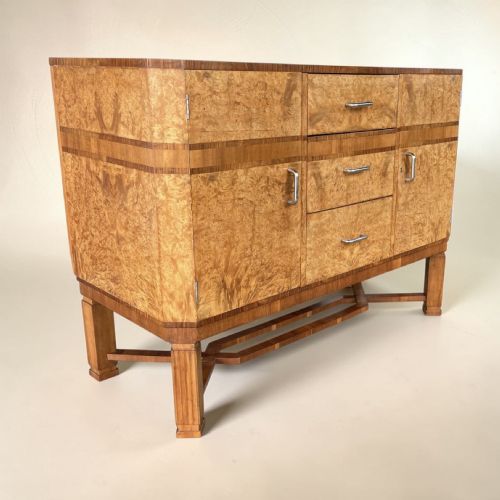
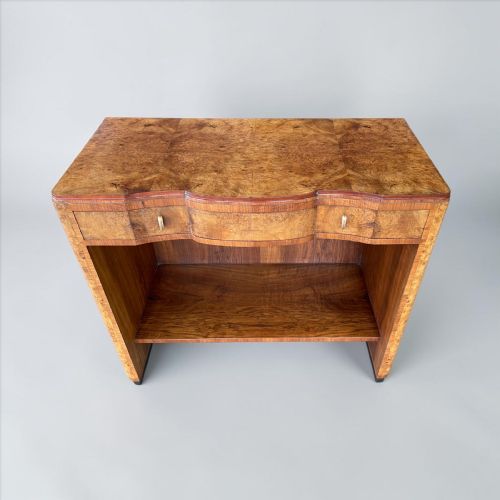

1930s Burr Walnut Sideboard
A 1930s burr walnut sideboard brings tactile warmth and striking grain patterns to a room, offering serious storage wrapped in interwar elegance.
1930s Burr Walnut Sideboard
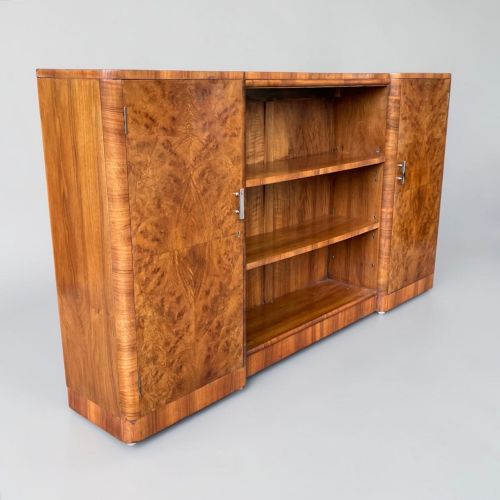
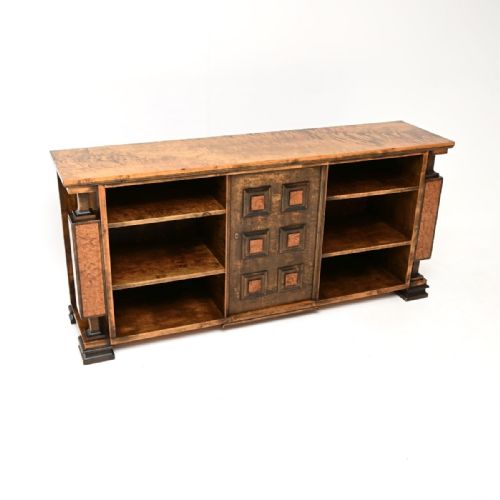
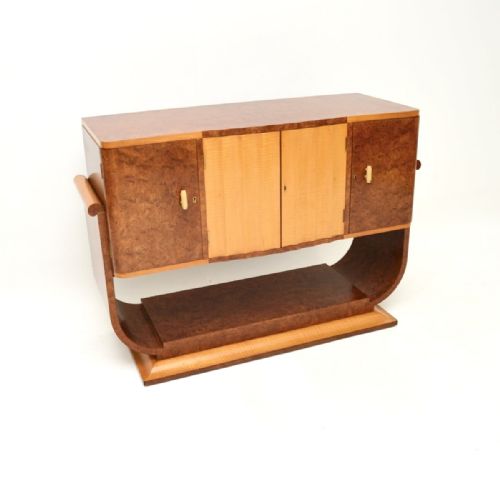
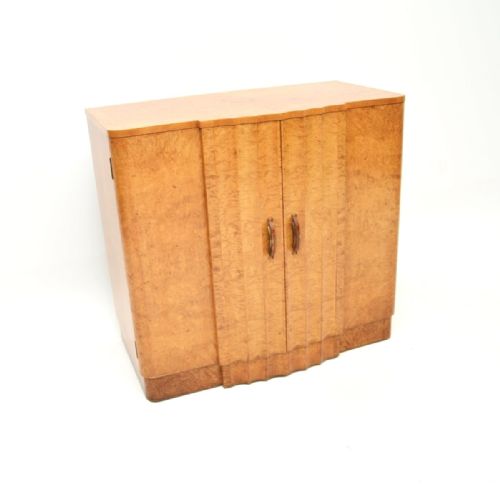
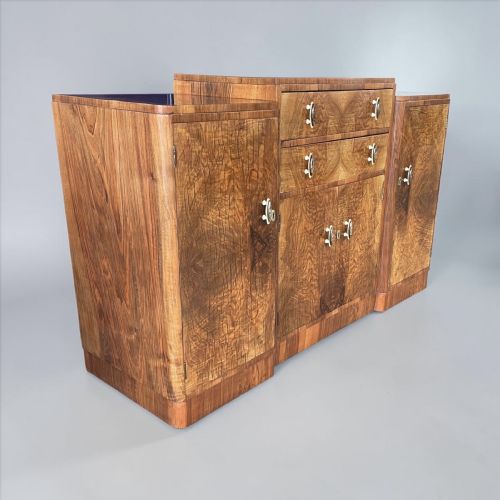
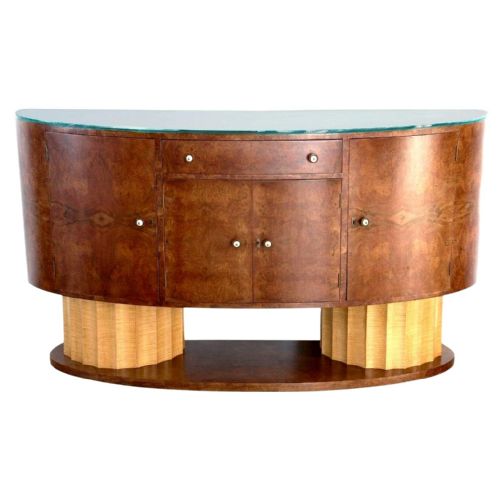
A 1930s burr walnut sideboard is a substantial storage piece shaped by the geometric lines of the Art Deco period. These cabinets combine broad cupboard doors with fitted interior shelving and drawers, built to anchor a dining room or living space.
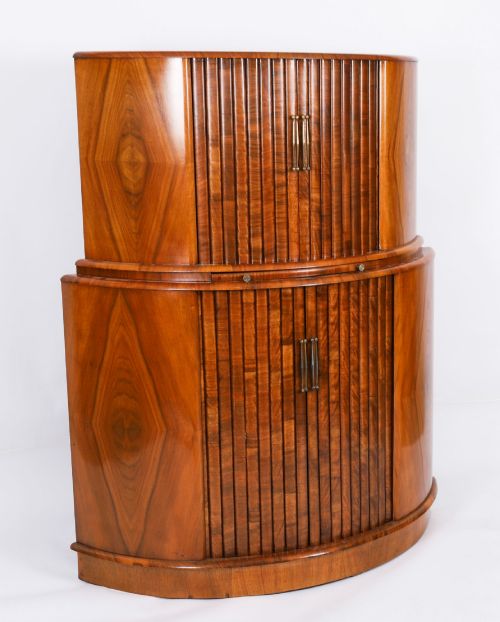
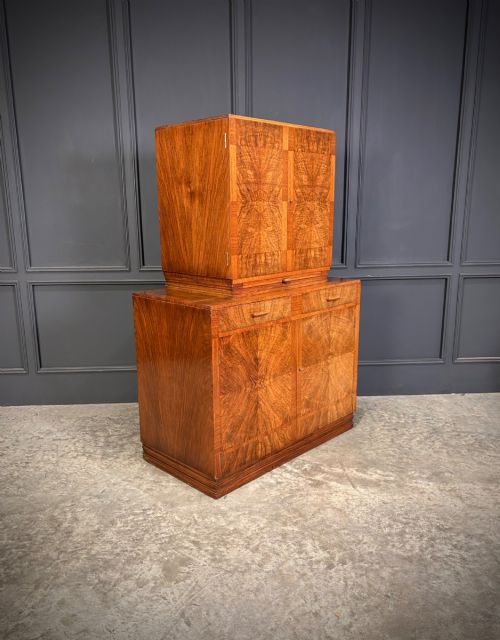
The version most commonly met on this page is the English Art Deco sideboard, frequently executed in burr walnut veneer with contrasting wood details. Alongside traditional sideboards, the selection encompasses dedicated cocktail cabinets, drinks cabinets, and serving tables from the same decade.
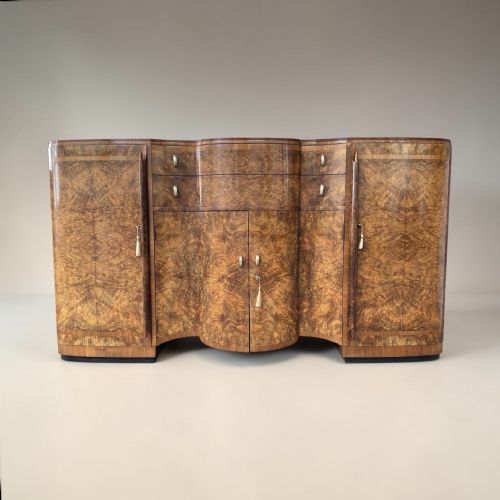
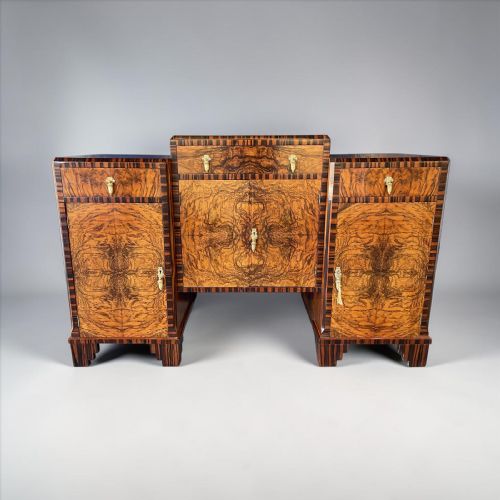
Design influences stretch beyond straightforward utilitarian storage towards architectural grandeur. Makers of the era utilised rich veneers to create symmetrical patterns across the front, turning a domestic furniture item into a focal point.
What varies in quality
The standard of timber selection and veneer matching defines the upper tier of these pieces. Master makers arranged the burr walnut figures with deliberate care, ensuring grain patterns mirror each other across central doors and drawers.
Construction methods and internal fitting complexity also distinguish individual examples. Higher quality cabinets feature fully fitted interiors with dedicated compartments for glassware, pull-out serving slides, and heavier, better-cast brass hardware.
Attribution to notable workshops and makers elevates a piece above standard production. The precision of the joinery and the integrity of the original polish distinguish workshop-built examples from more utilitarian factory outputs.
1930s Burr Walnut Sideboard Retail Price Guide 2026
Typical asking prices for 1930s burr walnut sideboard among the pieces listed under this phrase on Sellingantiques today, from the lower quarter to the upper quarter. They describe what is for sale here now, not the wider market.
Some cabinets are wired for electricity, ready to illuminate your evening gin and tonic with interwar flair.
Maurice Adams·Harry and Lou Epstein·Hille·Hamptons of Pall Mall London
The 1930s Burr Walnut Sideboard Glossary
- Burr walnut
- A prized wood harvested from the wart-like growths on walnut trees, yielding an intricate, swirling grain pattern. It is sliced into thin veneers for furniture exteriors.
- Veneer
- A thin layer of choice wood applied over a stable base timber to provide a decorative surface. This technique allows cabinet makers to display complex grain figures without risking the warping of solid timber.
- Art Deco
- The dominant design style of the 1920s and 1930s, characterised by sleek geometric shapes, streamlined forms, and modern industrial materials. It replaced the ornate curves of earlier revival styles.
- Cocktail cabinet
- A specialised storage unit designed for mixing and serving drinks, usually featuring a drop-down mirror-backed preparation shelf and internal glass holders. These pieces became prominent in fashionable homes during the interwar years.
- Sycamore
- A pale hardwood often used alongside darker walnut in interwar cabinet making. It provides sharp visual contrast when employed for interior linings or decorative banding.
1930s Burr Walnut Sideboard: Frequently Asked Questions
What is a 1930s burr walnut sideboard?
A 1930s burr walnut sideboard is a large storage cabinet defined by the bold geometric lines of the Art Deco period and veneered in highly figured walnut. These pieces served as the centrepiece of the dining room, providing cupboards and drawers for tableware and linens.
Today, they function equally well in modern interiors as statement credenzas or media consoles. Their distinctive grain patterns and warm tones make them versatile additions to contemporary living spaces.
How were they used originally?
In interwar households, these sideboards stored best china, silver, and table linens used for formal dining. Many variations included specialised drawers for cutlery and sliding trays for serving food.
Some iterations doubled as drinks cabinets, featuring drop-down flaps and mirrored interiors for entertaining guests. They were practical furniture pieces designed to support domestic hospitality.
How do I live with one?
Living with a 1930s burr walnut sideboard requires careful placement away from direct sunlight and heat sources to protect the delicate veneer. Regular dusting and occasional waxing will maintain the depth and lustre of the original French polish.
Their generous surface area also provides an ideal display space for lamps, ceramics, or art. The internal storage remains practical for contemporary household organisation.
How do I spot an Epstein piece?
Epstein pieces from this era are recognised by their substantial proportions, dramatic burr walnut grain configurations, and heavy, high-quality construction. They often combine curved waterfall edges with striking geometric veneer layouts across the doors.
Many examples also incorporate dual functions, merging traditional sideboard storage with cocktail compartments. The combination of exceptional timber selection and robust build quality distinguishes their workshop production.