


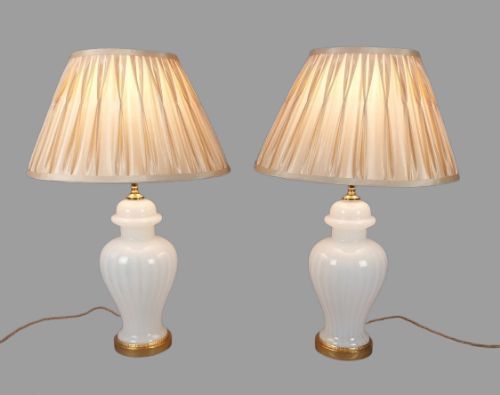


1930s Brass Table Lamp
A 1930s brass table lamp brings geometric grace and heavy industrial utility to a room.
1930s Brass Table Lamp
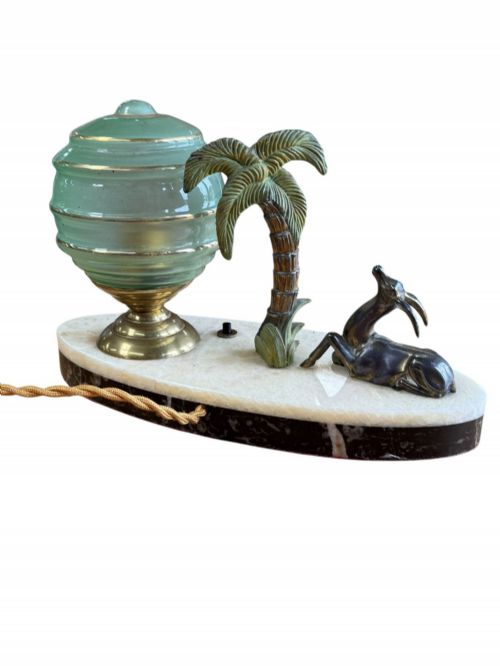
A 1930s brass table lamp encompasses both domestic Art Deco lighting and industrial desk lamps from the period. You encounter standard upright forms, flexible gooseneck designs, and sculptural novelty figures incorporating animals.
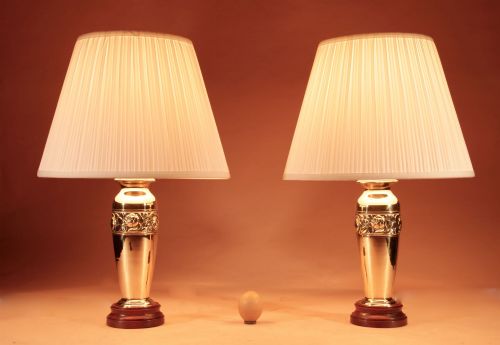
The prevailing style across these pieces is Art Deco, alongside occasional Regency Revival influences. Many examples originate from France and Italy, whilst others reflect British and general European manufacturing.
Makers paired the metal with varied shades and bases, including opaline glass, frosted glass, marble, onyx, and fabric. These objects function equally as functional task lighting and decorative interior centerpieces.
Materials and construction
The primary structural metal is cast or plated brass, often supported by heavy solid brass bases or weighted metal foundations. Workshops also integrated steel, coppered finishes, wood, and spelter into the heavier desk lamps.
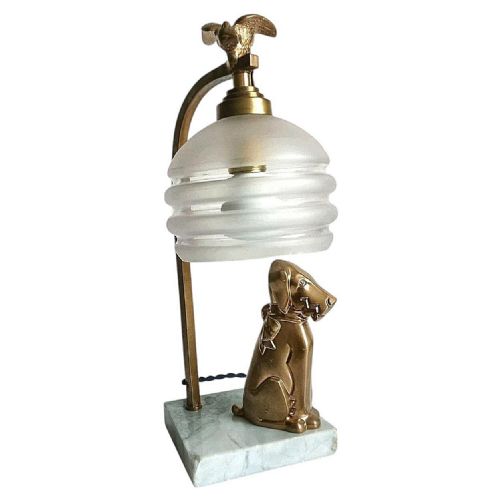
French workshops of the era produced novelty lamps depicting dogs and parrots keeping watch over the desk.
Evaluating quality and manufacture
The distinction between standard output and superior manufacture lies in the weight of the metal and the complexity of the casting. Heavy solid brass bases and substantial cast components indicate a higher grade of production than plated alternatives.
Artistic ambition sets certain examples apart, particularly those featuring detailed novelty figures like birds or dogs, or specialised glass shades such as shell-shaped bases and tulip up-lighters. The integrity of integrated adjustable mechanisms also marks out better desk lamps.
Fratelli Toso
The 1930s Brass Table Lamp Glossary
- Art Deco
- A design movement of the 1920s and 1930s characterised by streamlined geometric shapes and stylised motifs. It heavily influences the silhouettes found in this category.
- Opaline glass
- A milky, translucent glass often used for lamp shades to diffuse light softly. It appears frequently in white or mottled finishes.
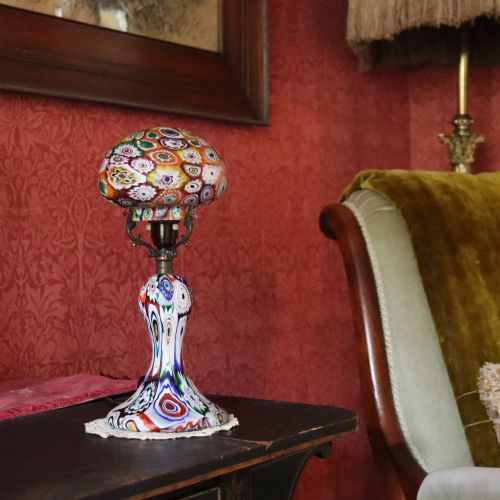
- Millefiori
- A glasswork technique producing distinctive patterned mosaics with multicoloured flowers. This method appears on specialist Italian glass lamp bodies.
- Spelter
- An alloy of zinc and other metals used as a cheaper substitute for bronze or brass in sculptural lamp figures. It provides a solid base for patination and metal plating.
- Up-lighter
- A lamp designed to direct illumination upwards toward the ceiling rather than downwards. These often utilise tulip-shaped glass shades.
1930s Brass Table Lamp: Frequently Asked Questions
How do I date a 1930s brass table lamp?
Dating relies on stylistic markers such as geometric Art Deco forms, stepped bases, and the integration of materials like opaline glass and spelter. Makers often utilised specific construction methods like heavy casting that distinguish the era from later reproductions.
Examining the wiring compartments, switches, and lamp holders can also provide clues, though many pieces have been updated with modern electrical components for safety.
Were these lamps used on desks or tables?
Both applications were common, with flexible goosenecks and adjustable swan-neck frames suited for task lighting on desks. More decorative sculptural or dual-lamp arrangements served as ambient lighting on side tables and sideboards.
The inclusion of heavy marble or cast brass bases ensured stability regardless of whether the lamp sat on a work desk or a living room table.
What glass types are used for the shades?
Shades and diffusers typically incorporate frosted glass, opaline white glass, or textured moulded glass. Some specialised pieces feature delicate Murano millefiori glass or shell-shaped forms.
These materials were chosen to soften the illumination from early bulbs while contributing distinct colour and texture to the overall silhouette.
Can these lamps be used safely today?
Most antique lamps require modern rewiring and PAT testing to meet contemporary electrical standards before daily use. Many examples have already been updated with modern flex and plugs whilst retaining their original brass components.
Consult a qualified electrician if you acquire a lamp with vintage wiring to ensure safe operation in a modern home.