
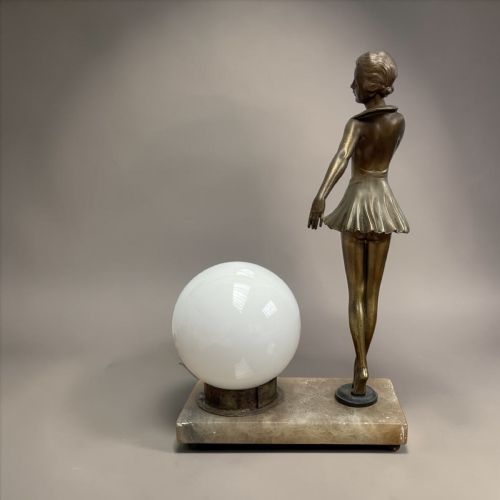
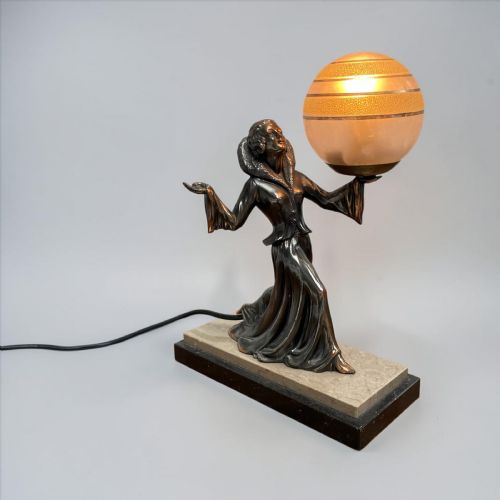
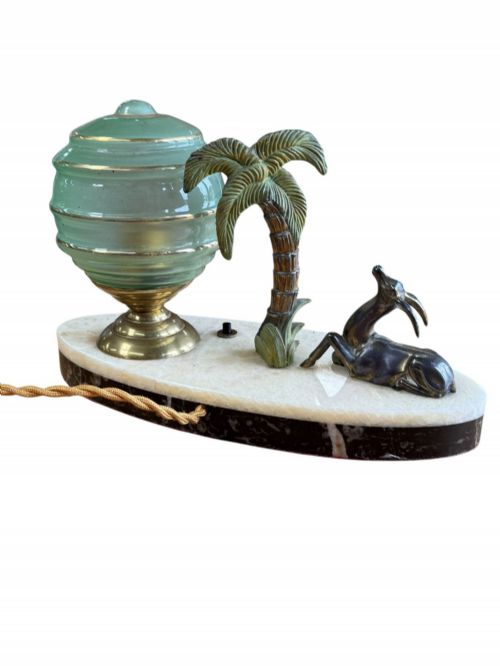


Antique Figurine Desk Lamp
An antique figurine desk lamp brings character to a workspace, combining figural sculpture and lighting from periods ranging from Victorian to Art Deco.
Antique Figurine Desk Lamp
An antique figurine desk lamp combines a sculptural figure with a functional light source, providing both illumination and decorative presence. When searching for an antique figurine desk lamp, buyers encounter pieces that integrate human figures, animals, or putti into the base or stem.
The selections span various forms, including Art Deco lady lamps, night lights, and converted statuettes. These pieces originate from different decades, bringing distinct aesthetic qualities from the nineteenth and early twentieth centuries to a desk or table.
Art Deco examples from the nineteen-thirties appear frequently alongside Victorian and turn-of-the-century designs. Materials range from porcelain and bronze to spelter and marble, reflecting the varied manufacturing traditions of their respective eras.
How they were made
Makers utilised cast metals such as bronze, brass, and spelter for figural components, often mounting them onto heavy marble bases for stability. Figures cast in spelter frequently received patinated or gilt finishes to emulate more expensive metals.
Porcelain figures were moulded and hand-painted, with specific pieces originating from German and French potteries. Glass components, including frosted elements from makers like Baccarat, were blown or pressed to diffuse light effectively.
Listings feature pieces spanning the nineteenth century up to nineteen thirty, incorporating materials such as marble, glass, fabric, bronze, brass, spelter, and porcelain.
What varies in quality
The refinement of the casting work separates standard production pieces from finer sculptural examples. Detailed chasing on bronze or ormolu mounts and expressive hand-painting on porcelain figures indicate superior craftsmanship.
The choice of base materials also influences the overall standard of the object, with solid marble and patinated bronze representing the higher tiers of production. Original components and conversions executed with care retain greater integrity than heavily altered pieces.
Karl Ens·Anton Buschelberger
The Antique Figurine Desk Lamp Glossary
- Spelter
- A zinc alloy commonly utilised as a less costly alternative to bronze for figural sculptures. It often carries a bronze or painted finish.
- Ormolu
- Gilt bronze produced by applying a finely ground high-carat gold-mercury amalgam to a bronze object. This technique creates a rich golden surface.
- Patinated
- The surface treatment applied to metal to alter its colour through chemical means or age. It enhances the visual depth of figural castings.
- Baccarat
- A renowned French glass manufacturer known for producing high-quality crystal and glassware. Their pieces often feature frosted or moulded finishes.
Antique Figurine Desk Lamp: Frequently Asked Questions
How do I identify an Art Deco lady lamp?
Art Deco lady lamps typically feature stylised female figures cast from spelter or modelled in porcelain, dating from around nineteen thirty. They often incorporate geometric bases and sleek drapery characteristic of the period.
These pieces reflect the modern aesthetic of the interwar years while serving as functional desk lighting.
Were all these lamps made for electricity originally?
Many figural lamps started life as decorative statuettes, night lights, or bronze cherub figures before later conversion into desk lamps. Such adaptations are common among nineteenth-century and early twentieth-century pieces.
Wiring and lamp holders are frequently modern replacements fitted to older bases to ensure safe use today.
What is the difference between bronze and spelter figures?
Bronze is a durable copper alloy that allows for sharp detail in sculptural casts and develops a stable natural patina over time. Spelter is a softer zinc alloy that was widely utilised for affordable decorative figures during the late nineteenth and early twentieth centuries.
Spelter figures are lighter than bronze and usually rely on an applied metallic paint finish for their appearance.
How should I clean a porcelain figurine lamp?
Porcelain components require gentle dusting with a soft brush to protect delicate painted details and glazed surfaces. Avoid harsh chemical cleaners that might damage hand-painted decorations or gilding.
Keeping the piece away from direct moisture preserves both the ceramic body and any historical wiring components.