


1930s Art Deco Necklace
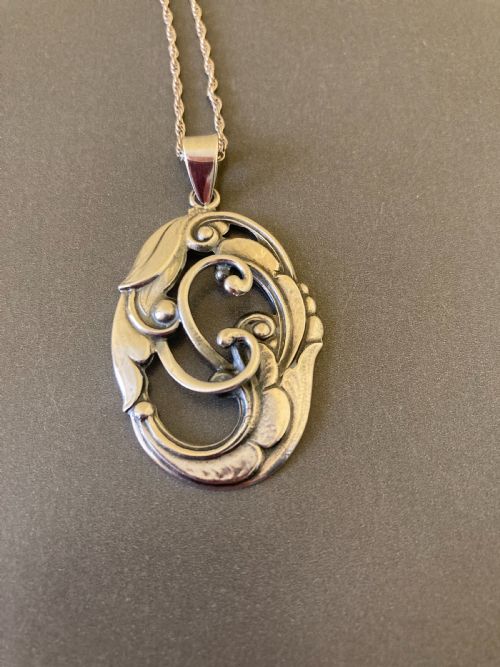
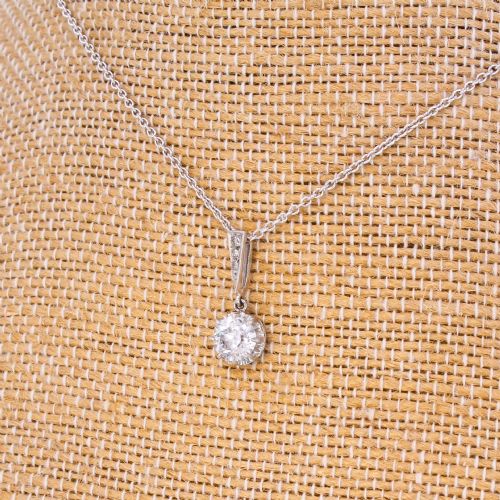
These pieces capture the geometry and industrial confidence of a 1930s art deco necklace, offering collectors a wearable slice of modernist design.
1930s Art Deco Necklace
A 1930s art deco necklace unites geometric precision with the materials of a rapidly changing machine age. Buyers searching this phrase encounter everything from fine platinum diamond drops to accessible chrome and plastic statements.
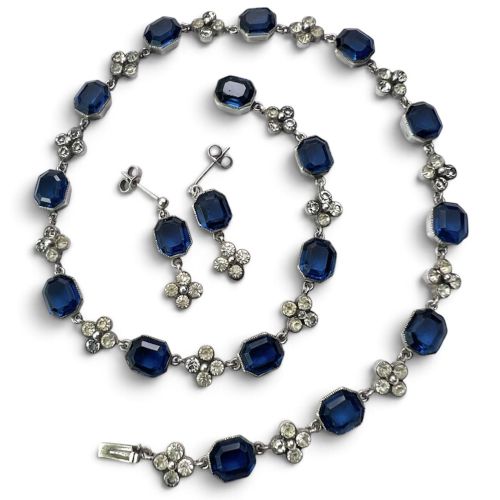
The pieces on this page span several distinct forms, including simple pendants, triple strand pearls, and matching jewellery sets. While the majority originate from the nineteen thirties, items from the nineteen twenties and Victorian periods also appear.
Makers utilised both precious stones and industrial mediums to achieve striking visual contrasts. Geometric motifs dominate the selection, often paired with clean lines and symmetrical arrangements.
How they were made
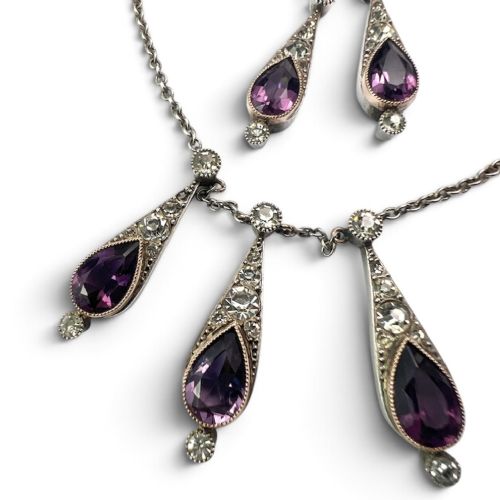
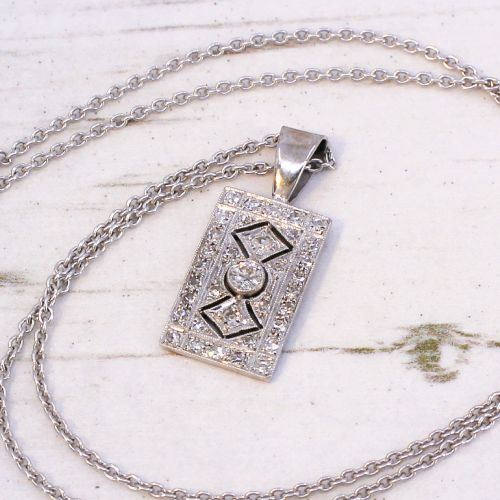
Metals range from platinum and eighteen carat white gold to silver, chrome, and silver plating. Gemstones such as diamonds, opals, garnets, and amethysts combine with pearls, amber, rock crystal, and glass.
Modernist pieces incorporate alternative materials like Bakelite, Galalith, and enamel alongside base metals. Artisans set stones into platinum or gold frameworks using precise claw and bezel techniques.
Pendant drops and fringe configurations require articulated links for movement. Bead necklaces feature hand-strung amber, glass, or cultured saltwater pearls with secure clasps.
Materials across the selection range from precious platinum and diamonds to industrial chrome, Bakelite, and Galalith.
What varies in quality
Quality rests upon the inherent value of the materials and the skill of the execution. Platinum and diamond pieces represent the upper tier of the selection, utilising old cut stones and fine metalwork.
Industrial designs derive their merit from the ingenuity of the modernist composition and the preservation of materials like chrome, enamel, and Bakelite. Clean construction and intact settings distinguish finer examples from standard production.
The weight of the stones, the uniformity of graduated pearls, and the complexity of the pendant drop dictate the standing of each individual piece.
Jakob Bengel
The 1930s Art Deco Necklace Glossary
- Art Deco
- A design style characterised by sleek geometric shapes, streamlined forms, and modern industrial materials. It emerged during the interwar period and dominated decorative arts.
- Old Cut
- A precursor to the modern brilliant diamond cut, featuring a smaller table, higher crown, and open culet. These stones display a softer candlelit sparkle.
- Bakelite
- An early form of synthetic plastic prized for its durability and rich colour potential. Designers utilised it extensively in modernist jewellery during the interwar years.
- Galalith
- A semi-synthetic plastic made from casein and formaldehyde, commonly used in twentieth century costume jewellery. It accepts vibrant dyes and takes a high polish.
- Fringe Necklace
- A necklace design featuring suspended drops or tassels that hang below the main collar chain. This style was popular for evening wear during the period.
- Paste
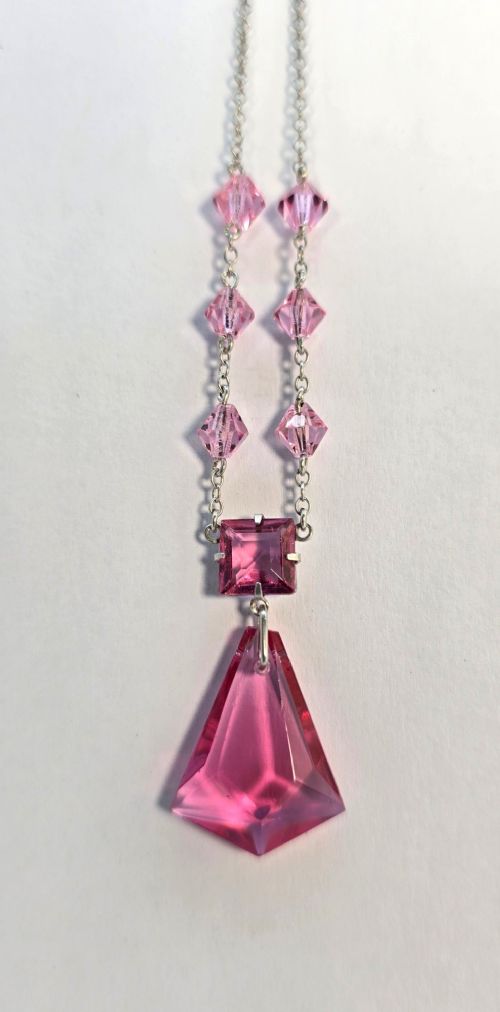
- Hand-cut and polished glass utilised as a substitute for precious gemstones. High quality paste pieces display convincing brilliance and careful colouration.
1930s Art Deco Necklace: Frequently Asked Questions
How do I style a 1930s art deco necklace?
Geometric pendants and chrome statements suit minimalist evening wear, allowing the sharp lines of the design to stand out against plain fabrics.
Pearl strands and diamond drops pair naturally with vintage evening gowns or tailored dresses for formal occasions.
Are these necklaces made of solid platinum?
Many of the fine diamond pieces from this period utilise platinum for its strength and bright white finish, which securely holds small stones.
Other examples employ eighteen carat white gold, silver, or base metals plated in chrome according to the intended luxury tier.
How do I tell Bakelite from Galalith?
Bakelite is a phenol formaldehyde resin that typically yields a distinct medicinal odour when tested with specific cleaning agents.
Galalith is protein based and swells in water, making it distinct from synthetic plastics despite similar visual appearances in modernist pieces.
Can I wear these necklaces every day?
Precious metal and diamond pendants withstand regular wear provided the settings and chains receive careful handling.
Costume pieces containing Galalith, Bakelite, or paste require gentle treatment and protection from moisture to preserve their surfaces.