
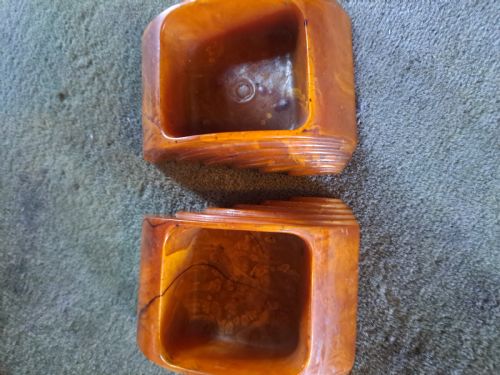





Vintage Phenolic Resin
Vintage phenolic resin brings striking colour and geometric modernist form into any interior.
Vintage Phenolic Resin
Vintage phenolic resin encompasses moulded and carved objects produced during the early twentieth century, particularly the nineteen-twenties and nineteen-thirties. Buyers searching for vintage phenolic resin typically encounter striking Art Deco items that combine synthetic polymers with gleaming metallic elements.
How vintage phenolic resin pieces were made
Maker's workshops utilised synthetic thermosetting polymers, commonly known as Bakelite and Catalin, which allowed for vibrant colouration and intricate moulding. Artisans shaped the durable resin through compression moulding or carved solid blocks into smooth, tactile forms.
Makers frequently combined the colourful moulded resin components with polished chrome metal mounts, frames, and chains. This pairing of bright synthetic materials with industrial metal defined the modernist aesthetic of the era.
Listings span the nineteen-twenties and nineteen-thirties, utilising materials such as Bakelite, Catalin, and chrome metal.
What varies in quality
Quality in these early plastics rests upon the depth of colour, surface finish, and the complexity of the moulding or carving. Rich, translucent hues and well-preserved surface polishes distinguish superior examples from duller, heavily weathered specimens.
The integration of secondary materials also influences overall excellence, particularly the weight and polish of associated chrome metal fittings. Items that retain crisp geometric lines and secure mechanical joints demonstrate superior initial manufacture.
The Vintage Phenolic Resin Glossary
- Phenolic resin
- A synthetic thermosetting polymer formed from phenol and formaldehyde. This material served as the base for early plastics renowned for their durability and rich colour potential.
- Bakelite
- An early trade name for a specific type of phenolic resin. It revolutionised manufacturing by providing a mouldable, heat-resistant material for decorative and practical objects.
- Catalin
- A cast phenolic resin known for its exceptional clarity and vibrant colour range. Unlike opaque moulded plastics, Catalin often displayed wonderful translucent depth.
- Art Deco
- A design style prevalent during the nineteen-twenties and nineteen-thirties. It prioritised symmetry, clean geometric lines, and modern industrial materials.
- Chrome
- A metallic plating utilised to provide a bright, corrosion-resistant finish. Makers paired this shiny metal directly with colourful resin components.
Vintage Phenolic Resin: Frequently Asked Questions
How do I clean phenolic resin?
Clean these items gently using a soft, damp cloth to remove accumulated dust and surface grime. Avoid harsh chemical cleaners or prolonged soaking in water.
Dry the surface thoroughly immediately after cleaning. Proper care preserves the original polish and colour of the material.
Are these items from the nineteen-thirties?
Many pieces date directly from the nineteen-twenties and nineteen-thirties, aligning with the height of the Art Deco period. Design characteristics and material formulations help indicate this timeframe.
Makers utilised innovative synthetic compounds during these decades to create bold, modern accessories. This era produced the most iconic examples of early plastic design.
How should I display my pieces?
Display these colourful items away from direct sunlight to prevent colour fading and surface degradation over time. Stable indoor humidity protects both the resin and any metallic mounts.
Arranging them on neutral surfaces highlights their bright tones and geometric shapes. Proper placement ensures they remain safe from accidental knocks.