




1930s Art Deco Flacon
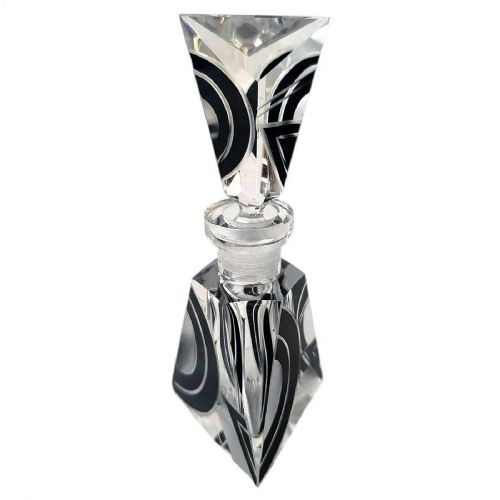
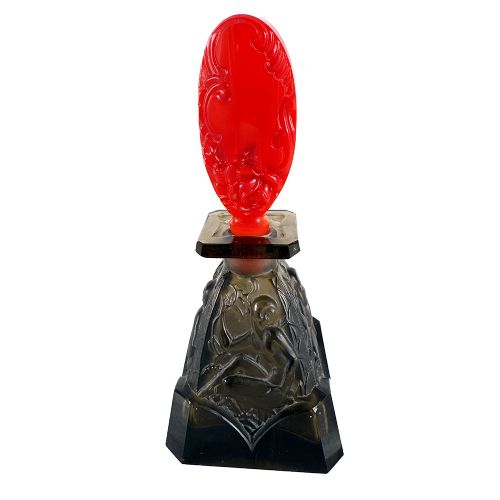
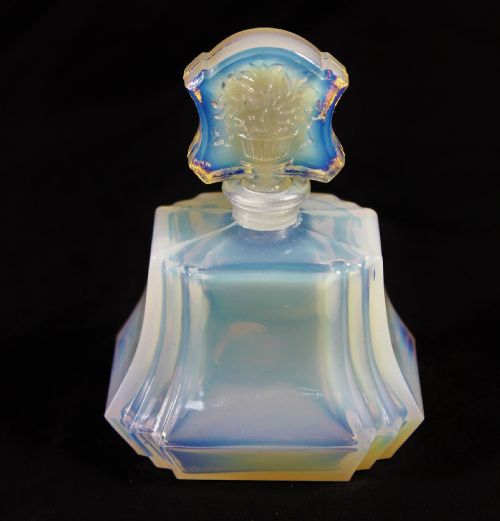
These 1930s art deco flacon pieces bring geometric elegance and vibrant enamelling to a dressing table, combining utility with distinct period design.
1930s Art Deco Flacon
A 1930s art deco flacon is a decorative scent or perfume bottle produced during the height of the Art Deco movement. These vanity items reflect the bold aesthetic of the interwar period through clean lines and striking colour contrasts.
The pieces appearing here include moulded opalescent glass from France alongside geometric cut glass and enamel designs originating from Czechoslovakia. They serve as both functional containers and sculptural objects for display.
Buyers will encounter various forms, ranging from tall faceted profiles to rounded vessels mounted in sterling silver and black or blue enamel. Each variation captures the distinct modernist impulse of the 1920s and 1930s.
How they were made
Glassmakers utilised pressing, moulding and crystal cutting techniques to achieve sharp geometric profiles and diffusing opalescent surfaces. These methods allowed workshops to produce complex three-dimensional forms with high optical clarity.
Metalwork and decoration involved combining sterling silver mounts with applied enamel and guilloche detailing. Craftsmen carefully fused coloured glass and enamel to the metallic elements to create striking visual contrast.
The documented periods for these vanity items span from 1920 through the 1930s, reflecting the progression of the Art Deco style.
What varies in quality
Quality in these flacons depends upon the crispness of the glass cutting and the complexity of the moulding. Superior examples display sharp facet edges and balanced proportions without distortion in the glass body.
The integration of precious metals and enamel work also distinguishes finer pieces. Well-executed guilloche patterns and securely fitted sterling silver collars indicate higher craftsmanship originating from distinguished makers.
Karl Palda·Sabino
The 1930s Art Deco Flacon Glossary
- Flacon
- A small stoppered bottle designed to hold perfume or scent. These vessels often double as decorative vanity ornaments.
- Opalescent Glass
- Glass that has a milky, translucent appearance with shimmering colour effects. It diffuses light softly across moulded surfaces.
- Guilloche
- An intricate decorative engine-turned engraving technique applied to metal beneath transparent enamel. It creates repeating geometric patterns.
- Sterling Silver
- A silver alloy containing a high proportion of pure silver by mass, frequently used for bottle mounts and collars. It provides a sturdy and bright structural frame.
- Moulded Glass
- Glass shaped by pressing molten material into a prepared matrix. This technique allows for consistent production of relief patterns and figural designs.
1930s Art Deco Flacon: Frequently Asked Questions
What is a 1930s art deco flacon?
A 1930s art deco flacon is a decorative scent bottle embodying the geometric and modernist design principles of the interwar period.
These vanity pieces were produced primarily in glass, crystal, and enamel across European workshops for everyday use and display.
Where were these perfume bottles made?
The pieces originate mainly from specialised glass-producing regions in Czechoslovakia and France.
Workshops in these countries utilised advanced moulding and cutting techniques to supply the international market with distinct vanity items.
How should I display a scent bottle?
These flacons suit placement on mirrored trays or dressing tables where natural light can pass through the coloured glass.
Keeping them away from direct heat sources helps preserve the stability of historic glass and enamel components.