






1930s Rug
A 1930s antique rug brings enduring textile artistry and rich regional character into a room.
1930s Rug
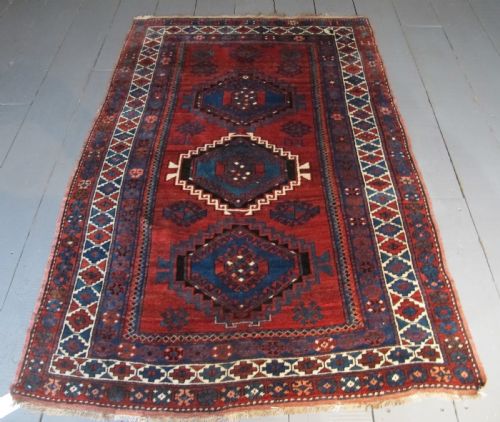
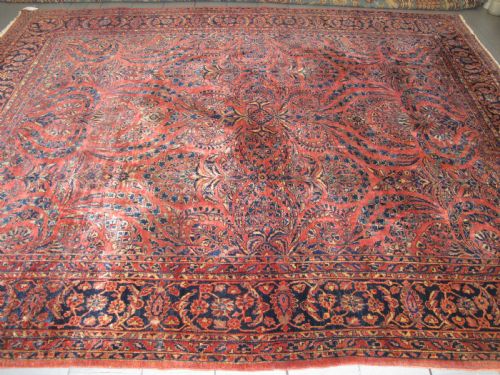
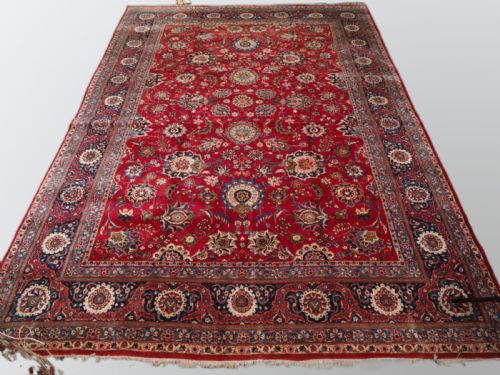
When you examine a 1930s antique rug, you encounter hand-knotted and flatwoven floor coverings originating from Persian, Caucasian, Turkmen, and Anatolian weaving traditions. These textiles reflect regional aesthetics, ranging from detailed village and city carpets to tribal nomad pieces.
The selections available here emphasise wool construction, often enriched with cotton foundations, camel wool, or silk highlights, alongside embroidered textiles and flatwoven kilims. Buyers frequently find diverse formats including room-size carpets, prayer rugs, and smaller area rugs suited to varied interior layouts.
Evaluating the standard of weaving
Knot density and structural tightness dictate the durability and crispness of design in piled carpets, separating refined city workshop production from coarse village weaving. Finer pieces maintain uniform pile height and precise geometric or curvilinear motifs across the entire field.
The quality of materials and dye consistency significantly influence the visual depth of a textile. Superior examples display harmonious colour saturation and resilient fibre selection, ensuring the wool or silk retains integrity through sustained use.
Camels contributed their wool to nomadic weavers, ensuring that at least one rug on this page comes equipped with built-in desert toughness.
Benlian
The 1930s Rug Glossary
- Kilim
- A flatwoven textile produced without a pile, commonly associated with Anatolian, Caucasian, and Persian nomadic weaving traditions. These pieces rely on slit-tapery techniques to create sharp geometric patterns.
- Medallion
- A central ornamental design motif placed in the middle of a carpet field, frequently found in Persian Tabriz, Sarouk, and Bakhtiari productions. It anchors the symmetrical layout of the rug.
- Prayer rug
- A small-format textile featuring a mihrab or niche design used historically for daily devotions. Examples from Baluch and Anatolian traditions typify this specific functional form.
- Pile
- The upright yarn loops or knotted surface of a carpet that forms the soft upper layer. Materials range from standard sheep wool to fine silk highlights and camel hair.
1930s Rug: Frequently Asked Questions
How do I identify a 1930s rug?
Examination of structural materials, regional knotting styles, and dye characteristics helps place a textile within this early twentieth-century period. Many pieces bear traditional village or workshop designs distinct from later mid-century manufacturing.
Comparing the foundation threads and wool texture against documented regional examples clarifies the likely origin and date of production.
Where were these rugs made?
The pieces originate across Persia, the Caucasus, Anatolia, and Central Asia, encompassing distinct weaving cultures from tribal communities to urban workshops. Major centres include Tabriz, Kashan, and regions associated with Yomut and Baluch weavers.
Each geographical area imparted specific technical methods and aesthetic motifs onto its textiles.
Are these rugs suitable for daily use?
Traditional wool and cotton construction provides natural resilience, making these durable floor coverings for domestic interiors when placed with proper underlays. Regular maintenance and careful placement protect the foundational structure from excessive wear.
Gentle care preserves the integrity of both piled carpets and delicate flatwoven kilims.
What is the difference between a kilim and a carpet?
Carpets feature a dense pile knotted onto a warp and weft foundation, offering a plush surface texture. Kilims are entirely flatwoven without pile, resulting in a lighter, reversible textile with crisp geometric patterning.
Both forms served essential domestic and decorative functions within nomadic and settled households alike.