

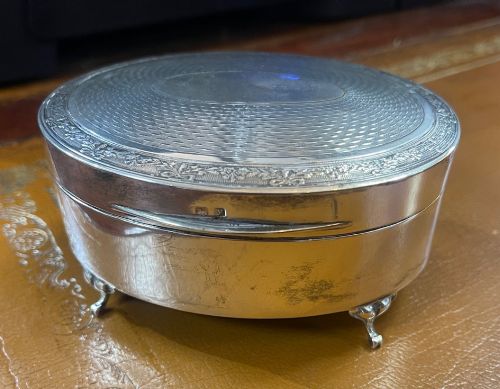
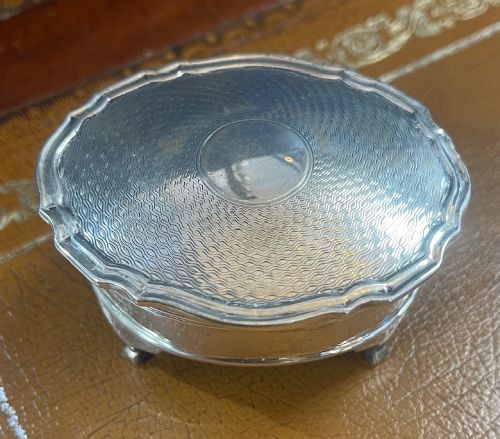



1920s Silver Trinket Box
These 1920s silver trinket boxes are compact dressing table containers crafted to hold small keepsakes and jewellery.
1920s Silver Trinket Box
A 1920s silver trinket box is typically a small container intended for a dressing table or vanity desk, designed to store rings, pins, and personal effects. The examples on this page span the 1920 and 1930 periods, encompassing George V and Art Deco styles.
You will encounter various forms, including oval footed caskets, lidded vanity jars, small ring boxes, and pill boxes. Materials frequently combine sterling silver with cut glass, cranberry glass, oak, ebonised wood, and tortoiseshell.
Origins trace primarily to Birmingham hallmarked pieces alongside English examples from the early 20th century. Some boxes pair silver mounts with enamel or guilloche enamel panels.
How they were made
Silversmiths utilised sterling silver sheet and mounts, often working within manufacturing hubs such as Birmingham to stamp, shape, and hallmark lids and bodies. These metal elements were then paired with carved timber bodies like oak and ebonised wood, or glass vessels including cut and cranberry glass.
Decorative surfaces involved applied guilloche enamel and tortoiseshell inlays set flush into silver frames. Enamelled dressing table items required precise firing techniques to fuse coloured glass powders onto textured metal bases.
1920s Silver Trinket Box Retail Price Guide 2026
Typical asking prices for 1920s silver trinket box among the pieces listed under this phrase on Sellingantiques today, from the lower quarter to the upper quarter. They describe what is for sale here now, not the wider market.
Some pill boxes were small enough to fit a single headache powder.
What varies in quality
Quality in these boxes rests on the complexity of the materials and the crispness of the manufacture. Pieces featuring intact guilloche enamel or finely fitted tortoiseshell lids sit at the upper end of the scale compared to plain metal versions.
The weight of the sterling silver, the clarity of the Birmingham hallmarks, and the precision of the joinery between wood, glass, and metal define the standard of the construction.
B and Co·Henry Clifford Davis
The 1920s Silver Trinket Box Glossary
- Hallmark
- An official stamp applied to precious metals indicating the standard of purity, the assay office, and the year of production. Birmingham was a primary centre for silver assaying during the 1920s.
- Guilloche enamel
- A decorative technique where a precise geometric pattern is engraved into metal beneath a translucent layer of enamel. This creates a shimmering, reflective surface commonly seen on dressing table items.
- Sterling silver
- An alloy of silver containing 92.5 percent pure silver and 7.5 percent other metals, usually copper. It provides the durable standard used for these lidded boxes and caskets.
- Cranberry glass
- A rich red glass made by adding gold chloride to the molten glass batch. It frequently appears combined with silver lids in vanity and trinket containers.
- Ebonised wood
- Timber treated with a finish or stain to imitate ebony. It yields a deep black surface often utilised for jewellery boxes and trays.
1920s Silver Trinket Box: Frequently Asked Questions
What were 1920s silver trinket boxes used for?
These boxes served as tidy receptacles on dressing tables and vanity desks for small personal items like rings, brooches, and pills. They kept daily accessories organised and protected from dust.
Wealthy and middle-class households alike displayed them as decorative accessories that matched other silver dressing table wares.
How can I tell a 1920s piece from other eras?
The presence of official Birmingham hallmarks combined with date letters specific to the 1920s provides the most reliable indicator of age. Stylistic markers such as early Art Deco geometry also point to this decade.
Construction methods typical of the early 20th century, such as specific hinge types and enamel colours, further confirm the period.
Are all these boxes made entirely of solid silver?
Many boxes feature sterling silver lids or mounts combined with other materials rather than being solid silver throughout. Common pairings include glass vessels, oak bodies, and ebonised wooden frames.
Only the hallmarked components consist of silver, while the structural core relies on wood or glass.
How do I care for a silver and enamel box?
Silver components require gentle cleaning with a soft cloth and dedicated silver polish, avoiding contact with any enamel or glass inserts. Enamel surfaces should be wiped carefully with a damp cloth rather than submerged or scrubbed.
Keeping the box away from direct sunlight preserves the vibrancy of the enamel and protects organic materials like tortoiseshell.