


1920s Gateleg Table
A 1920s gateleg table offers practical folding design and rich timber character, suiting modern dining rooms needing flexible space.
1920s Gateleg Table
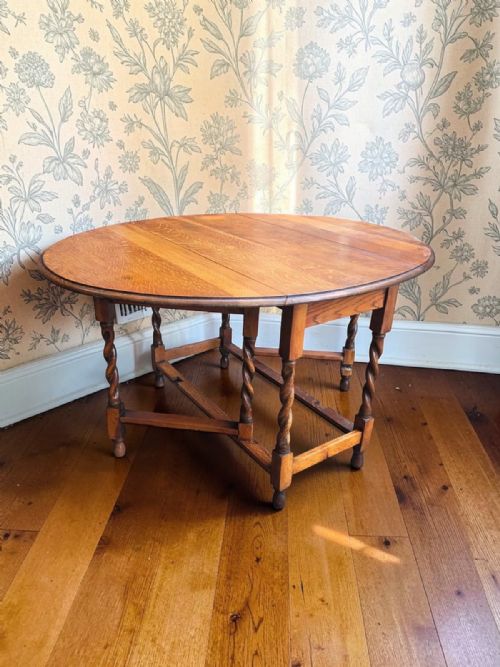
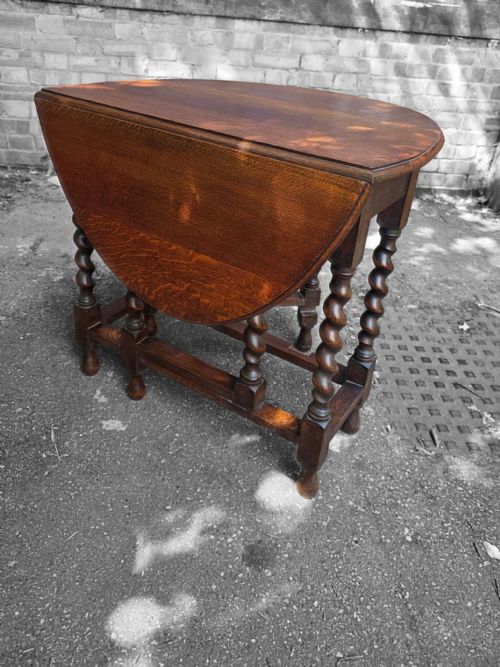
A 1920s gateleg table combines folding drop leaves with swinging leg supports to create a versatile surface that expands for dining and folds away compactly. The examples seen on this page span the 1920 period itself, alongside Edwardian pieces and earlier 18th century work.
Buyers will most frequently meet solid oak constructions dating directly to around 1920, often shaped with oval tops and supported by turned legs. Alongside standard dining tables, the listings include drop leaf tables and Arts & Crafts or Jacobean Revival variants.
What varies in quality
Quality in these tables rests upon the selection of timber and the precision of the pivoting leg mechanism. Superior examples utilise dense, well-figured oak or mahogany with robust hinge construction that allows the leaves to drop level and steady.
The refinement of the turned legwork also dictates distinction, where crisp carving and balanced proportions elevate a piece above simpler utilitarian builds. Timber selection that displays rich grain depth separates finer dining tables from standard workshop production.
The listings on this page feature oak and mahogany as the primary materials, shaped into dining and drop leaf tables across multiple revival styles.
The 1920s Gateleg Table Glossary
- Gateleg table
- A table with hinged leaves supported by one or more legs that swing out like a gate. This design allows the surface area to reduce or expand easily.
- Barley twist
- A decorative turning technique resembling a spiral rope. It appears frequently on the legs of tables from this period.
- Drop leaf table
- A table featuring fixed centre sections with movable flaps on the sides. The flaps drop down when not in use to save floor space.
1920s Gateleg Table: Frequently Asked Questions
How do I use a gateleg table daily?
Keep one or both leaves folded down against a wall to use the piece as a side console or compact desk. Swing the gate legs outward and lift the leaves when you need a full dining surface.
Ensure you clear items from the leaves before folding them down to protect the hinges and the timber surface from sudden strain.
What woods are typical for these tables?
Solid oak forms the vast majority of the timber used in pieces from this decade, prized for its durability and strong grain pattern. Mahogany also appears occasionally, often associated with revival styles.
Both timbers provide the structural weight necessary to keep the swinging leg frames stable when the leaves are fully extended.
How do I date a 1920s gateleg table?
Examine the timber finish, construction marks, and hardware hinges underneath the drop leaves for signs of early twentieth-century manufacturing methods. The presence of specific revival styles, such as Jacobean or Arts & Crafts details, helps point to this era.
Compare the turning style on the legs, as barley twist supports gained immense popularity during the 1920s.
Are these tables suitable for small dining rooms?
Their folding leaf design makes them ideal for smaller spaces because you can adjust the surface area to match your immediate needs. You can tuck the table tightly against a wall with both leaves dropped when floor space is required.
Opening just one leaf provides a practical setup for daily meals without crowding the room.