




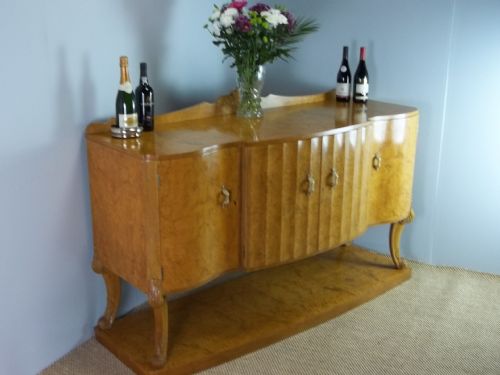
1920s Dining Sideboard
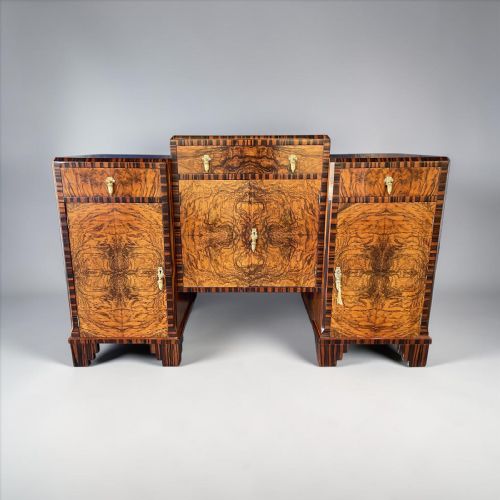
A 1920s dining sideboard brings striking geometry and rich cabinet timbers to the dining room, offering both generous storage and period character.

1920s Dining Sideboard
A 1920s dining sideboard serves as the central storage and serving piece in the dining room, housing tableware, linens, and dining essentials. The pieces gathered here span the Edwardian period through to the 1930s, reflecting a transitional era in domestic design.
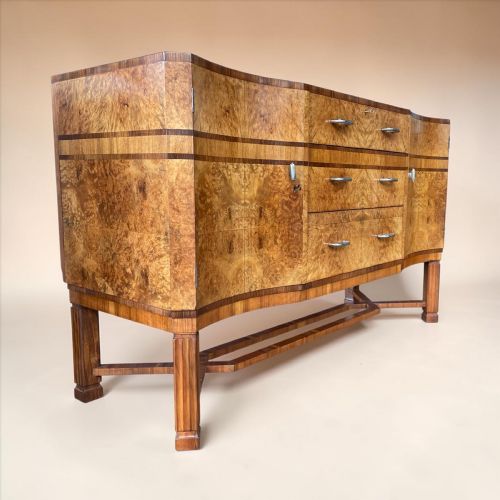
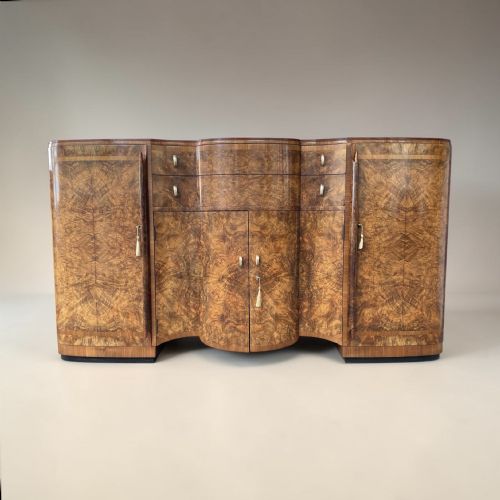
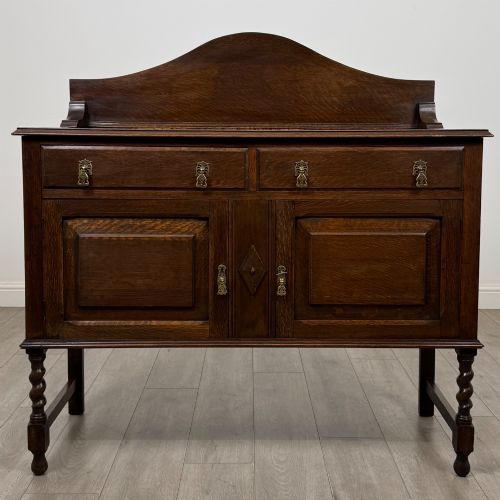
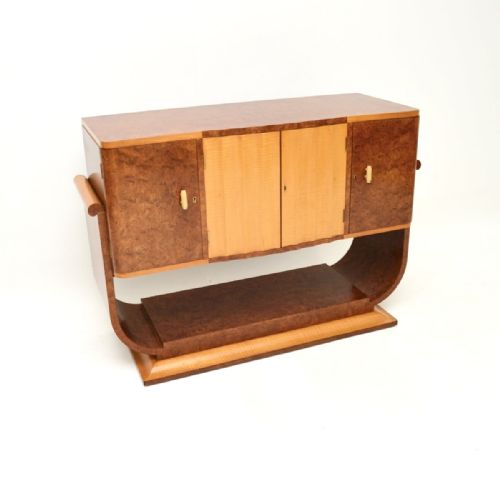
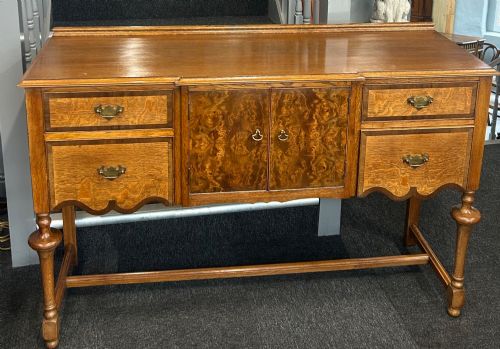
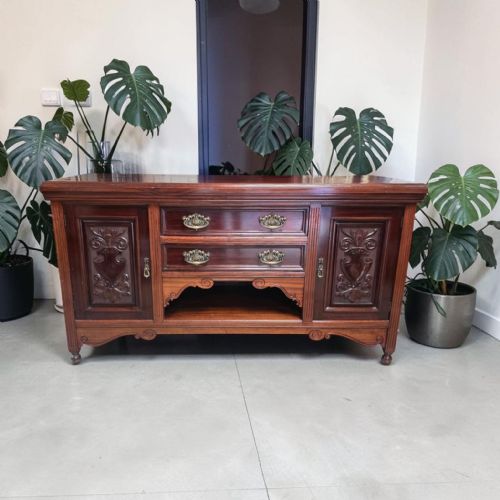
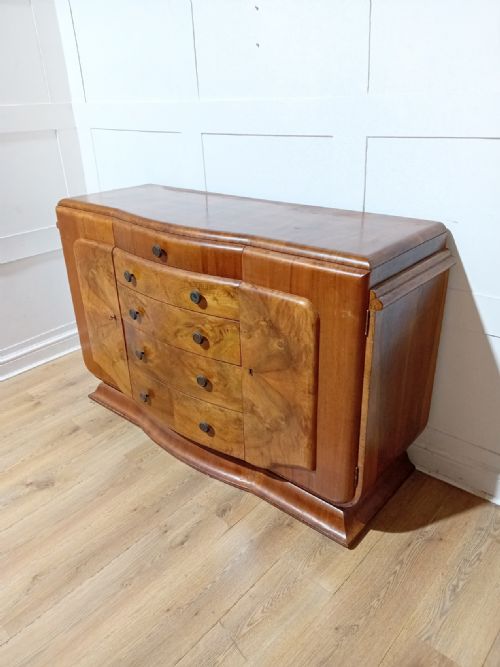
Buyers meet varied forms on this page, ranging from linear Art Deco designs to earlier Edwardian Revival and neo-classical styles. Woods such as oak, walnut, and mahogany dominate the offerings, often elevated with striking burr walnut veneer.
Cabinetmakers of this decade produced both substantial dining suite components and more compact freestanding sideboards. The selection balances traditional craftsmanship with the emerging modernist lines of the interwar years.
Construction and materials
Carpenters built these sideboards using solid timber frames of oak, mahogany, or walnut, overlaid with decorative veneers like burr walnut, sycamore, calamander, and ebony to create geometric grain patterns. Metal and brass hardware added functional contrast to the wooden surfaces.
Specialist workshops employed techniques such as veneering and marquetry to display the natural figuring of exotic woods. Finishing involved polishing the timber to highlight the grain and protect the surface against daily dining room use.
Some interwar dining suites required eleven separate pieces to fully furnish a single room, creating quite a logistical puzzle for the Edwardian dining room.
Distinguishing quality
The distinction between standard production and top tier pieces lies in the selection of timbers and the precision of the cabinetwork. Master makers chose highly figured burr veneers and matched the grain symmetrical across drawer fronts and cabinet doors.
Superior examples display careful attention to interior fittings, drawer construction, and original hardware. The integration of contrasting secondary woods, such as sycamore or ebony stringing, marks out the work of prominent interwar firms.
Maurice Adams·M. D. Miller & Sons·Heals of London·Harry And Lou Epstein·Epstein
The 1920s Dining Sideboard Glossary
- Burr walnut
- A veneer taken from the wart or burl growths of a walnut tree, prized for its swirling, highly decorative grain patterns. It forms the defining visual surface on many interwar pieces.
- Art Deco
- A design movement of the 1920s and 1930s characterised by sleek geometric shapes, streamlined forms, and stylised ornamentation. It moved furniture away from heavy Victorian revivalism.
- Barley twist
- A turned wooden furniture leg or decorative column carved in a spiral rope pattern. This detail links Edwardian pieces to earlier 17th-century revival traditions.
- Limed oak
- Timber treated with a white pigment or lime finish to open the grain and lighten the overall colour. This treatment gained popularity in British cabinetmaking during the early twentieth century.
- Calamander
- A dense, heavy exotic wood featuring dark brown stripes, used for fine decorative veneers in high end furniture. It provides strong contrast in interwar dining suites.
1920s Dining Sideboard: Frequently Asked Questions
How do I style a 1920s dining sideboard?
Position the sideboard against a principal dining room wall where it can function as a serving surface during meals. Allow the figured wood grain to remain the focal point by keeping surrounding decor restrained.
Pair the piece with complementary interwar ceramics, glassware, or simple metallic trays. Avoid cluttering the top surface to let the geometry of the cabinetwork stand out.
What is the difference between Edwardian and Art Deco sideboards?
Edwardian and early revival pieces tend to feature turned supports like barley twists, heavier mouldings, and traditional solid oak or mahogany construction. They reflect a lingering Victorian preference for ornate domestic woodwork.
Art Deco examples embrace streamlined symmetry, flat planes, and decorative veneers such as burr walnut or calamander. They present a cleaner, more modern silhouette designed for interwar interiors.
How should I care for a veneered sideboard?
Protect the polished wood and delicate veneers from direct sunlight to prevent fading and drying of the timber. Maintain a stable room temperature to keep the underlying structure secure.
Dust regularly with a soft, dry cloth and avoid silicone based polishes. Treat the surface occasionally with appropriate furniture wax to nourish the wood and maintain the lustre.
Were these sideboards part of larger dining suites?
Many interwar dining pieces formed part of coordinated suites that included matching tables, chairs, and serving cabinets. Makers designed these collections to unify the interior scheme of contemporary homes.
Individual pieces appear frequently on the market today as standalone items. They adapt easily to mixed interiors while retaining their original period presence.