






1920s British Watercolour Painting
These 1920s British watercolour painting examples capture domestic scenes and townscapes with paper, pigment, and glass.
1920s British Watercolour Painting
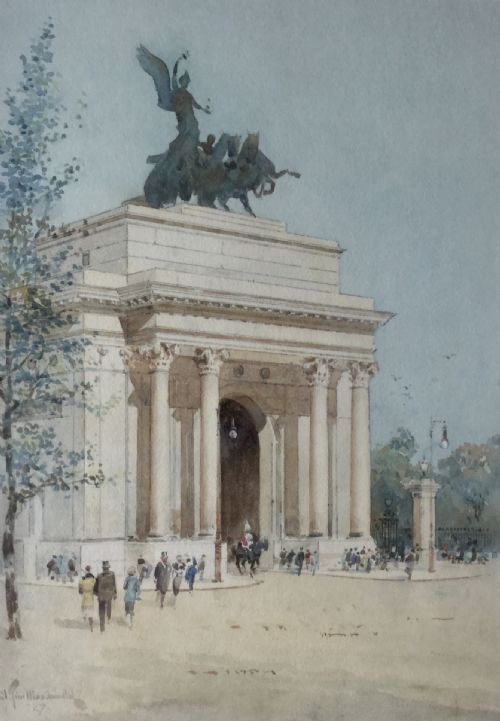
A 1920s British watercolour painting offers a direct record of interwar landscape, townscape, and figural studies produced across the United Kingdom. Buyers seeking this phrase encounter original works on paper capturing subjects from rural cottage gardens to London arches and Mediterranean views.
The selections on this page span styles from early twentieth-century British school and English impressionism to interwar realism. Most pieces appear framed and glazed in wood or gilt frames, preserving the delicate pigments applied by artists active during the period.
How they were made
Artists painted primarily with watercolour on paper, frequently augmenting transparent washes with gouache, ink, or pencil underdrawing to define architectural and figural details. These water-based pigments rely on the reflective quality of the white paper beneath to generate luminosity.
Finished works received protective mounting behind glass within wooden or gilt wood frames. This framing safeguarded the sensitive paper supports from atmospheric moisture and handling damage.
Materials utilised in these listings include paper, watercolour, glass, ink, pencil, gilt wood, gouache, and wood.
What varies in quality
Quality rests upon the sureness of the brushwork and the artist's command of tone and composition across the paper surface. Stronger examples display confident handling of light and atmospheric depth, whether depicting a bustling townscape or a quiet rural harbour.
The condition of the paper and the preservation of the original pigments dictate the visual strength of each painting. Pieces showing minimal fading and stable framing retain their intended vibrancy.
Owen Bowen·Edward Horace Thompson·Edith E Caswall·Fred Lawson·Jane Utley·J Tim Macdonald·Montagu Barstow·Dame Laura Knight·George Graham
The 1920s British Watercolour Painting Glossary
- Watercolour
- A painting method in which the paints are made of pigments suspended in a water-soluble vehicle. It provides translucent washes of colour on paper.
- Gouache
- An opaque watercolour paint mixed with a binding agent and white pigment to create solid, flat areas of colour. Artists used it alongside transparent washes to add highlights.
- Works on paper
- A collective category encompassing drawings, watercolours, and prints executed on paper supports. These require protection behind glass to prevent environmental degradation.
- Interwar Realism
- An artistic approach prominent between the First and Second World Wars focusing on recognizable scenes of everyday life, landscape, and architecture. It avoids extreme abstraction in favour of observed detail.
- Gilt wood
- Wood decorated with a thin layer of gold leaf or metallic gilding. It frequently forms the decorative border of traditional picture frames.
1920s British Watercolour Painting: Frequently Asked Questions
How should I frame a 1920s watercolour?
Watercolours require framing behind glass with acid-free mount board to prevent the paper from touching the glazing directly. This separation stops condensation from damaging the pigment.
Keep these works away from direct sunlight to prevent the water-based pigments from fading over time.
Were these paintings made as studies or finished works?
Artists during this period produced both rapid plein air watercolours and highly developed studio watercolours. Many townscapes and landscape studies served as finished exhibition pieces.
The presence of framing and signature often indicates a completed work intended for display.
What subjects are most common?
Townscapes, architectural landmarks, coastal views, and rural cottage gardens dominate the works from this decade. Artists travelled across Britain and Europe recording local topography.
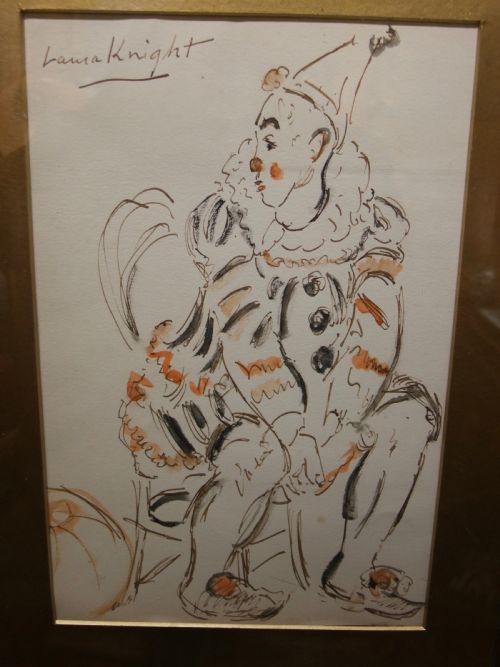
Figural studies, including circus performers and symbolic figures, also appear within the interwar output.
How do I identify the period of the painting?
Dates inscribed by the artist, framing styles, and subject matter provide primary evidence for dating. Many works carry period signatures or gallery labels on the reverse.
Stylistic markers like interwar realism align the visual approach with the nineteen-twenties and thirties.