



1920s Barley Twist Table
These 1920s barley twist tables bring structural movement and rich grain to a room through distinctive turned wooden supports.
1920s Barley Twist Table
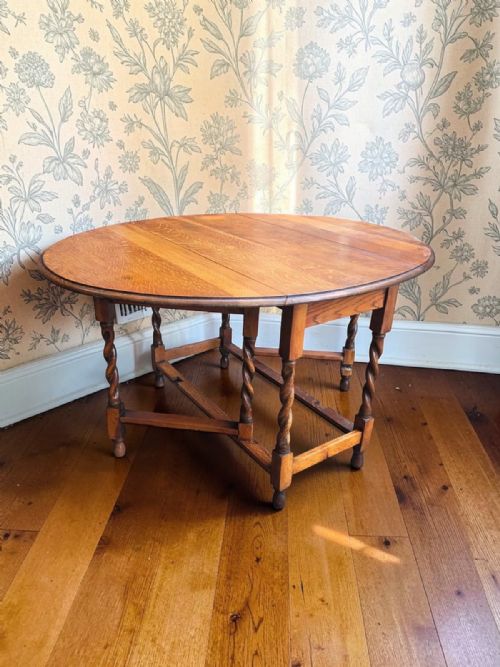
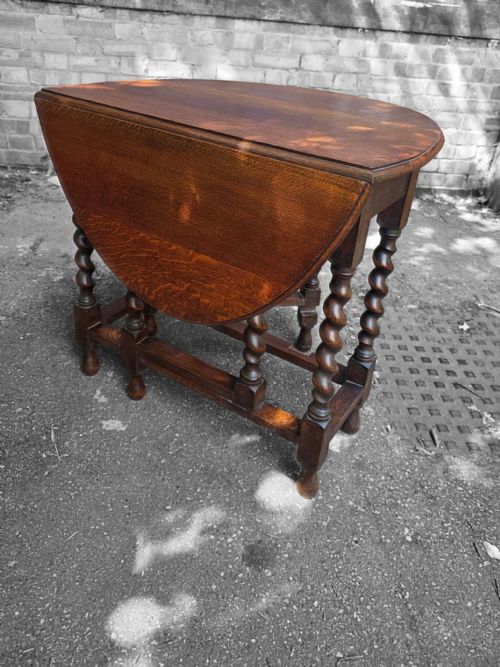
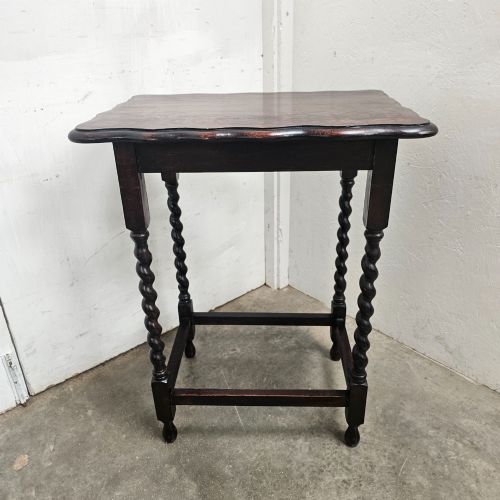
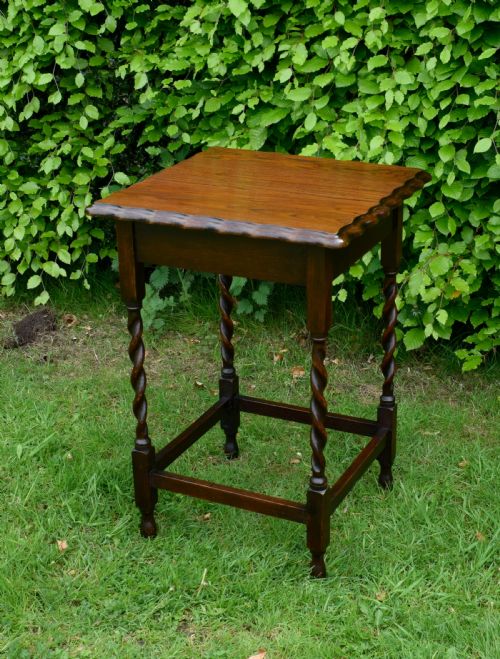
When you search for a 1920s barley twist table, you are looking at sturdy English oak furniture rooted in earlier Jacobean Revival aesthetics. The most common form you will meet on this page is the gateleg drop-leaf dining table, alongside smaller side tables and occasional pieces.
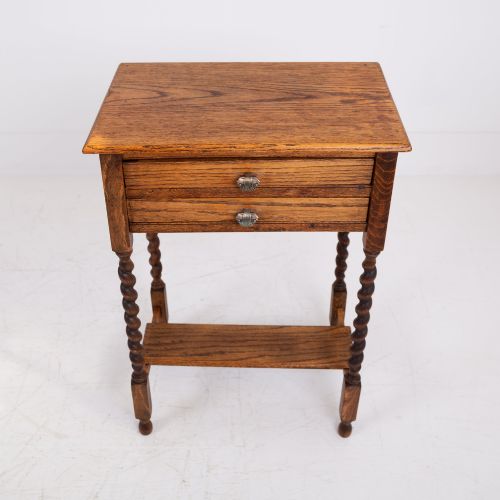
While the majority of pieces date firmly to the nineteen-twenties or the Edwardian years, related forms stretch from side tables and plant stands to dressing tables and table lamps. The characteristic spiral turning defines the legs across all these domestic objects, whether supporting a dining leaf or a small oval top.
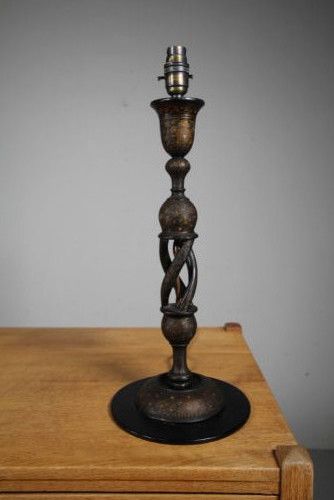
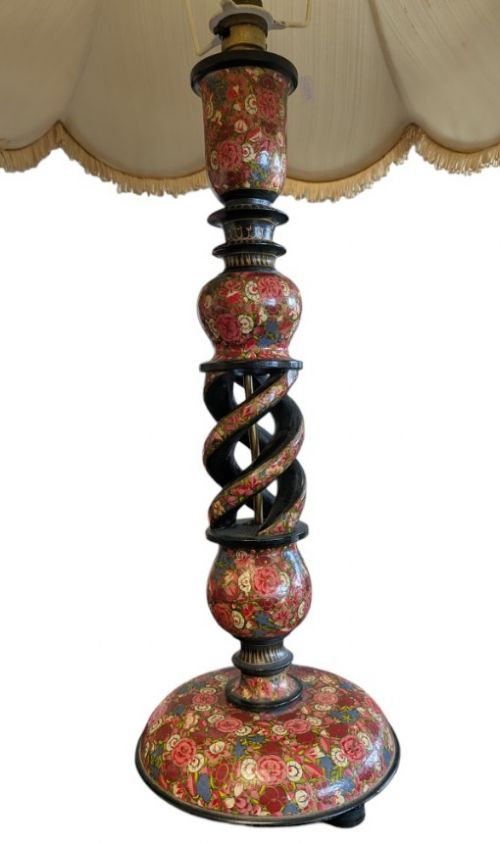
Occasional variations incorporate contrasting materials or regional styles, such as Kashmiri lacquer work on wooden lamp bases, but solid English oak remains the principal medium for the tables themselves. Buyers choose these designs for their honest timber construction and the way the spiral legs catch the light in a traditional or modern interior.
Materials and construction methods
Carpenters built these tables primarily using solid oak, selecting timber with prominent grain patterns that enhanced the visual rhythm of the turned supports. The distinctive spiral twist on the legs was produced by lathe-turning and hand-finishing, creating a continuous, rounded helical moulding.
Gateleg and drop-leaf forms relied on sturdy hinged mechanisms and pegged wooden joints to support folding leaves securely. Secondary materials appear in smaller items and lighting, including brass fittings, carved wood, fabric shades, and papier-mache with lacquer finishes.
Listings feature oak predominantly, alongside metal, brass, carved wood, lacquer, papier-mache, and fabric across dining tables, side tables, lamps, and candlesticks.
Distinctions in execution and material
The degree of refinement in the hand-turned spiral legs separates standard production from superior pieces, with cleaner lines and more uniform pitches in the twist indicating better workshop practice. Timber selection also plays a significant role, as dense English oak with an even, attractive grain elevates the overall presence of a gateleg dining table or side table.
Structural integrity in the hinge mechanisms and drop-leaf supports determines how well a table survives daily use. Pieces that retain their original finish and solid oak framework demonstrate superior preservation compared to items requiring extensive timber replacement.
The 1920s Barley Twist Table Glossary
- Barley twist
- A type of furniture leg or support turned in a spiral helix resembling a stalk of barley. It gained popularity in seventeenth-century English joinery and saw a major revival in the early twentieth century.
- Gateleg table
- A table with hinged leaves supported by one or more legs that swing out like a gate. This design allowed furniture to fold flat against a wall when not in use.
- Drop-leaf table
- A table featuring a fixed centre section and two hinged flaps that lower at the sides. It offers adjustable surface area for dining or compact placement.
- Jacobean Revival
- A nineteenth and early twentieth-century design movement that copied or reinterpreted the heavy oak furniture styles of the early seventeenth century. It accounts for the dark timber and turned motifs common in this period.
- Pie crust table
- A small occasional table featuring a raised, carved edge shaped in gentle undulating curves. The decorative border resembles the pastry edge of a pie.
1920s Barley Twist Table: Frequently Asked Questions
What rooms suit a barley twist table?
These pieces fit naturally into living rooms, dining spaces, and hallways where warm timber tones add character. Compact side tables and plant stands work well in tighter corners, while larger gateleg models anchor a dining area.
The tactile nature of the turned legs complements both traditional country houses and contemporary rooms seeking texture. Their versatility allows them to function as desks, lamp tables, or occasional surfaces.
How do I care for antique oak?
Regular dusting with a dry, soft cloth maintains the surface sheen of the timber without building up unnecessary residues. Avoid placing wooden tables near direct heat sources or strong sunlight to prevent drying and fading.
Occasional application of appropriate wax nourishes the grain and protects the finish from moisture. Gentle handling of drop-leaf hinges preserves the mechanical operation over time.
Are gateleg tables practical for dining?
Gateleg tables offer adjustable surface space that adapts easily to different room layouts and seating numbers. Folding down the leaves reduces the footprint significantly when the table is not in active use.
The swinging leg supports provide adequate stability for daily meals when properly locked into position. Their sturdy oak construction ensures they withstand regular everyday demands.
How do I distinguish 1920s oak from older pieces?
Nineteenth and twentieth-century revival pieces often exhibit machine assistance in the turning process, resulting in uniform regularity across the spiral legs. Tool marks, timber shrinkage, and assembly methods also provide clues to the approximate date of manufacture.
Hardware such as hinges and screw types help confirm whether a table belongs to the early twentieth-century revival period rather than earlier centuries. Comparing the colour and patination of the oak further clarifies its age.