



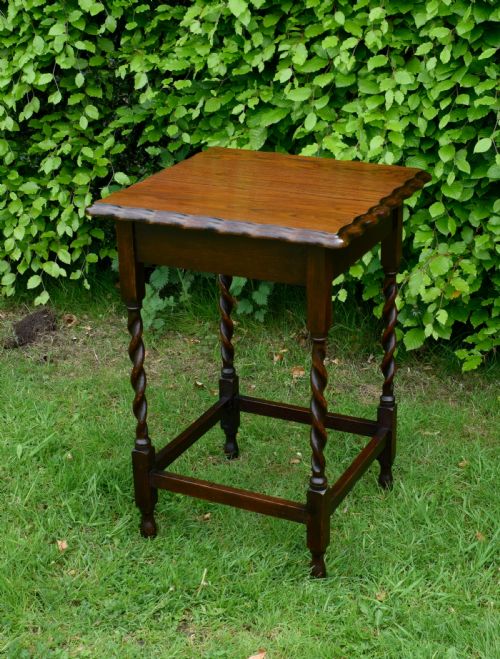


Oak Spiral Leg Table
An oak spiral leg table brings robust character and tactile turned timber into a room, offering both sturdy utility and centuries of English craft tradition.
Oak Spiral Leg Table
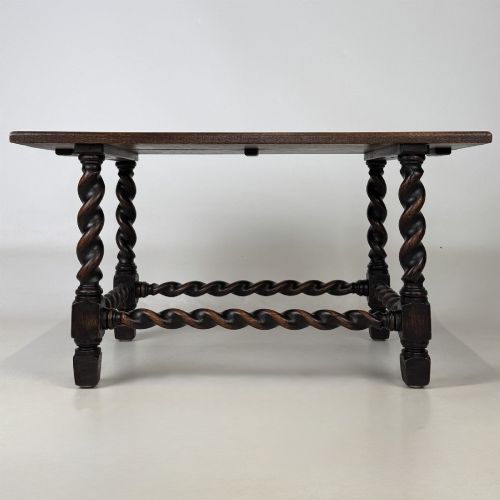
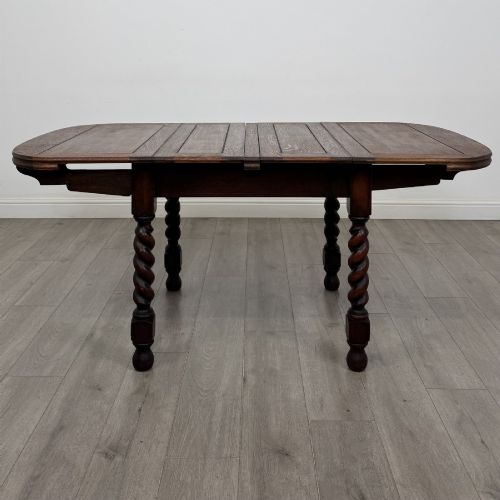
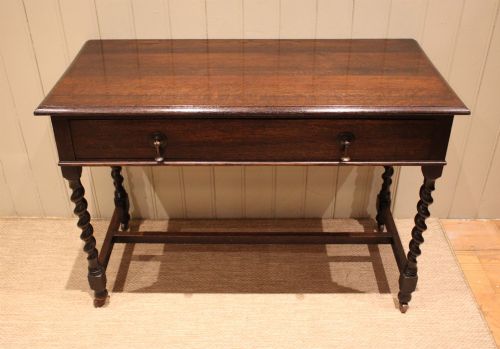
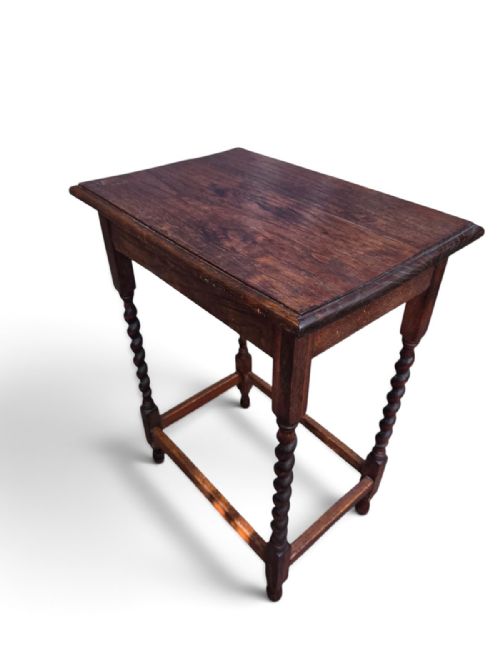
The assortment of forms available includes practical side tables, dining tables, coffee tables, and desks, often defined by distinctive turned supports. Side tables and coffee tables with barley twist legs appear frequently, alongside larger gateleg dining tables and compact nests of tables.
Originating largely from British workshops across different eras, these items reflect enduring utility combined with decorative turning. Whether you seek a seventeenth-century parquetry piece or a nineteen-twenties Jacobean style coffee table, the timber remains the primary constant.
How they were made
Makers utilised solid oak for the primary framework and surfaces of these tables, occasionally incorporating walnut or secondary timbers depending on the period. Metal fittings in brass or iron appear on specific functional forms such as desks and drawers.
Construction techniques evolved from seventeenth-century parquetry and gateleg mechanisms to twentieth-century draw leaf systems. The signature spiral or barley twist legs were shaped using specialised turning methods on lathes, demanding considerable skill from the carpenter to maintain even proportions.
Oak Spiral Leg Table Retail Price Guide 2026
Typical asking prices for oak spiral leg table among the pieces listed under this phrase on Sellingantiques today, from the lower quarter to the upper quarter. They describe what is for sale here now, not the wider market.
Spiral legs were sometimes turned by hand on pole lathes, meaning no two twists match perfectly upon close inspection.
What varies in quality
The crispness and depth of the timber turning set finer examples apart from simpler production pieces, particularly on the spiral legs where hand-carved or meticulously lathed contours define the silhouette. Early pieces demonstrate greater complexity in jointing and surface treatment, such as intricate parquetry work.
The integrity of the timber and the retention of original structural elements govern the standing of each piece. Tables that preserve their authentic nineteenth or seventeenth-century surface patination carry stronger material presence than later revivals.
The Oak Spiral Leg Table Glossary
- Barley twist
- A type of spiral turning resembling a twisted rope, commonly found on table legs from the seventeenth century and later revival periods.
- Gateleg table
- A drop-leaf table featuring hinged legs that swing out to support the expanded leaves.
- Parquetry
- Geometric mosaic woodwork used for decorative surface patterns, seen on top panels of period tables.
- Draw leaf
- An extension mechanism where two leaves slide out from beneath the main tabletop to increase its length.
Oak Spiral Leg Table: Frequently Asked Questions
What periods do these tables come from?
The pieces span a wide chronological range, covering the late seventeenth, eighteenth, and nineteenth centuries, alongside early twentieth-century revivals.
Most examples lean towards the Victorian, Edwardian, and nineteen-twenties periods, often adopting earlier styles such as Jacobean Revival.
Where were barley twist legs used?
Barley twist turning appears prominently on the vertical support legs of side tables, dining tables, and coffee tables.
This decorative feature provides structural strength while adding dynamic visual rhythm to the timber framework.
Are these tables suitable for daily use?
Solid oak construction provides these tables with exceptional durability, making them well-suited for everyday living spaces.
From compact nests of tables to large extending dining variants, they accommodate modern domestic requirements while retaining historical character.