




1900s Kilim
These 1900s antique kilim flatweaves bring warmth, pattern and genuine tribal character to any floor.
1900s Kilim
A 1900s antique kilim is an unpiled flatwoven textile originating from tribal and regional weaving traditions across Persia, Turkey, the Caucasus and Central Asia. When you search for this phrase, you encounter rugs, prayer kilims, saddlebags and tribal textiles produced around the turn of the twentieth century.
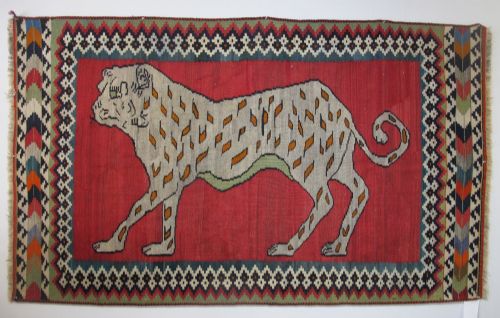
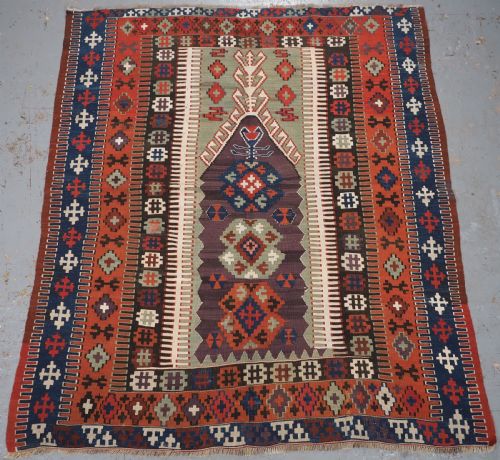
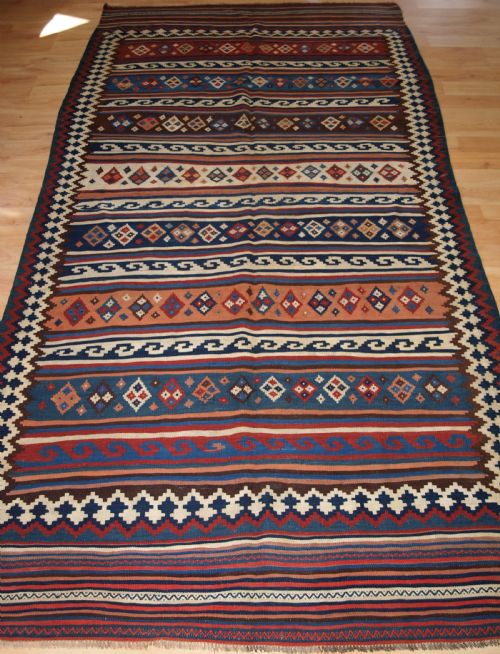
The pieces on this page lean heavily towards Turkish and Persian origins, featuring specific regional examples from Konya, Obruk, Sivrihisar, Qashqai, Shahsavan and Varamin. Alongside these, Turkmen, Uzbek and Caucasian pieces appear in forms ranging from banded weft work to striking eye-dazzler patterns and figurative lion designs.
Buyers seek these textiles for their flat-faced weave and geometric motifs, which provide a distinct contrast to piled carpets. Each piece represents traditional domestic or nomadic production, utilising techniques passed down through generations.
How they were made
These flatweaves are constructed primarily from wool, utilising slit-tapisserie weaving techniques where the weft threads are beaten down tightly over the warp to create crisp geometric transitions. Natural dyes provide the soft colour palettes seen across the regional examples.
Weavers employed banded weft work, fine weaves and distinct structural patterns suited to both functional items like saddlebag faces and larger floor coverings. The absence of pile creates a durable, lightweight textile that sits flat.
Listings feature wool and natural dyes exclusively, spanning regional styles from Persian and Anatolian tribal to Caucasian and Central Asian workshops.
What varies in quality
Quality in these flatweaves rests on the tightness of the weave and the clarity of the design structure. Finer weaves demand greater skill from the maker and hold their geometric precision sharply across the field.
The visual appeal depends on the harmony of the natural dyes and the balance of the regional design, whether it is an eye-dazzler pattern, a prayer niche or a figural composition like a lion.
The 1900s Kilim Glossary
- Kilim
- A flatwoven textile produced without a pile by tightly interlocking weft threads over warp threads. This technique creates a lightweight rug with identical patterns visible from both sides.
- Prayer kilim
- A regional textile featuring a Mihrab or niche design used historically for daily prayers. These pieces direct the focus toward Mecca during worship.
- Slit tapestry
- A weaving method where the weft threads return at the edge of a colour motif, leaving a small vertical slit in the fabric. This technique defines the sharp geometric edges characteristic of tribal weaving.
- Saddlebag
- A utilitarian container woven in pairs to be draped over pack animals for nomadic travel. The faces are often preserved as decorative flatweaves after the backing wears away.
- Natural dye
- Colour extracted from plants, insects and minerals before synthetic aniline dyes dominated the market. These colourants age with subtle tonal variations.
1900s Kilim: Frequently Asked Questions
How do I clean a kilim?
Gentle surface cleaning and regular shaking remove dust and grit from the flat weave. Professional specialist washing protects the wool fibres and natural dyes from damage.
Avoid harsh chemical detergents and excessive scrubbing, which weaken the antique structure. Air drying flat preserves the original dimensions of the textile.
Where were these textiles woven?
Weavers produced these flatweaves across regions including Anatolia, Persia, the Caucasus and Central Asia. Specific areas such as Konya, Varamin and regions worked by Qashqai and Shahsavan tribes generated distinct regional styles.
Nomadic groups and settled villagers alike contributed to this output, using local materials and traditional geometric vocabulary.
Can I use a kilim on the floor?
These flatweaves function well as floor coverings in areas with moderate foot traffic. Their durable wool construction withstands daily walking when paired with a quality rug underlay.
The lack of pile makes them easy to lift, shake and reposition compared to heavy knotted carpets.