


18th Century Wooden Head
An 18th century wooden head brings striking sculptural presence into a room, offering authentic period character through centuries of handling and age.
18th Century Wooden Head
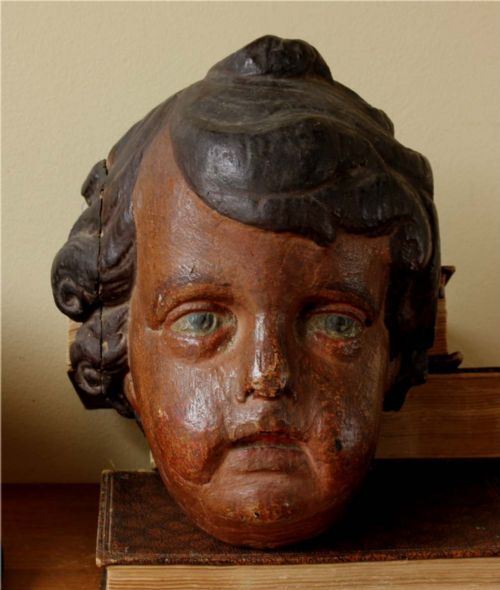
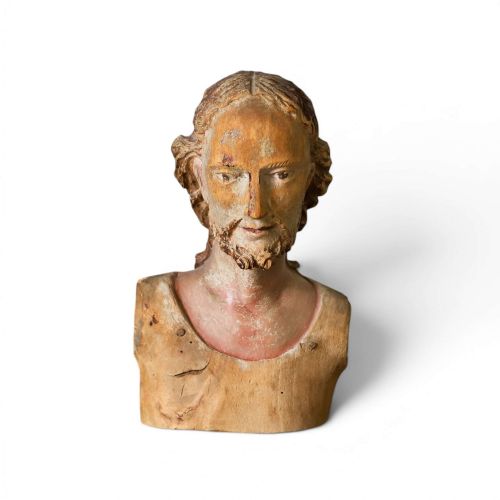
When you search for an 18th century wooden head, you encounter a remarkable variety of sculptural forms spanning religious figures, architectural salvage, and portrait busts. The selection on this page ranges from Italian Baroque putti and Sicilian busts of Christ to Spanish saint figures and Venetian devil heads.
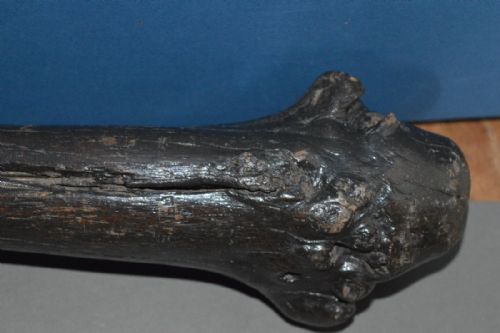
Most pieces date from the 17th and 18th centuries, taking the form of cherub heads, noble ladies, saints, and carved animal terminals such as lions and tigers. Alongside these sacred and decorative carvings, occasional ethnographic weaponry and milliners heads appear in the wider record.
Makers shaped these works during the Georgian, Neoclassical, and Baroque eras across England, France, Italy, Spain, Russia, and beyond. Whether you examine a small pair of cherub heads or a walnut Santos bust, each object carries the distinct sculptural idiom of its regional origin.
Materials and Craftsmanship
Carvers worked primarily in dense hardwoods including walnut, mahogany, olive wood, and carved wood, occasionally utilising gesso to prepare surfaces for decoration. These timbers provided the stable grain necessary for intricate chiselling and deep relief work.
Many surfaces feature polychrome paint, gilding, or brass elements applied over the carved timber to enhance visual realism and devotional impact. Tool marks and residual preparation layers remain visible across the reverses and interiors of these sculptures.
Listings feature periods spanning the 17th century, Georgian era, and late 18th century, utilising walnut, mahogany, olive wood, polychrome, and gesso.
Assessing Quality and Expression
Quality rests entirely in the expressive depth of the carving and the preservation of the original surface decoration. Superior examples display confident chisel work that defines facial anatomy and drapery without stiffness.
The survival of original polychrome pigment or gilded finish elevates a piece significantly. Pieces that retain their historic surface integrity without excessive later repainting command the strongest presence.
The 18th Century Wooden Head Glossary
- Polychrome
- Decoration consisting of several colours applied to wood or gesso surfaces. This technique added lifelike realism to religious and decorative sculptures.
- Gesso
- A plaster mixture applied as a smooth base for painting or gilding on wood. It sealed the timber grain before the artisan applied colour or leaf.
- Putti
- Depictions of chubby male infants, often winged, common in Baroque and Neoclassical art. Sculptors carved these figures extensively for church decoration and architectural schemes.
- Santos
- A devotional figure representing a saint or holy person, frequently dressed in real fabrics or carved entirely from wood. These busts served private and institutional worship.
- Boss
- A decorative projecting block of stone or wood, often carved with a grotesque or animal head. Architectural settings utilised these elements at intersections or terminals.
18th Century Wooden Head: Frequently Asked Questions
What were 18th century wooden heads used for?
These carvings served diverse purposes ranging from church altarpieces and devotional Santos figures to architectural salvage and millinery display. Religious sculptures focused the mind during prayer while animal heads adorned larger furnishings or buildings.
Over time, many pieces transitioned from functional or sacred contexts into decorative objects collected for their sculptural qualities.
How do I care for antique wood sculptures?
Keep wooden sculptures away from direct sunlight, radiators, and rapid humidity fluctuations to prevent timber splitting and paint flaking. Dust gently with a dry, soft brush rather than using wet cloths or modern polishes.
Stable indoor conditions preserve both the structural wood and any delicate polychrome surfaces for decades to come.
Are all these pieces religious?
While saints, cherubs, and busts of Christ form a large portion of the work, the category includes secular subjects as well. Architectural elements like lion and tiger heads, Venetian devil bosses, and portrait busts broaden the scope beyond sacred art.
Every piece reflects the specific decorative or symbolic needs of its original patron.
What is architectural salvage in this context?
Architectural salvage refers to carvings originally fixed to buildings, ships, or large pieces of furniture that were later removed. These items include decorative terminals, brackets, and wall bosses.
Such sculptures show attachment points or flat uncarved backs where they once joined a larger structure.