



18th Century Window Seat
An 18th century window seat is a long seating form designed to fit a recess, offering sturdy mahogany and upholstered comfort by the glass.
18th Century Window Seat
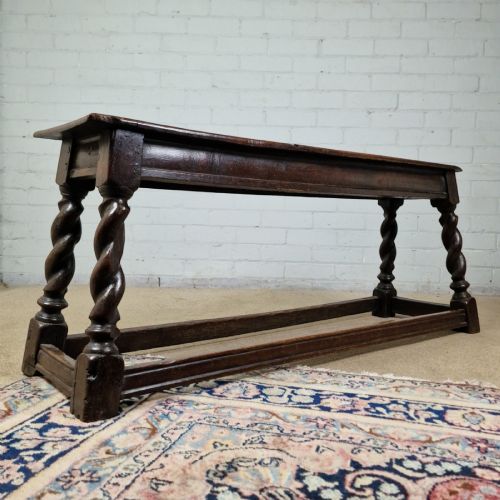
An 18th century window seat appears in several distinct forms across our records, ranging from compact stools to longer settees designed for multiple occupants. The selection spans robust oak pieces as well as refined mahogany examples with carved legs.
Makers of this era produced forms suited to specific domestic spaces, sometimes categorised broadly as long stools or piano stools. Buyers encountering these pieces today will find both English iterations and continental European examples.
The materials recorded in these listings show a preference for solid hardwoods paired with various textiles. Craftsmanship from the period prioritises proportion and utility alongside decorative carving.
How they were made
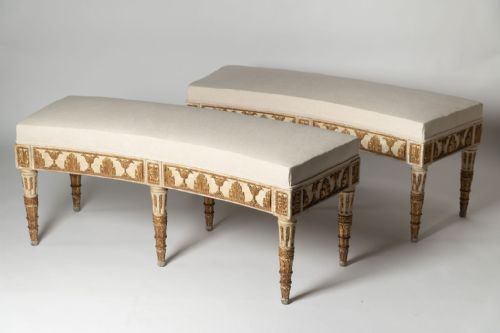
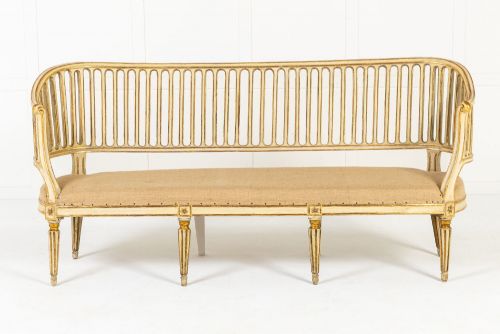
Carpenters constructed these frames primarily from mahogany and oak, utilising traditional joinery to ensure stability under daily use. Selected pieces incorporate painted wood finishes or gilded surfaces to achieve a more formal appearance.
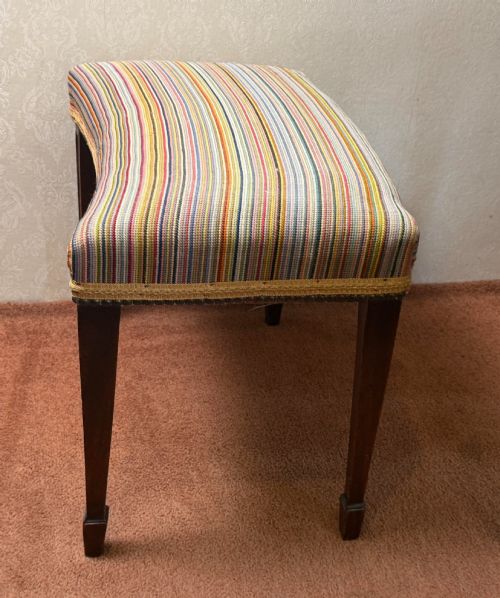
Upholstery techniques involved durable linen and various textile coverings fixed over padding to support the sitter. Frame construction often featured square tapering legs or cabriole supports depending on the prevailing style.
One past record demonstrates that an 18th century window seat once shared space with a pastel portrait of a lady gazing out the glass.
What varies in quality
The refinement of the carving and the elegance of the proportions separate standard examples from finer works. Well-drawn legs and crisp detailing indicate a higher level of workshop execution.
The choice of primary timber and the integrity of the original frame construction also influence the standard of a piece. Pieces retaining their structural coherence and appropriate textile coverings demonstrate superior preservation.
I.M. Gillows of Lancaster
The 18th Century Window Seat Glossary
- Cabriole leg
- A furniture leg that curves outward at the knee and tapers inward toward the foot, often ending in a pad or claw.
- Serpentine
- A line or edge that curves outward centrally and inward at the sides, creating a gentle undulating wave.
- Giltwood
- Timber that has been coated with a thin layer of gold leaf or powder, frequently seen on decorative Italian frames.
- Tapering leg
- A vertical support that gradually decreases in thickness toward the base, characteristic of later neoclassical designs.
- Settee
- A medium-length upholstered wooden bench with a back and arms, built to seat two or more people.
18th Century Window Seat: Frequently Asked Questions
What is an 18th century window seat?
An 18th century window seat is a long stool or small settee designed specifically to sit within the architectural recess of a bay or window. These pieces provide low seating without high backs that would otherwise obscure the light.
Surviving examples utilise timber frames such as mahogany and oak, frequently accompanied by upholstered textile tops. They reflect the interior arrangements of Georgian homes where comfort met natural illumination.
How were window seats used historically?
Historically, these long stools served as convenient resting places positioned near glazing for reading or needlework. Their compact height ensured they did not block window shutters or casements.
In grander interiors, matched sets furnished long galleries or drawing rooms, moving between windows and interior walls as required. They accommodated one or multiple sitters depending on the length of the frame.
How do I distinguish George III styles?
George III pieces often display rectilinear forms, square tapering legs, and restrained classical carving influenced by contemporary architects. Mahogany remains the dominant wood for these English productions.
Earlier iterations may show heavier proportions or cabriole supports, while later examples embrace lighter neoclassical lines associated with the Adam style.
Where should I place a window seat today?
These pieces fit naturally beneath modern windows, along hallways, or at the foot of a bed where a low profile is advantageous. Their narrow depth allows them to occupy transitional spaces without obstructing movement.
Pairing the frame with appropriate textile upholstery helps integrate the antique into contemporary domestic lighting and colour schemes.