



18th Century Welsh Coffer
An 18th century welsh coffer brings robust vernacular craftsmanship and enduring utility into a modern interior.
18th Century Welsh Coffer
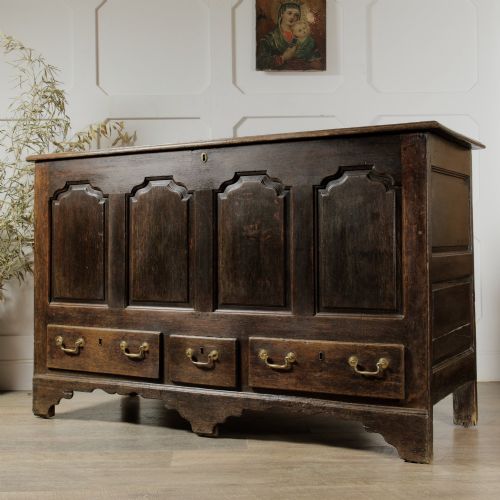
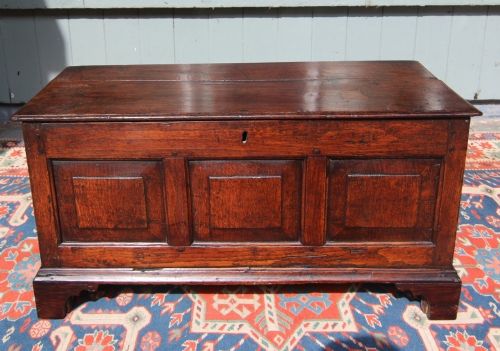
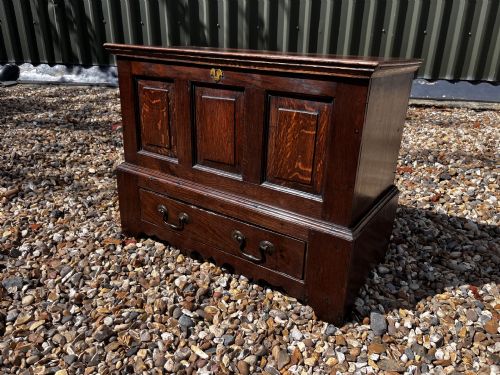
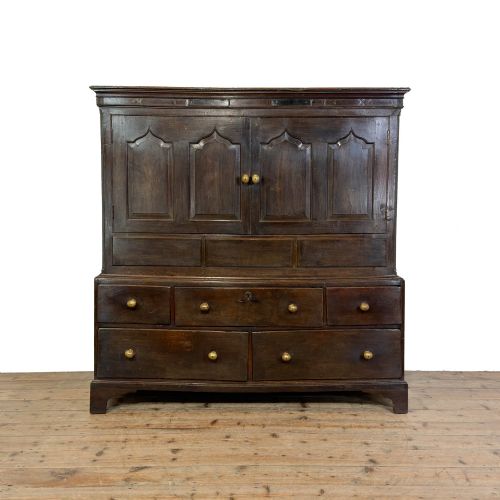
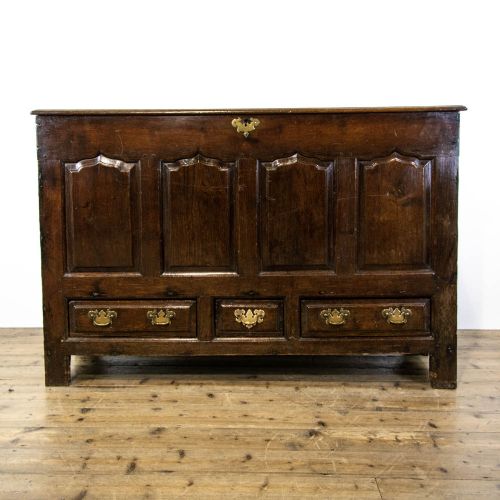
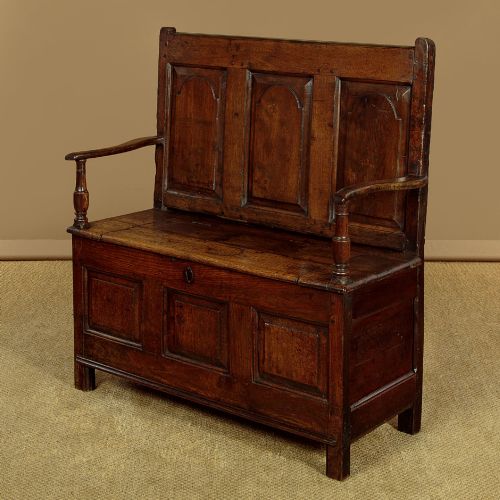
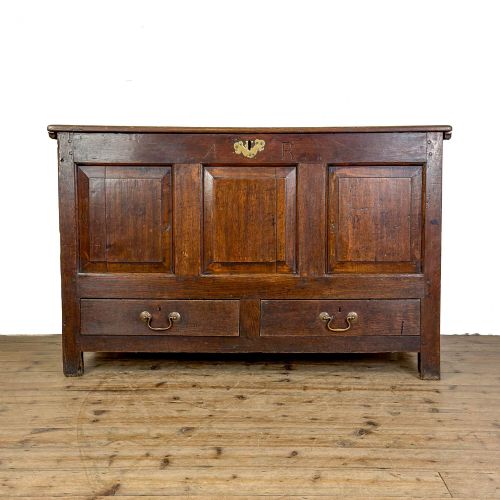
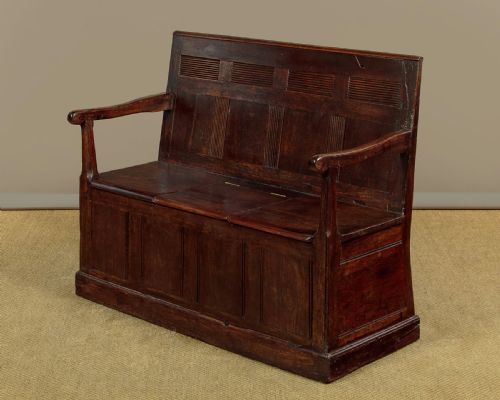
An 18th century welsh coffer encompasses traditional vernacular storage furniture created across Wales during the Georgian period, including standard blanket chests, mule chests fitted with lower drawers, and box settles.
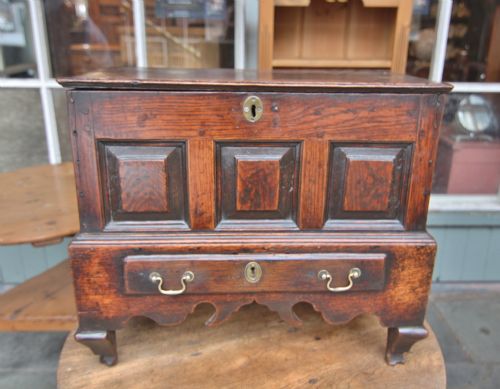
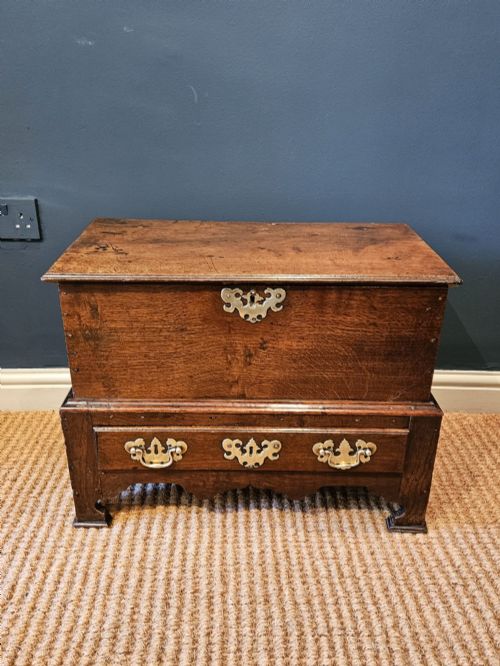
The coffer bach, or small miniature chest, appears frequently in these selections, historically used to store valuables or documents rather than household linens.
Mule chests combine the deep upper lidded compartment of a standard coffer with one or more drawers built into the base, offering expanded storage capacity.
How They Were Made
Local cabinet makers constructed these pieces primarily from sturdy native oak, often utilising pine for internal secondary elements and floorboards.
Decorative enrichment frequently relies on contrasting timber inlay, fruitwood detailing, and occasional bone accents, alongside raised and fielded panels.
18th Century Welsh Coffer Retail Price Guide 2026
Typical asking prices for 18th century welsh coffer among the pieces listed under this phrase on Sellingantiques today, from the lower quarter to the upper quarter. They describe what is for sale here now, not the wider market.
Several miniature coffers feature handwritten owner initials and dates, preserving the personal touch of eighteenth century households.
What Varies in Quality
The refinement of regional joinery and the presence of sophisticated geometric or floral inlay distinguish finer workshop output from simpler domestic carpentry.
Proportion and scale dictate desirability, particularly in miniature formats where balanced dimensions reflect the maker's architectural training.
The 18th Century Welsh Coffer Glossary
- Coffer bach
- A miniature Welsh chest, translating literally to little coffer, typically featuring a lidded top above a small drawer.
- Mule chest
- A storage chest equipped with a hinged lid for top access and one or more functional drawers positioned beneath the main compartment.
- Box settle
- An oak seating bench featuring a high solid back, armrests, and an enclosed lidded compartment beneath the seat.
- Livery cupboard
- A freestanding domestic storage cabinet used for food or household provisions, often incorporating panelled doors and ventilation slats.
- Vernacular furniture
- Domestic pieces built by regional joiners using local traditions and materials rather than adhering to formal metropolitan design canons.
18th Century Welsh Coffer: Frequently Asked Questions
What is a coffer bach used for?
These small miniature chests served secure domestic purposes for holding valuables, precious documents, or small personal items.
Today, their compact proportions make them suitable as tabletop display pieces or accent storage in living spaces.
How do mule chests differ from standard coffers?
Mule chests combine the traditional top-opening lid of a standard blanket chest with the convenience of lower drawer storage.
This hybrid form allowed owners to access frequently used items without disturbing objects stacked inside the upper compartment.
What timber was used for welsh coffers?
Local oak served as the primary material for the vast majority of these regional chests, providing structural durability and rich grain.
Secondary woods such as pine appear internally, while fruitwood and bone frequently furnish contrasting decorative inlay.
How do you date an 18th century coffer?
Dating relies on examining construction techniques, such as panel assembly methods, hinge types, and the evolution of drawer framing.
Stylistic cues like regional vernacular carving patterns and inlaid initials or dates further help narrow the period of creation.