



18th Century Watercolour Portrait
An 18th century watercolour portrait captures personal likeness on a small scale, offering intimate glimpses of Georgian sitters through delicate pigments.
18th Century Watercolour Portrait
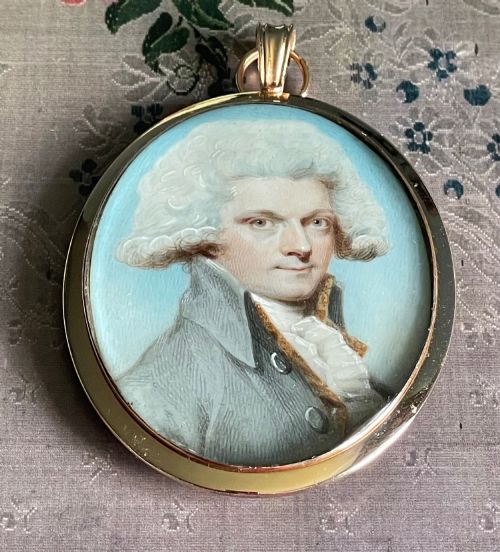
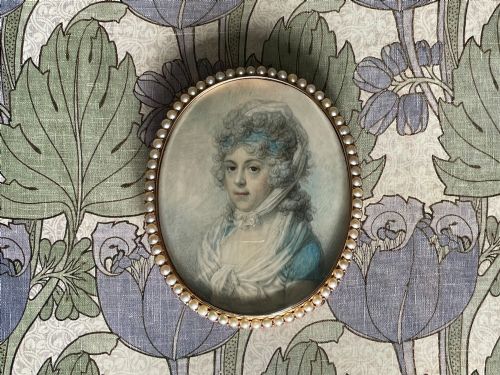
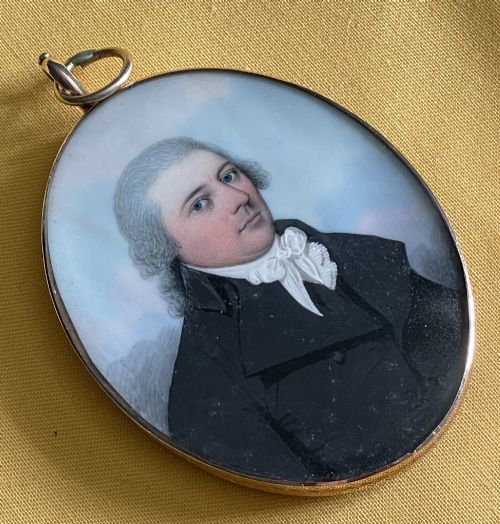
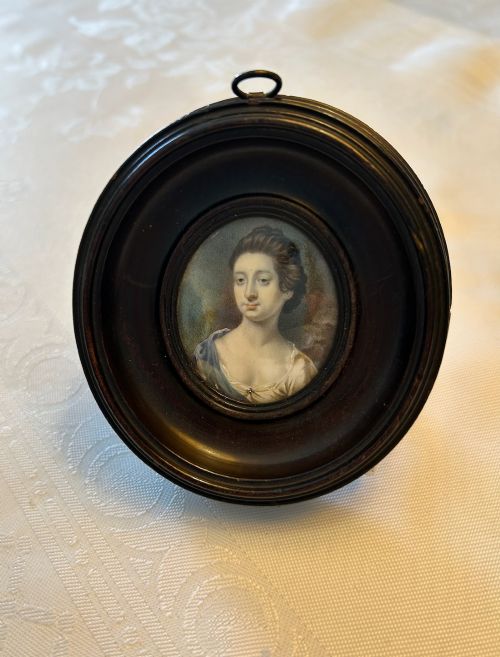
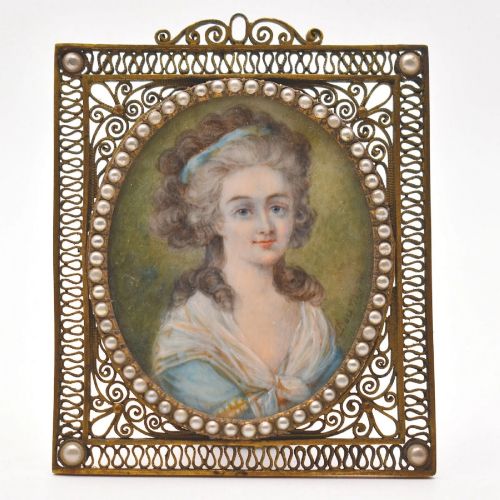
An 18th century watercolour portrait typically takes the form of a delicate miniature painting created to be held in the hand or worn as a pendant. These works record the likenesses of gentlemen, ladies, children and military officers from the Georgian era.
The versions most commonly met on this page originate in British schools of art, executed during the eighteenth century and the Regency period. They appear framed in wood, ebonised surrounds or precious metals such as gold.
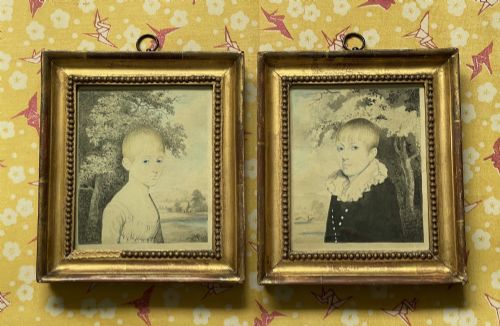
Beyond intimate portrait miniatures, the category encompasses broader paintings on paper and wash sketches depicting single subjects or family groups. Artists working in this medium frequently produced likenesses intended for private remembrance or familial display.
Materials and technique
Artists painted these works using water-soluble pigments applied to prepared surfaces such as paper, fine vellum or ivory panels. Washed watercolour and gouache built up translucent layers of flesh tones and costume details.
Finished paintings received protection beneath transparent glass held within frames constructed from wood, gilt metal, 14K gold or 18k gold. Some examples incorporated seed pearls or protective reverse panels to complete the ensemble.
Several portraits preserve the exact gaze of eighteenth-century sitters who sat patiently while artists captured their powdered hair and lace collars.
Distinctions in execution
The choice of housing also influences distinction, as original gold frames and intact glass enclosures preserve the integrity of the piece. Works attributed to known miniaturists demonstrate greater command of proportion and pigment density than anonymous student productions.
Charles Shirreff·Richard Cosway·Frederick Buck·William Wood·Charles Hayter·William Naish·Nicolas Freese·Albin R Burt·George Englehead·Archibald Skirving·William Grimaldi·Edward Pugh·Samuel Cotes·Diana Hill·John Barry·Sir Joshua Reynolds·John Downman
The 18th Century Watercolour Portrait Glossary
- Portrait Miniature
- A small-scale painting executed on ivory, vellum or paper designed for private viewing or portable wear. These objects often served as tokens of affection between family members.
- Wash
- A thin, translucent layer of diluted watercolour pigment spread evenly across paper to create skies, shadows or background depth. It forms the tonal foundation of many eighteenth-century sketches.
- Pendant
- A framed piece manufactured with a loop or bezel to allow suspension from a chain or ribbon. Many miniature portraits were made specifically to be worn near the heart.
- Ebonised
- Wood treated with a dark stain or finish to imitate true ebony. This dark framing material provided high visual contrast against pale watercolour portraits.
- Gilt Metal
- Base metal treated with a thin layer of gold leaf or gilt wash to simulate solid precious metal. It offered an accessible decorative housing for Georgian artworks.
18th Century Watercolour Portrait: Frequently Asked Questions
How were these miniatures worn?
Many portraits were fitted with bezels, loops or hinged backs so they could be worn as pendants or kept inside pocket-sized leather cases. This allowed owners to carry likenesses of absent family members during travel.
Over time, some pieces transitioned from wearable items into desk ornaments or wall-hung pictures supported by gilt metal stands.
Why use ivory for painting?
Artists selected thin slices of ivory because its smooth, slightly luminous surface imparted a natural glow to human skin tones. Watercolour applied over ivory possessed a depth that opaque paper could not replicate.
Painters often cross-hatched fine pigment layers to let the pale ground shine through the translucent paint.
How do I identify military sitters?
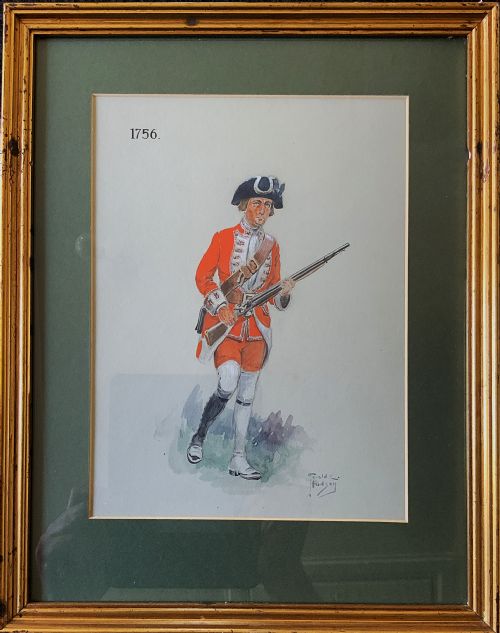
Military subjects are identified through the accurate depiction of period uniforms, gorgets, epaulettes and regimental facings. Artists recorded specific branch details, such as artillery or naval dress, to document the sitter's service.
Inscriptions on the reverse or accompanying family provenance frequently confirm the regiment and rank.
Where should I hang these portraits?
These delicate works require placement away from direct sunlight and excessive moisture to protect fugitive watercolour pigments and paper supports. Small groupings displayed at eye level in low-lit drawing rooms allow close inspection of fine details.
Securing them in stable, temperature-controlled environments ensures the preservation of the original frames and glass.