
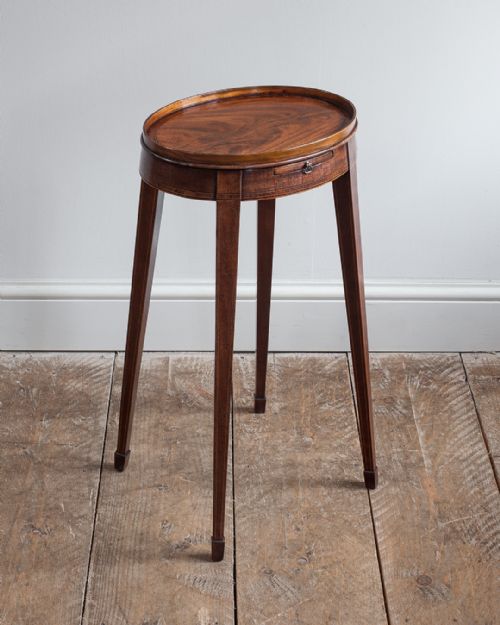


18th Century Urn Table
An 18th century urn table is a slender standalone piece built to hold a heavy hot water vessel, offering compact elegance beside a seating area.
18th Century Urn Table
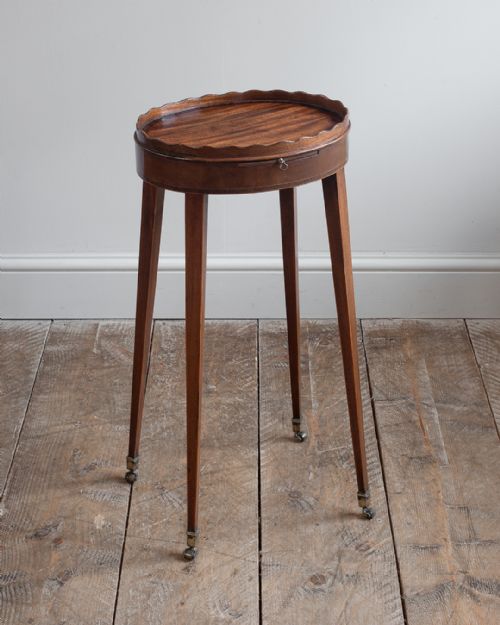
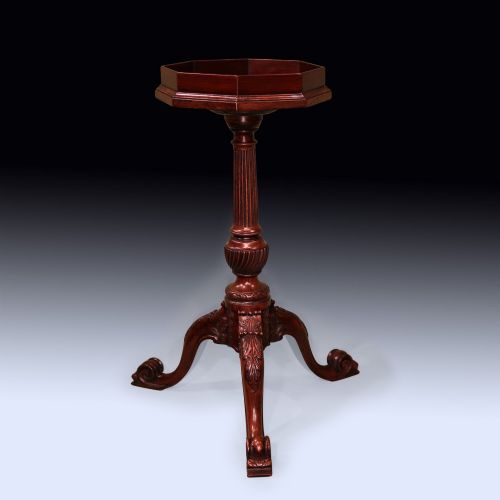
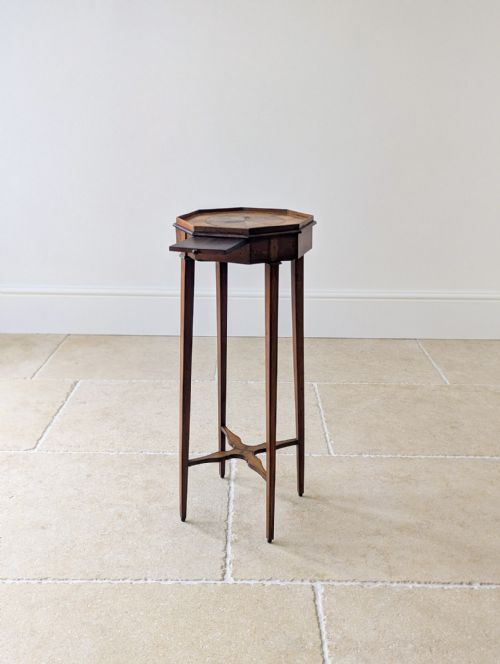
The pieces on this page span oval, octagonal, and square configurations in solid timbers. Makers shaped these compact tables to sit comfortably beside larger furniture groupings while holding considerable weight.
Alongside standard tripod or four-legged stands, the selection includes related small forms like kettle stands and lamp tables. These items share the diminutive proportions and elevated platform necessary for pouring tea without strain.
How they were made
Cabinet makers relied predominantly on dense mahogany and rich satinwood for the primary structure of these stands. Carpenters often incorporated fine marquetry inlay and carved details along the edges and legs.
Joinery had to remain exceptionally rigid to support heavy porcelain and metal vessels without wobble. Turners and carvers shaped slender legs that terminated in secure feet while maintaining a stable centre of gravity.
Listings feature mahogany, satinwood, and oak alongside decorative brass and marble elements.
What varies in quality
The distinction between standard utility items and exceptional pieces rests upon the crispness of the carving and the selection of figured timber. Superior examples display precise joinery where the grain of the wood flows naturally around the perimeter.
Proportion dictates visual success in small furniture, separating balanced designs from clumsy adaptations. The best pieces maintain delicate leg profiles that conceal structural strength.
Louis Goret·Sacre
The 18th Century Urn Table Glossary
- Kettle stand
- A small, tall table specifically designed to hold a tea kettle near the host. These pieces usually feature raised edges to prevent sliding.
- Urn stand
- A diminutive furniture form intended to elevate a hot water urn to a convenient height for pouring. They appear frequently in mahogany and satinwood.
- Marquetry
- Decorative veneer work arranged in geometric or pictorial patterns across the surface. Artisans embedded contrasting woods into the primary timber.
- Chippendale
- A style of British furniture design characterised by carved mahogany and Chinese or Gothic motifs. The aesthetic dominated mid-century production.
18th Century Urn Table: Frequently Asked Questions
What was an urn table used for?
These small tables held heavy metal urns filled with boiling water during formal tea service. Placing the vessel on an elevated surface allowed servants or hosts to fill cups easily without reaching down.
Because tea drinking was a central social ritual in Georgian drawing rooms, the furniture surrounding it required both stability and refined appearance. The raised edges kept the vessel secure during pouring.
How do I spot a Georgian urn table?
Look for diminutive proportions, tall slender legs, and a small top designed for a single vessel rather than general dining. Most authentic examples utilise dense mahogany or satinwood.
Many feature pull-out slides or raised moulded borders to retain spills and keep equipment steady. The overall height matches the arm level of a seated tea host.
Are these tables sturdy enough for daily use?
Original tables were engineered to bear the substantial weight of water-filled vessels and heavy metal hardware. Their sturdy joinery allows them to function reliably in modern settings.
Care should be taken to place them where they will not be knocked, given their narrow stance and tall profile. Gentle placement ensures the historical timber remains undamaged.
What is the difference between a kettle stand and an urn stand?
While both terms describe compact Georgian tea furniture, kettle stands historically supported boiling water heaters used to replenish teapots. Urn stands often accommodated larger standalone vessels.
In practice, makers used the terms interchangeably for similar slender forms featuring square, oval, or octagonal tops. Both types prioritise height and stability over surface area.