

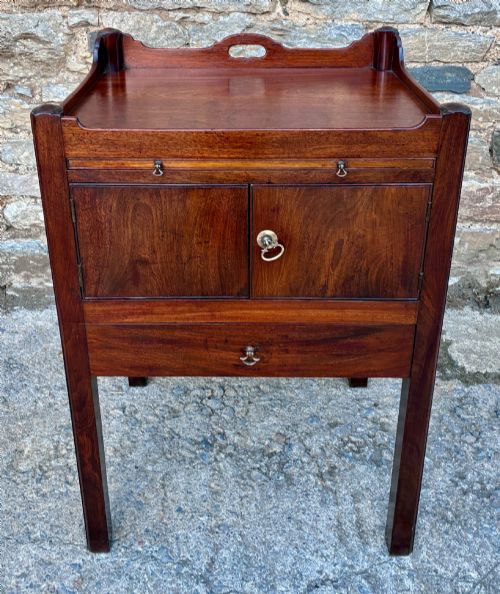
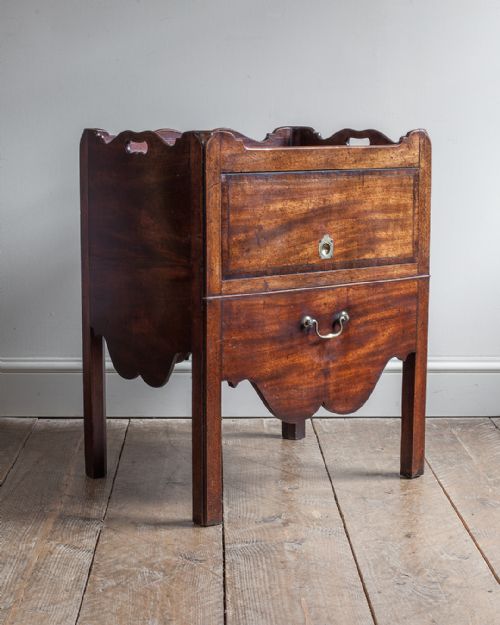
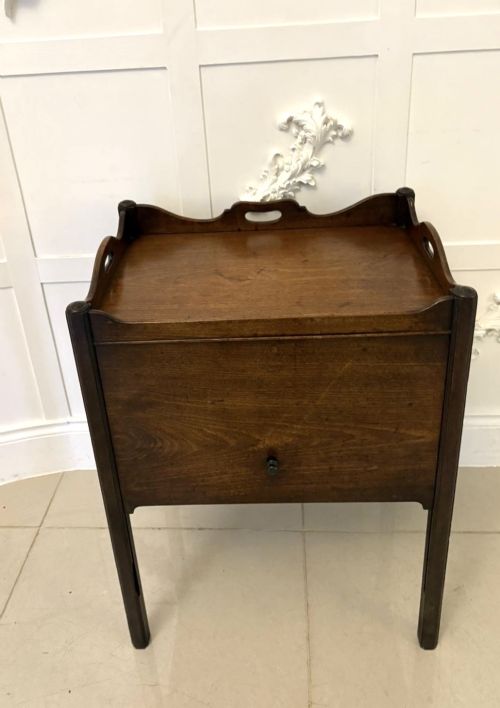
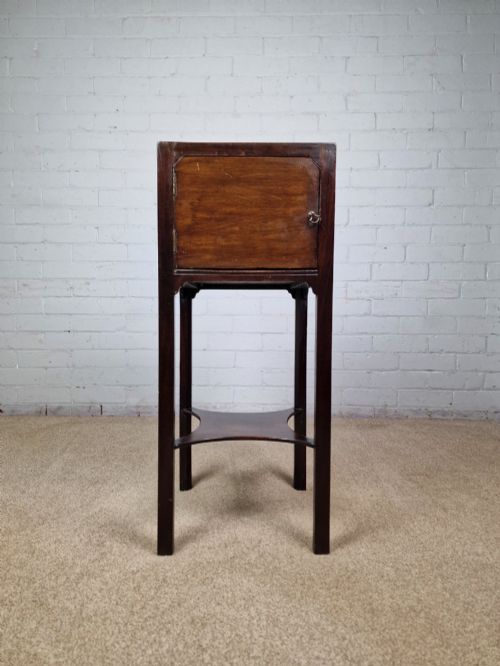

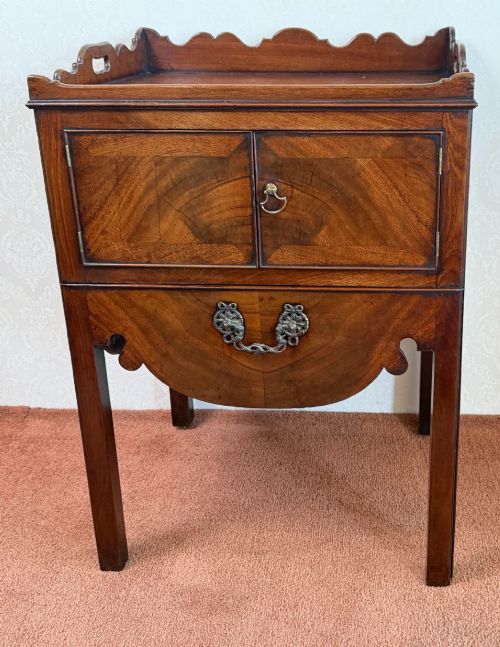
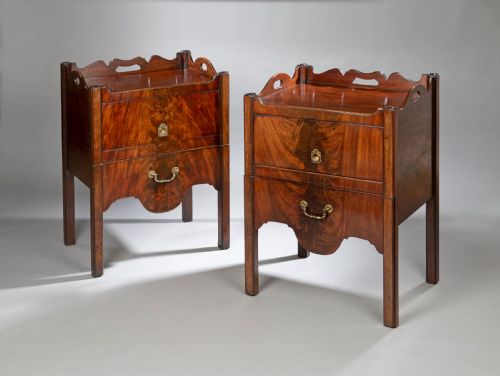


18th Century Tray Top Cupboard
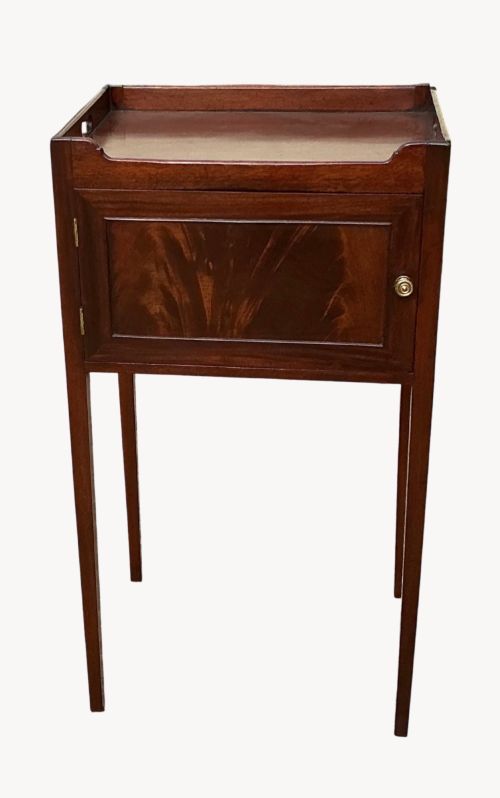
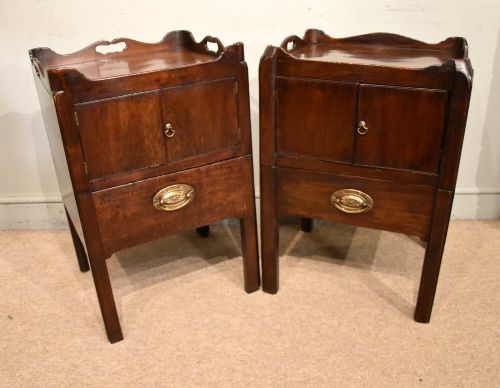
An 18th century tray top cupboard offers practical bedside storage disguised in refined Georgian timber.
18th Century Tray Top Cupboard
The 18th century tray top cupboard functions primarily as a bedside table, nightstand, or small commode designed for Georgian domestic spaces.
Most pieces seen here date from the Georgian period, often attributed to the George II and George III eras under styles like Sheraton and Chippendale.
Makers constructed these compact forms to hold washbasins or night commodities, featuring a raised gallery edge to contain spills.
Materials and construction
Workshops relied predominantly on solid mahogany and flame mahogany veneer, chosen for deep grain patterns and structural resilience.
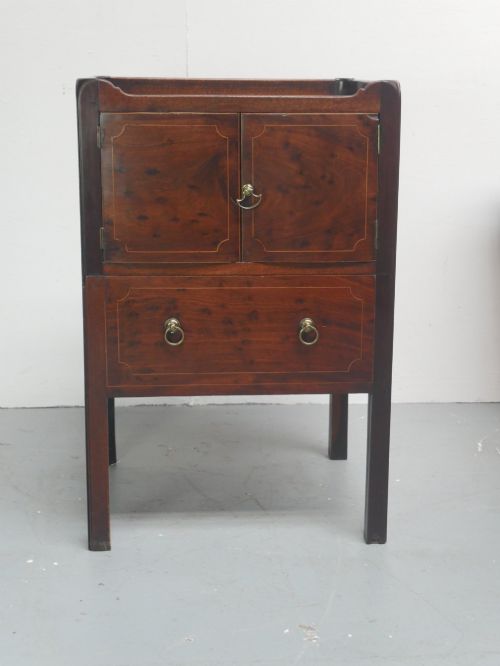
Cabinet makers integrated decorative details such as boxwood inlay, satinwood accents, and marquetry inlay alongside functional brass hardware.
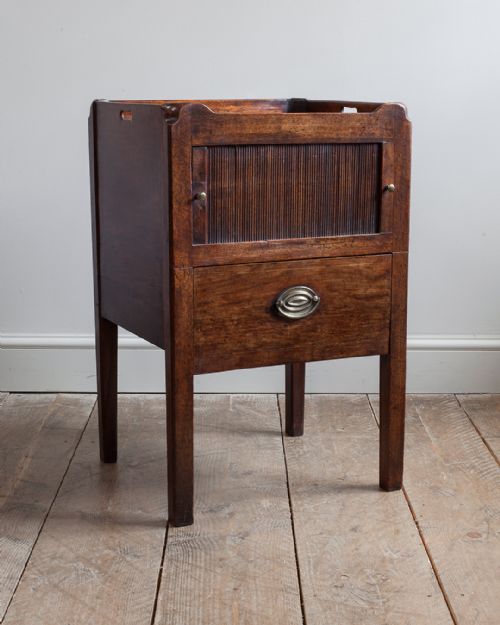
Specialised closures include tambour fronts, panelled cupboard doors, and concave or serpentine shaping executed by hand.
18th Century Tray Top Cupboard Retail Price Guide 2026
Typical asking prices for 18th century tray top cupboard among the pieces listed under this phrase on Sellingantiques today, from the lower quarter to the upper quarter. They describe what is for sale here now, not the wider market.
Understanding quality differences
Quality rests in the precision of the timber selection, particularly the choice of flame mahogany and the crispness of inlaid details.
Structural complexity dictates distinction, separating straightforward rectilinear bedside cabinets from serpentine or concave forms requiring advanced joinery.
The integrity of the raised tray top and the subtlety of period brass fittings distinguish finer workshop output from standard utility pieces.
The 18th Century Tray Top Cupboard Glossary
- Tray top
- A raised gallery edge encircling the upper surface designed to prevent items from rolling off. This feature defines the primary search category.
- Commode
- A low cabinet or chest of drawers used in bedrooms during the Georgian period. It often incorporates cupboard doors beneath the top surface.
- Tambour
- A flexible shutter door formed of narrow vertical strips of wood glued to canvas backing. It slides smoothly along tracks to enclose the cabinet interior.
- Serpentine front
- A convex central section flanked by concave curves creating an undulating profile. This shape demands high carpentry skill.
- Boxwood inlay
- Contrasting pale wood inserted into recesses on the darker mahogany surface. It provides linear decoration along edges and panels.
18th Century Tray Top Cupboard: Frequently Asked Questions
What were these cupboards used for?
These small cabinets served wealthy Georgians as bedside storage for chamber pots, night accessories, or washing apparatus.
The raised tray top prevented water pitchers and basins from sliding off the polished timber surface during use.
How do I identify a George III piece?
George III pieces typically display classic mahogany construction, sometimes featuring Sheraton or Chippendale stylistic details like straight legs or bracket feet.
Look for refined proportions, subtle boxwood inlay, and secondary woods standard to late eighteenth-century British workshops.
Are tambour doors original?
Tambour shutters operate on a hidden canvas backing that allows the wooden slats to curve around the cabinet corners.
Original mechanisms glide evenly within their wooden tracks without sticking or sagging when opened.
How do I care for mahogany?
Protect the timber surface from direct sunlight and excessive moisture to preserve the natural colour and flame veneer grain.
Apply traditional wax polish sparingly and buff with a soft cloth to maintain the historic sheen.