


18th Century Style Card Table
An 18th century style card table brings period elegance and folding utility to a room, offering a versatile surface for both display and play.
18th Century Style Card Table
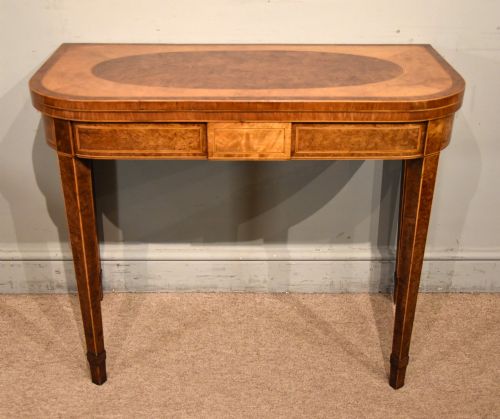
An 18th century style card table is a folding piece designed for gaming and social gatherings, featuring periods ranging from the original Georgian era through to later revival decades. The selection relies heavily on genuine 18th century pieces alongside early 20th century interpretations in walnut, mahogany, and satinwood.
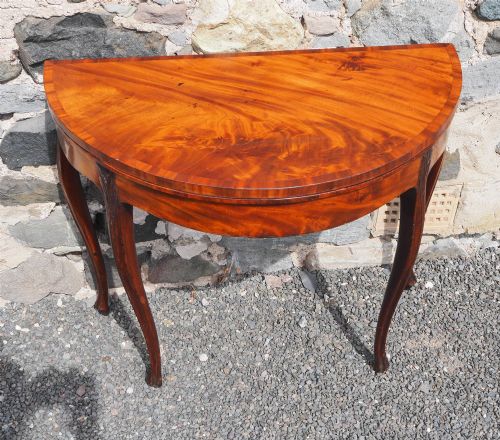
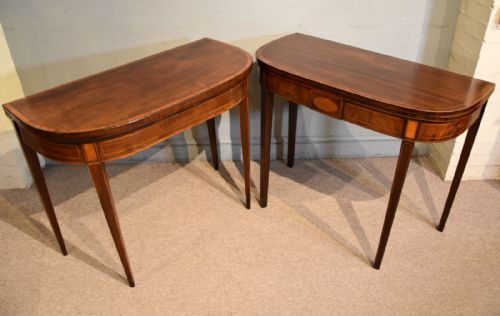
Most examples function as dual-purpose items, operating as compact side or tea tables when closed and opening to reveal a baize-lined playing surface. Formats vary from straight-edged rectangular models to demi-lune, serpentine, and concertina action tables.
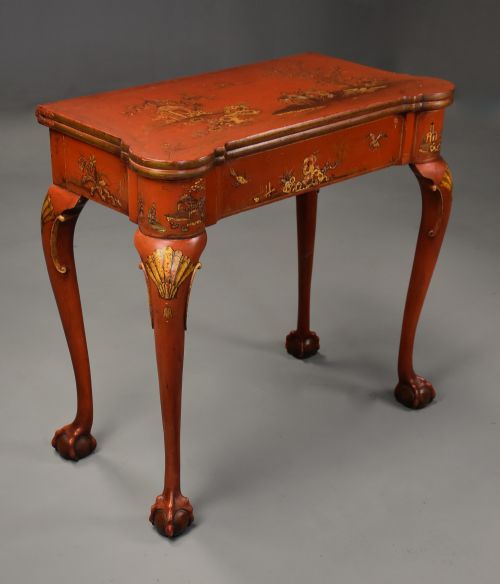
Originating predominantly within English cabinet-making traditions, these items reflect specific stylistic reigns including George II, George III, Hepplewhite, and Sheraton designs. Later Edwardian and 1930s revivals also appear, alongside distinctive Chinoiserie lacquered versions.
How they were made
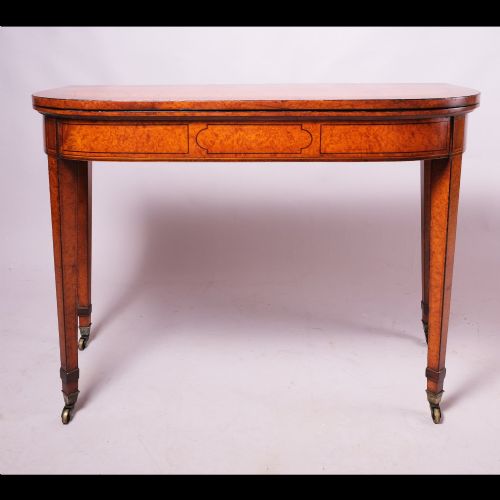
Cabinet makers utilised dense hardwoods such as mahogany and walnut for structural stability, often applying finer veneers of satinwood, burr yew, amboyna, and rosewood to the outer surfaces. Complex marquetry, boxwood stringing, and brass fittings complete the decorative schemes.
Hinged tops allow the surface to fold over, supported by pivoting rule joints or concertina framing mechanisms that expand the framework evenly when opened. Red lacquer and Chinoiserie decoration provide alternative surface finishes on specific revival pieces.
Listings span multiple eras from the 18th Century through to Edwardian and 1930s revival periods, using mahogany, satinwood, and walnut.
What varies in quality
The sophistication of the timber figure and the precision of inlaid marquetry dictate visual distinction, with choice cuts of burr walnut, satinwood, and figured mahogany elevating the piece. The execution of fine detailing, from edge stringing to carved friezes in the Hepplewhite or Chippendale manner, separates standard workshop production from master cabinet work.
Structural integrity depends on the original action of the folding mechanism and the alignment of concertina frames or pivoting legs when supporting the open top. Timber selection for internal framing and secondary woods further indicates the standard of construction.
Giles Grendey
The 18th Century Style Card Table Glossary
- Demi-lune
- A half-moon shape characteristic of side and card tables designed to sit flush against a wall when closed. This semicursal form gained popularity during the late Georgian period.
- Concertina action
- An expanding frame mechanism that allows all four legs of a card table to move outward in unison when the top unfolds. It provides superior weight distribution compared to a single swing leg.
- Marquetry
- The art of forming decorative patterns using fitted pieces of coloured veneers and exotic woods. It frequently adorns the tops of satinwood and mahogany gaming tables.
- Serpentine
- A curved outline featuring a convex centre flanked by concave ends, creating a gentle wave effect along the edge of the table top. This contour demands advanced woodworking skill.
- Foldover
- A hinged top design where the surface doubles in area by opening flat onto a supporting framework. It transforms a compact console into a full-sized gaming table.
18th Century Style Card Table: Frequently Asked Questions
How did people use these tables?
These tables served primarily for evening card games, social gambling, and general entertaining in the principal rooms of a townhouse or country house. When not in use for gaming, they stood closed against a wall holding decorative items or acting as tea tables.
The folding top allowed households to maximise floor space during the day while retaining a fully functional surface for evening leisure activities.
How do I tell original pieces from later revivals?
Distinguishing period items from later interpretations relies on examining the timber construction, secondary woods, and hand-cut joinery methods visible within the internal framing. Original pieces carry the wear patterns and tool marks consistent with eighteenth-century cabinet making.
Revival pieces from the early twentieth century often display different timber preparation techniques and modern mechanical fixings that reveal their later manufacture date.
Where should I place a card table at home?
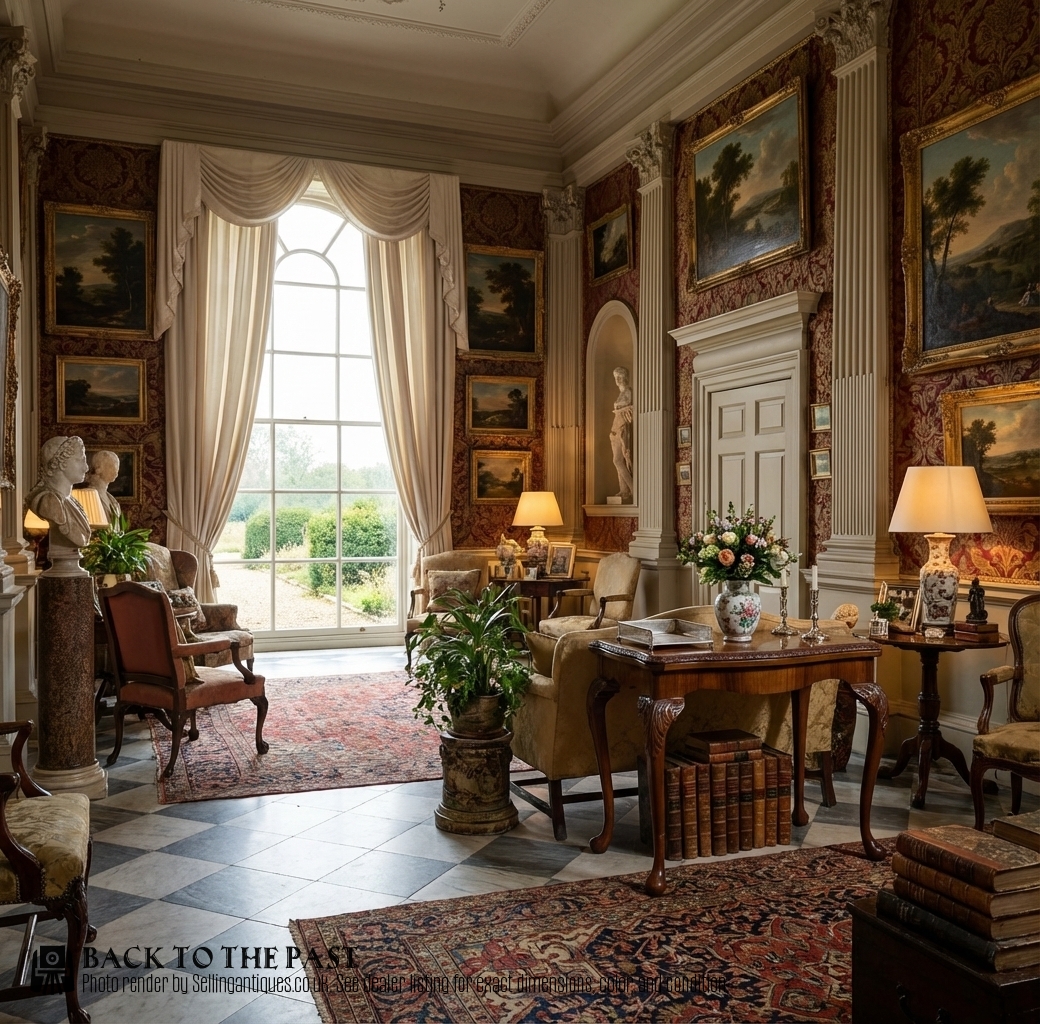
A closed demi-lune or rectangular table fits well against a hallway or living room wall beneath a mirror or painting. The folded profile takes up minimal depth.
Opening the table requires adequate clearance around all sides to allow players comfortable access to the playing surface during social gatherings.
What is the difference between George II and George III styles?
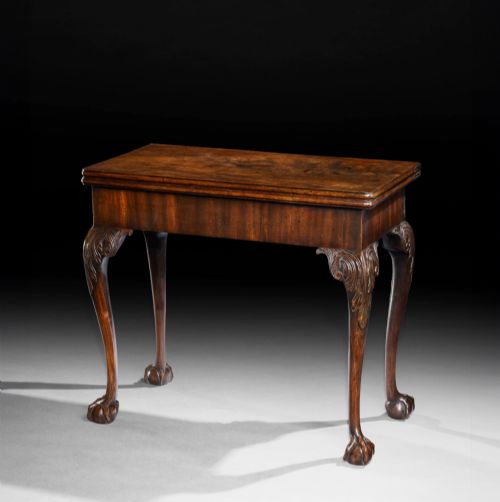
George II furniture typically exhibits heavier proportions, robust mahogany construction, and bold carved details such as cabriole legs ending in ball and claw feet. The overall aesthetic leans toward sturdy architectural presence.
George III designs shift towards lighter forms, elegant tapering legs, satinwood veneers, and delicate marquetry decoration inspired by neoclassical principles.