


18th Century Satinwood Console
An 18th century satinwood console brings shimmering golden timbers and elegant neoclassical geometry into a room.
18th Century Satinwood Console
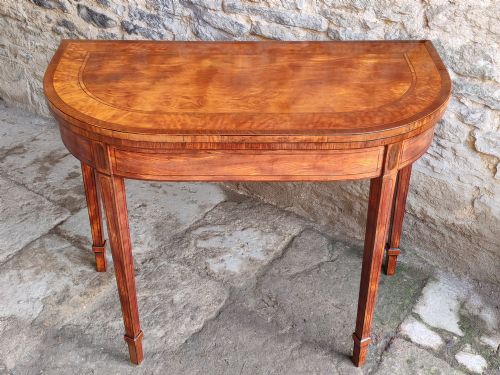
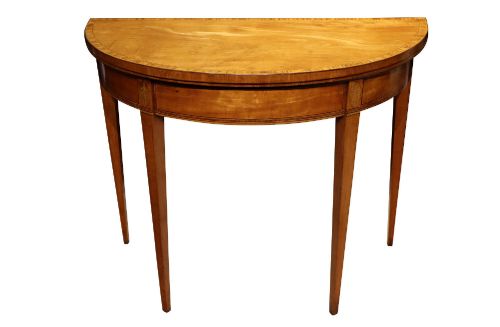
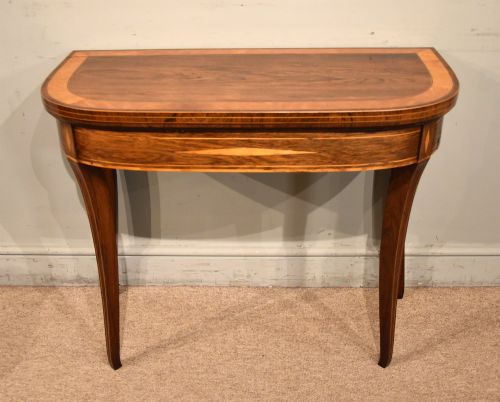
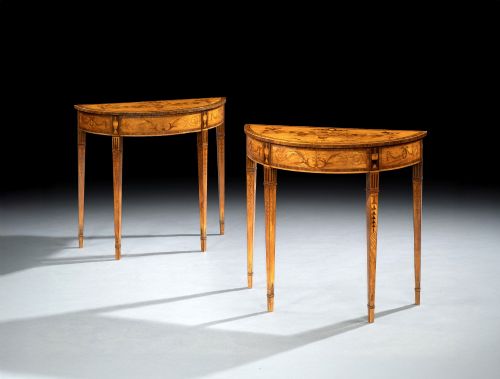
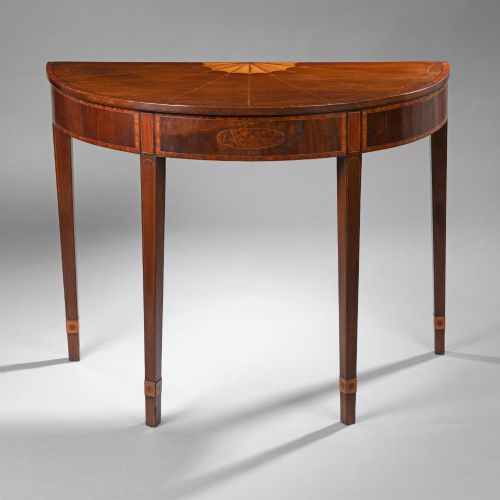
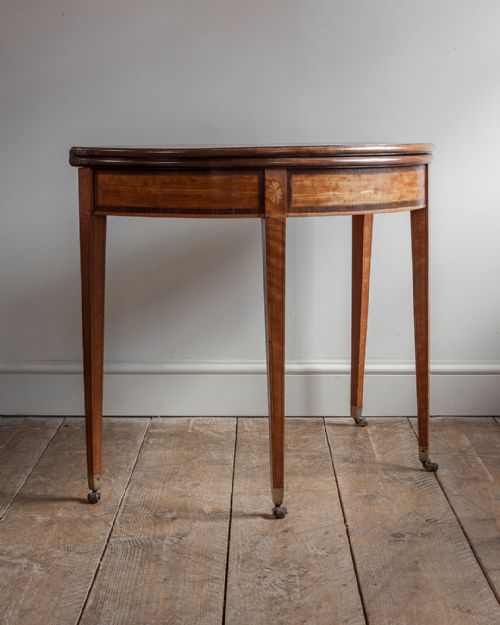
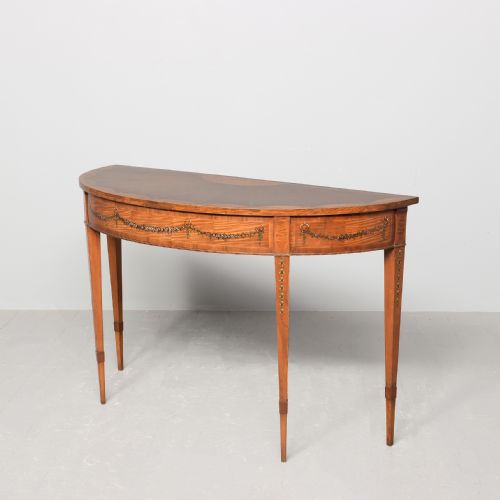
When you search for an 18th century satinwood console, you encounter sophisticated architectural furniture designed to sit against a wall in a formal room. The examples found here span diverse forms, frequently appearing as demi-lune card tables, side tables, and pier tables.
Most pieces date from the Georgian era, specifically associated with the George III and Sheraton styles. These tables often feature fold-over tops designed for card games or tea, combining utility with refined display surfaces.
Materials and construction
Cabinetmakers utilised exotic timbers, contrasting golden satinwood with darker woods such as mahogany, rosewood, kingwood, and padouk. Details often include boxwood and ebony stringing, alongside intricate marquetry inlay.
Surface decoration frequently extends to hand-painted motifs and cross-banding. Structural elements integrate brass hardware and sometimes composition or giltwood accents to enhance the neoclassical aesthetic.
Listings feature periods from the 1700s through the Victorian era, dominated by George III and Sheraton designs.
Assessing craftsmanship and finish
Quality rests in the precision of the timber matching and the intricacy of the marquetry. Superior tables display seamless grain alignment across fold-over leaves and finely executed cross-banding.
The refinement of the hand-painted decoration and the crispness of the inlaid details distinguish master workshops from standard production. Original surface patination significantly elevates the stature of a piece.
The 18th Century Satinwood Console Glossary
- Demi-lune
- Half-moon shape. This semicursal form defines many side and card tables designed to stand flush against a wall.
- Cross-banding
- A border of veneer applied to the edge of a table top with the grain running perpendicular to the centre.
- Marquetry
- Decorative patterns formed by inserting pieces of coloured wood, shell, or ivory into a veneered surface.
- Pier table
- A decorative table designed to stand against the wall between two windows, often paired with a matching mirror.
18th Century Satinwood Console: Frequently Asked Questions
Where did these tables stand?
These tables typically occupied prominent positions in entrance halls, drawing rooms, or against parlor walls. Their shallow profiles allowed them to sit neatly without obstructing walking routes.
Demi-lune shapes fit particularly well into curved recesses or flat against walls beneath large mirrors and paintings.
How are card tables used?
The hinged tops fold open to reveal a baize-lined surface intended for evening card games or social gatherings. When closed, they function as decorative side or console tables.
Many examples feature a swing leg or a gateleg mechanism to support the opened leaf securely.
How do I spot Sheraton style?
Sheraton pieces display restrained neoclassical lines, tapering legs, and delicate inlay work. The emphasis lies on geometric clarity and balanced proportions.
Satinwood veneers provide a bright canvas for subtle stringing and classical motifs characteristic of this period.
What woods appear with satinwood?
Mahogany, rosewood, and kingwood frequently frame satinwood panels as cross-banding or borders. Boxwood and ebony provide fine contrasting lines for stringing details.
Painters also applied pigments directly onto the satinwood ground to create floral or classical pictorial scenes.