




18th Century Salver
An 18th century salver is a footed serving dish of silver, plate, or glass, essential for presenting letters or glasses.
18th Century Salver
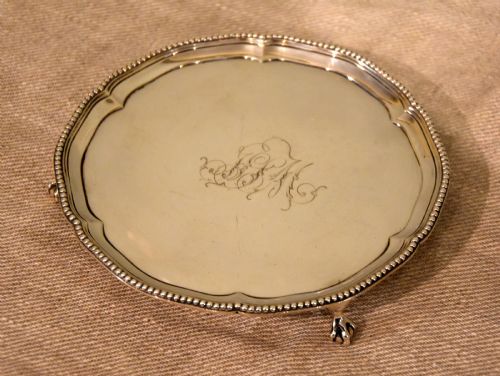
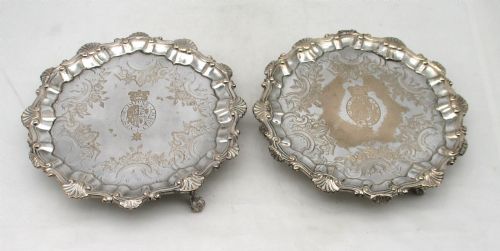
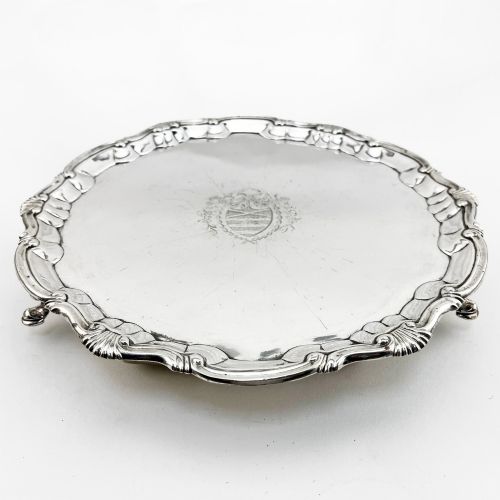
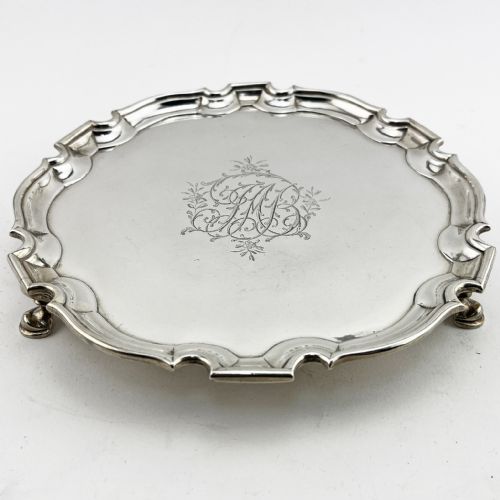
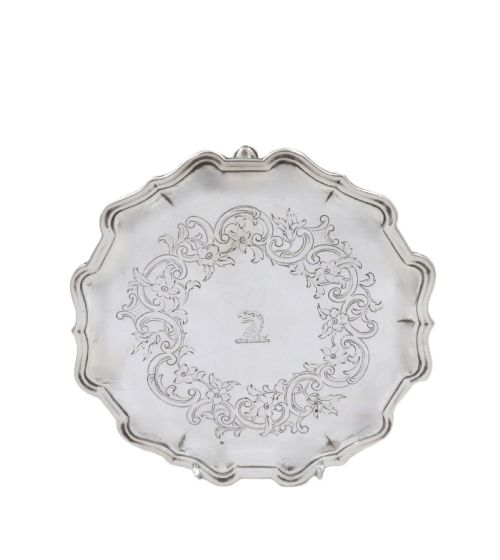
An 18th century salver is a formal serving dish raised on a foot or small supports, designed for passing glasses of wine or calling cards in the Georgian interior. These pieces emerge in solid sterling silver, early Old Sheffield plate, mahogany, and lead glass.
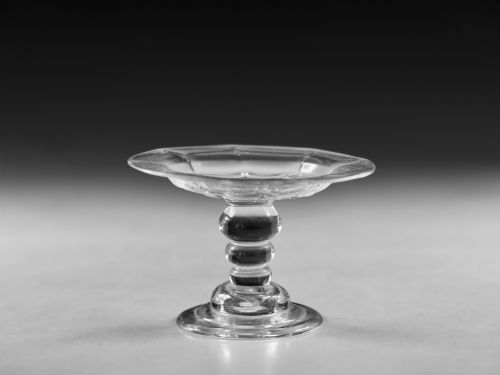
The selection here encompasses everything from substantial George II silver trays to delicate crystal glass tazzas and small patch stands. Most examples date from the Georgian period, spanning circular card trays to large serving vessels.
Makers and craftsmen of the era shaped these items as central social accessories, utilising precious metals or heavy glass to denote status. Buyers encounter various forms, including tazzas, patens, and card trays, each serving a specific domestic function.
Distinctions in Quality
Quality rests on the crispness of the engraving and the weight of the metal or glass used in the piece. Heavy gauge silver retains its structural integrity, while well-preserved Old Sheffield plate shows minimal copper bleed through the surface.
Proportion and the execution of cast feet or baluster stems separate standard items from superior examples. Objects with clear hallmarks and original patination command greater attention from collectors.
Tiny glass patch stands once held artificial velvet beauty spots worn on the face to hide smallpox scars.
Robert Abercromby·William Garrard
The 18th Century Salver Glossary
- Salver
- A flat footed tray used for serving food or drink. It forms the primary category for these silver and plated pieces.
- Tazza
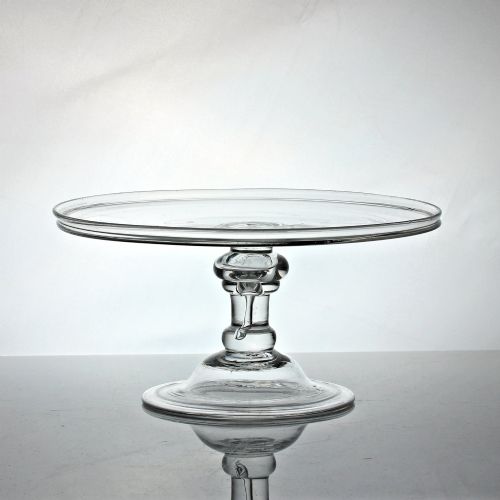
- A shallow saucer-like dish mounted on a stem and foot. Glass and silver versions appear frequently in early serving wares.
- Old Sheffield Plate
- A composite material made by fusing a sheet of silver to a copper ingot. This technique predates modern electroplating.
- Patch Stand
- A small pedestal dish used to hold cosmetic patches. These delicate glass items date to the mid-eighteenth century.
- Paten
- A small dish used primarily for ecclesiastical purposes or domestic serving. They share the flat top and foot of a standard salver.
- Baluster Stem
- A thick, shaped stem resembling an architectural column. This form supports many glass tazzas and sweetmeat glasses.
18th Century Salver: Frequently Asked Questions
What is an 18th century salver used for?
These pieces served wine, biscuits, and calling cards in wealthy households during the Georgian era. Servants used the elevated trays to hand refreshments to guests without touching the glasses directly.
Today, they function as decorative accent pieces or display trays on sideboards and tables. Collectors often utilise smaller card trays to hold pocket items or keys.
How do I identify Old Sheffield plate?
Old Sheffield plate reveals a thin line of copper showing along the cut edges or undersides where the silver layer has worn thin. The manufacturing process fuses silver to copper rather than depositing it electrically.
Sterling silver items display full hallmarks including maker's marks and date letters. Plated pieces lack these official assay stamps, though they may carry private maker marks.
What is the difference between a salver and a tazza?
A salver is generally a flat metal tray raised on small feet or a single central foot. The term tazza usually refers to a shallow dish mounted on a prominent stem and foot, common in glass.
Both forms belong to the broader category of serving ware. Eighteenth-century terminology often used these words interchangeably depending on the material.
How should I clean antique silver and plate?
Careful dusting with a soft cloth removes everyday particles without harming the surface. Traditional silver polish should be used sparingly to preserve the underlying detail and aged patina.
Old Sheffield plate requires particular caution to avoid wearing through the thin silver layer to the copper beneath. Gentle, non-abrasive cleaners maintain the historical finish safely.