



George III Waiter
When searching for a george iii waiter, collectors find tiered mahogany serving tables and small silver salvers from the late eighteenth century.
George III Waiter
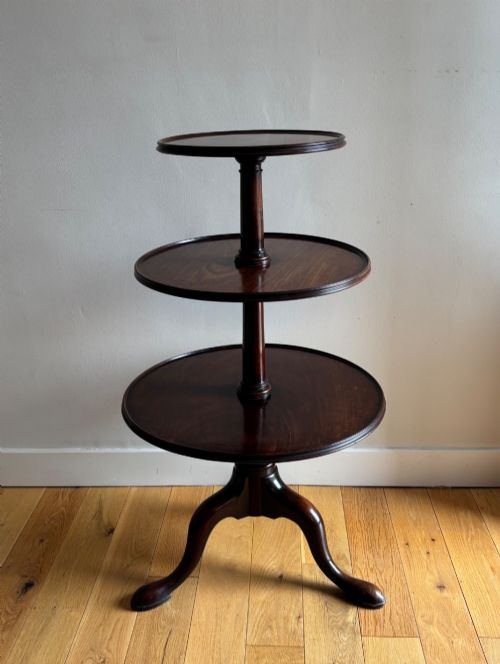
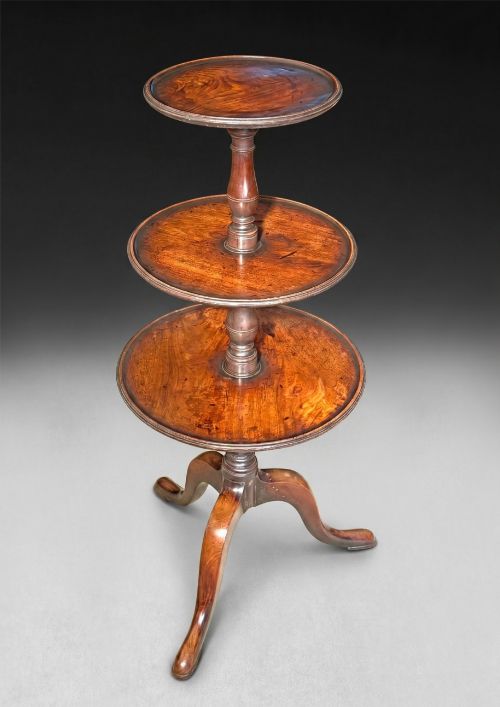
A george iii waiter most commonly refers to a tiered revolving serving table intended for dining rooms, though silver items also appear under this heading.
The wooden examples take the form of circular, octagonal, or drop-leaf tables with two or three descending tiers supported by tripod legs.
Silver versions include small circular trays and salvers resting on feet, often bearing hallmarks from London makers.
How they were made
Makers utilised dense timbers such as mahogany and Cuban mahogany, sometimes enhanced with satinwood or fine inlay work.
Wooden tiers frequently incorporated folding sides or revolving mechanisms, mounted upon turned pedestals with brass castors.
Silver and Old Sheffield Plate pieces were fashioned from precious metals or copper bases, decorated with chased borders and supported on hoof or bracket feet.
What varies in quality
The value of a timber piece rests on the choice of wood, such as figured Cuban mahogany, and the presence of functional folding mechanisms.
Original castors, crisp turning on the central pillar, and well-fitted revolving tiers separate superior furniture from ordinary workshop output.
Silver waiters are judged by the clarity of the maker mark, the crispness of chased or beaded borders, and the weight of the metal.
John Crouch I & Thomas Hannam·Ebenezer Coker·Bateman·Elizabeth Cooke·Magdalen Feline·Smith & Sharp·Paul Storr
The George III Waiter Glossary
- Dumb waiter
- A tiered freestanding piece of furniture designed to hold dishes without domestic staff present. These tables typically feature graduated revolving trays on a central column.
- Salver
- A small flat metal tray used for serving drinks or presenting cards. In silverwork, smaller circular versions are frequently termed waiters.
- Tripod base
- A three-legged support system providing stability for small tables and serving stands. They often terminate in brass castors or pad feet.
- Old Sheffield plate
- A composite material made by fusing a layer of silver to a copper core. This technique predates modern electroplating.
George III Waiter: Frequently Asked Questions
What was a george iii waiter used for?
Wooden versions stood beside dining tables to hold extra plates, glasses, and dishes during meals when hosts preferred privacy from servants.
Silver versions were utilised for serving individual cups of tea, wine, or carrying calling cards in a formal parlour.
How do I tell a two tier from a three tier model?
Two tier models consist of a pair of graduated circular trays mounted on a single turned column, sitting lower to the ground.
Three tier models add an extra upper tray, creating a taller profile that requires substantial tripod legs for balance.
Are the wooden tiers fixed or movable?
Many examples feature revolving mechanisms that allow diners to spin the trays and reach items easily without standing.
Other variations incorporate drop-leaf sides or folding flaps that allowed the furniture to be stored compactly against a wall.
How do I identify silver pieces from this era?
Silver waiters carry hallmarks stamped directly into the metal, revealing the assay office, date letter, and silversmith mark.
Examining the underside often shows hand-beaten surfaces and maker initials belonging to prominent London workshops.