






18th Century Porcelain Sculpture
These 18th century porcelain sculpture pieces capture mythological figures, street traders, and allegorical groups modelled in soft-paste and hard-paste clay.
18th Century Porcelain Sculpture
When you search for 18th century porcelain sculpture, you encounter figures, pairs, and groups shaped in European manufactories during the Georgian era. These ceramic sculptures depict allegorical themes like the four elements and the four seasons, alongside animals and human figures such as gardeners and street traders.
The objects span soft-paste and hard-paste porcelain, often enriched with enamel colours and gilding. Pieces originate from English kilns like Derby and Bow, alongside continental works from Meissen, Fürstenberg, and Ludwigsburg.
Most entries belong to the eighteenth century, though later revivals and nineteenth-century interpretations also appear in the listings. Buyers encounter single figures, paired companions, and elaborate groups featuring bocage or ormolu mounts.
Materials and methods
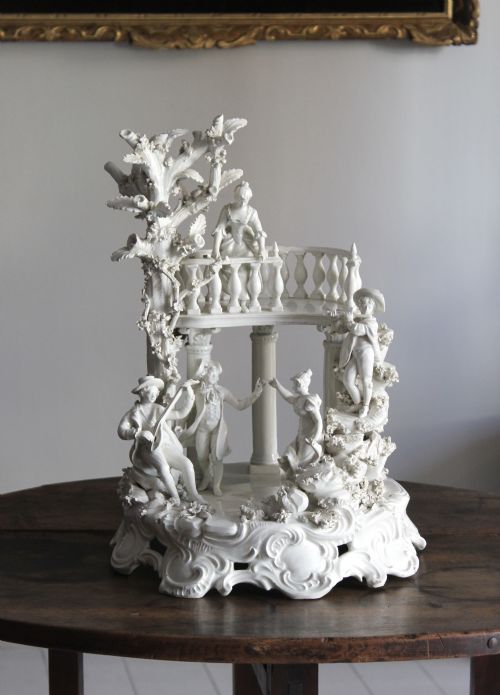
Many English and European works incorporated intricate bocage backgrounds of foliage, formed separately and attached prior to the glost firing. Some sculptural groups also integrated ormolu mounts, combining fired ceramic with cast metal components.
18th Century Porcelain Sculpture Retail Price Guide 2026
Typical asking prices for 18th century porcelain sculpture among the pieces listed under this phrase on Sellingantiques today, from the lower quarter to the upper quarter. They describe what is for sale here now, not the wider market.
A monkey holds a baby while a theatrical harlequin dances beside a working ormolu windmill.
Judging the standard
Quality rests upon the crispness of the modelling and the precision of the hand painting across faces, drapery, and natural elements. Superior examples retain fine details in the fingers, facial expressions, and applied floral or foliage work without excessive distortion from the kiln.
The retention of original enamel colours and gilding without intrusive overpainting dictates the standing of an individual sculpture. Early casts demonstrate sharper definition in the initial press through the mould compared to later secondary runs.
Meissen·Derby·Bow·Ernst Bohne Sohne·Volkstedt·Ludwigsburg·Frankenthal·Samson
The 18th Century Porcelain Sculpture Glossary
- Biscuit porcelain
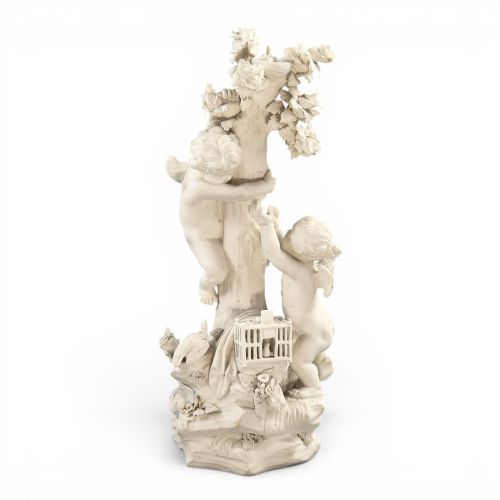
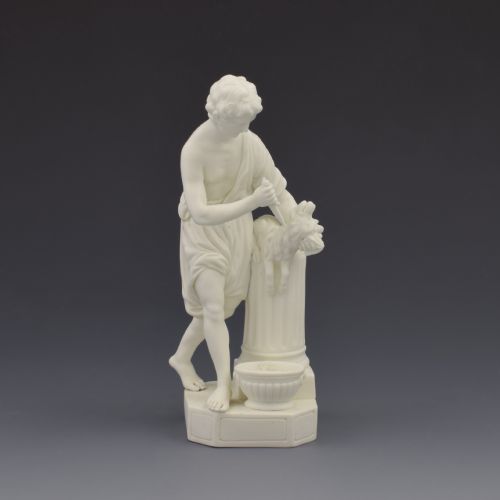
- Unglazed ceramic body fired once to produce a matte finish resembling marble. This surface highlights delicate sculptural details without the gloss of a traditional glaze.
- Bocage
- Applied background foliage and leaves made from porcelain. It frames figures in a thick canopy of branches and flowers.
- Soft-paste porcelain
- An artificial porcelain compound containing glass frit and white clay, fired at lower temperatures than hard-paste. It yields a warm translucent body favoured by early English kilns.
- Hard-paste porcelain
- A true porcelain composed of kaolin and petuntse fired at high temperatures. This formula creates a durable, vitreous body utilised extensively by continental factories.
- Enamel
- Coloured metallic oxide decoration fused onto the porcelain surface during a secondary low-temperature kiln firing. It provides the vivid palette seen on garments and naturalistic bases.
- Gilding
- The application of gold leaf or gold paint to highlights, clothing borders, and bases. Artisans burnished the metal after firing to achieve a bright finish.
18th Century Porcelain Sculpture: Frequently Asked Questions
What did people use these sculptures for?
These ceramic works served as decorative ornaments for dining tables and salon mantelpieces during the Georgian period. Wealthy households displayed allegorical sets representing seasons, continents, or elements to demonstrate cultural learning.
Over time, collectors moved these figures into cabinet displays to preserve their delicate enamel painted surfaces and applied porcelain foliage.
How do I care for antique porcelain figures?
Keep these sculptures out of direct sunlight to prevent the enamel colours and gilding from fading over decades of display. Dust the intricate areas, such as foliage and outstretched fingers, gently with a dry soft brush rather than using liquid cleaners.
Place the figures on stable, level surfaces away from heavy foot traffic vibrations, as soft-paste and hard-paste porcelain bodies remain vulnerable to sharp impacts.
How do I distinguish early pieces from later revivals?
Examine the weight, body translucency, and the character of the hand-painted enamel colours under natural light. Early eighteenth-century productions often exhibit subtle imperfections in the clay body and softer pigment tones.
Nineteenth-century revival pieces tend to feature brighter, more uniform factory decoration and crisper porcelain bodies that lack the specific glaze pooling associated with early kilns.
Why do some figures have leafy backgrounds?
The leafy foliage behind certain figures is known as bocage, which workshops added to mimic natural garden or woodland settings. This technique filled the space around mythological subjects and pastoral characters.
Craftsmen hand-formed these ceramic leaves and blossoms before attaching them to the main sculpture prior to the final kiln firing.