

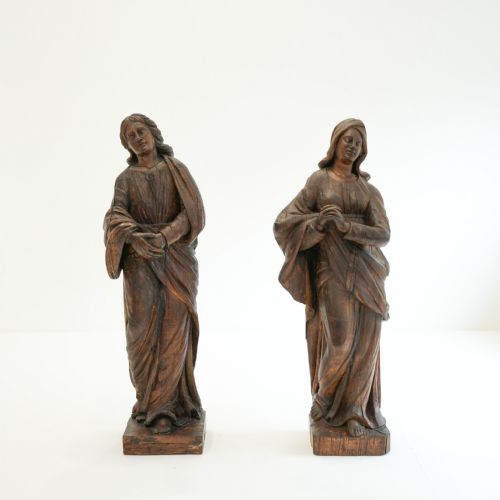



18th Century Oak Statues
These 18th century oak statues bring raw devotion and historic craft into a room, carved from stubborn timber to last centuries.
18th Century Oak Statues
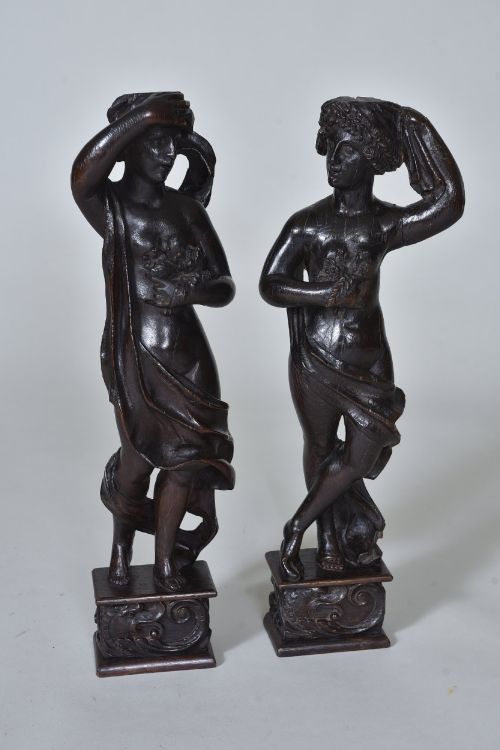
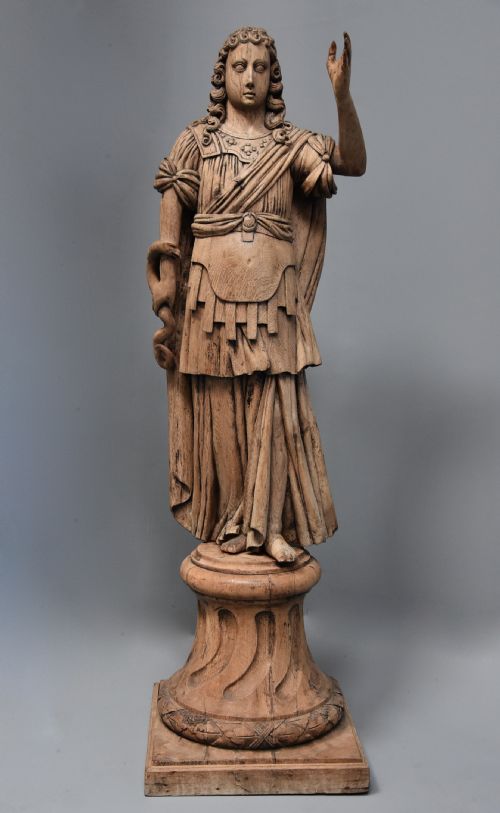
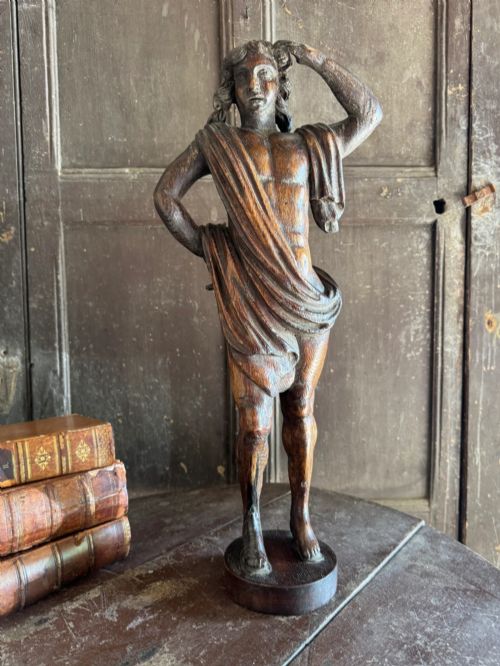
These pieces are carved wooden sculptures originating from the 18th century, rendered in solid oak and related hardwoods. Buyers seeking 18th century oak statues encounter ecclesiastical figures, saints, and classical representations spanning European and folk art traditions.
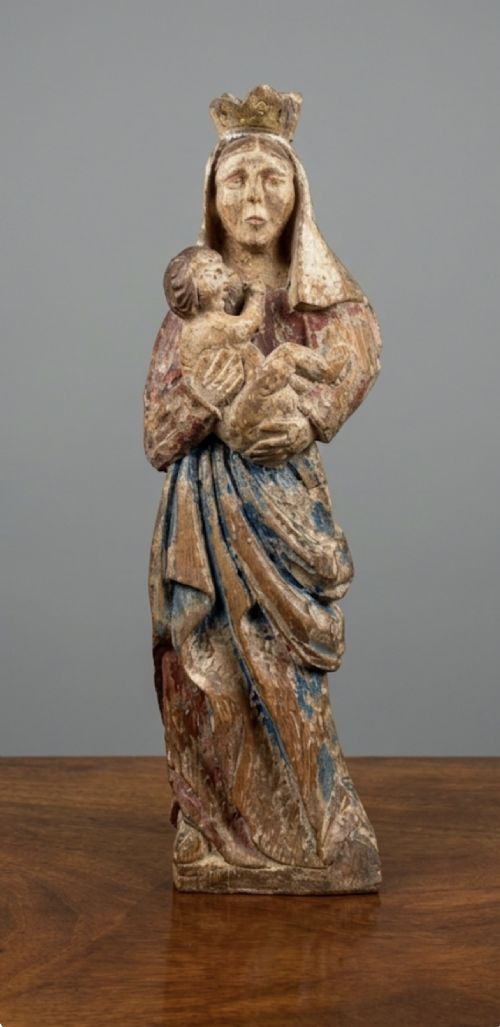
The selection ranges from large life-size Continental figures to intimate pairs of carvings and religious depictions such as Mary and Jesus or Saint Jerome. Most examples emerge from specific stylistic currents including Baroque, Neoclassical, and folk traditions, often shaped by continental workshops.
Surviving works reflect both solemn religious devotion and secular portraiture, including figures connected to historical subjects. Their enduring appeal lies in the tactile weight of the timber and the direct hand of the carver visible on every surface.
How they were made
Carvers shaped these statues directly from solid logs of oak and carved hardwood, relying on gouges and chisels to reveal human forms. The dense grain of the timber demanded immense physical effort, leaving tool marks that remain visible beneath later finishes.
Many surfaces received layers of gesso, polychrome paint, or gold leaf to enhance the visual drama of religious and classical subjects. Iron elements occasionally provide structural support or fasten components together within larger figures.
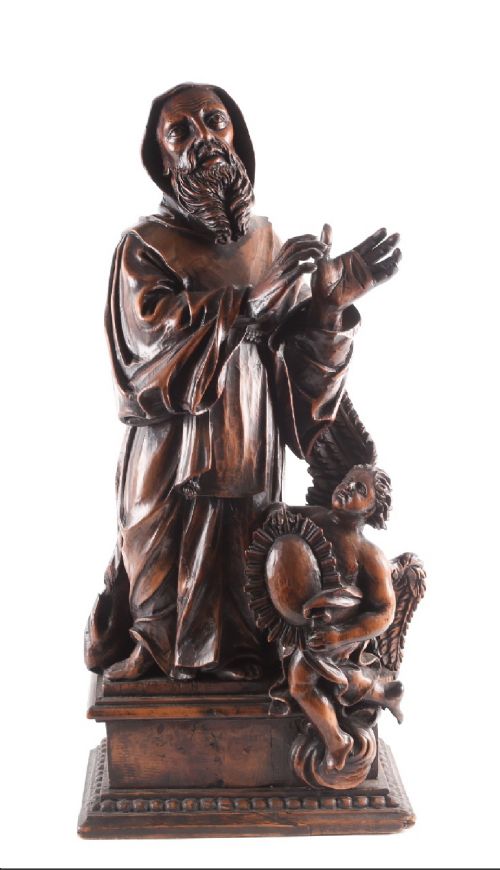
One saintly figure stands eternally accompanied by a carved cherub resting right at his feet.
What varies in quality
The sophistication of the carving dictates the distinction between standard workshop output and masterwork sculpture. Fluidity in drapery and expressive anatomical detail separate refined continental pieces from stiffer folk art interpretations.
The preservation of original surface treatments, whether polychrome pigment or gold leaf, heavily influences the integrity of a piece. Statues that retain their early painted layers offer a more complete historic witness than those stripped down to bare timber.
The 18th Century Oak Statues Glossary
- Polychrome
- Decoration consisting of several colours applied to the surface of wood or gesso. This technique was frequently used on religious statues to bring figures to life.
- Gesso
- A plaster-like mixture applied to wood as a smooth base for paint or gold leaf. It creates a bright foundation that intensifies surface decoration.
- Gold Leaf
- Hammered sheets of gold applied to a prepared surface for ornamentation. It highlights sacred figures and adds luminosity in dim ecclesiastical settings.
- Baroque
- An artistic style marked by theatricality, grand movement, and dramatic contrast. Figures from this period display sweeping drapery and dynamic postures.
18th Century Oak Statues: Frequently Asked Questions
Where were these statues originally displayed?
Many of these carved figures stood inside churches, chapels, and monastic foundations as objects of veneration. Others decorated domestic interiors or public spaces depending on their secular or religious subject matter.
Over time, changing architectural fashions and political shifts removed them from their original settings into private collections.
How do I care for antique oak sculpture?
Keep wooden sculptures away from direct heat sources and sudden humidity shifts to prevent the timber from splitting. Dust them gently with a dry, soft brush rather than using liquid polishes.
Stable indoor conditions ensure the historic wood and any remaining surface pigments survive intact for decades to come.
What is folk art in this context?
Folk art figures are carved by makers working outside formal academic training, often drawing on local traditions. These pieces possess a direct and unpretentious character that differs from courtly Baroque or Neoclassical sculpture.
Their charm rests in unstudied proportions and straightforward interpretations of human subjects.
Why is oak the primary material?
Oak was abundant across Europe and valued for its structural strength and longevity. Carvers trusted its tough grain to support large figures without warping excessively over centuries.
The timber's natural durability helped these sculptures survive centuries of handling and environmental changes.