


18th Century Oak Hutch
An 18th century oak hutch brings robust utility and vernacular charm to a room, offering practical display space for crockery and sturdy storage below.
18th Century Oak Hutch
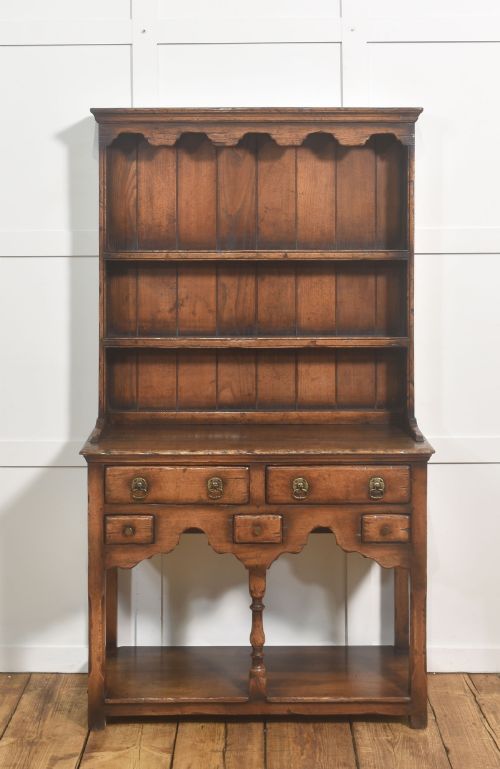
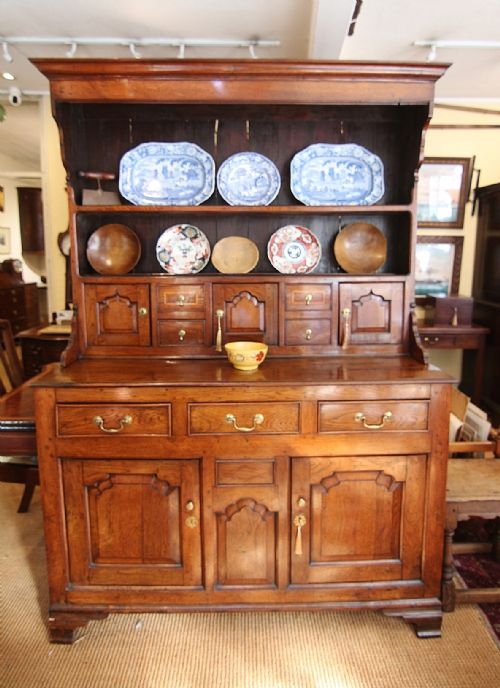
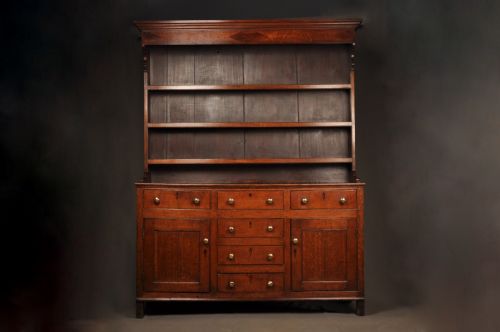
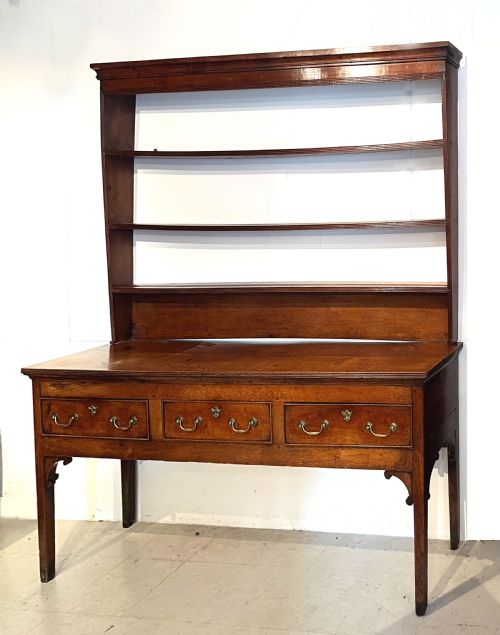
When searching for an 18th century oak hutch, buyers encounter regional forms primarily recorded as dressers, pot-boards, and buffet vaisseliers. These pieces combine a lower base of drawers or cupboards with an upper plate rack for displaying ceramic ware.
The versions most commonly met on this page span the 18th century and the Georgian period, often reflecting country workshops in Wales, England, and France. They range from small proportions suited to cottages to substantial two-part units designed for farmhouse kitchens.
How they were made
Carpenters constructed these items predominantly from solid oak, sometimes incorporating fruitwood, walnut, or pine for secondary timbers or specific decorative panels. Boards were joined using traditional methods such as mortise and tenon joints, secured with wooden pegs.
Hardware played both a structural and decorative role, featuring brass drop handles, keyplates, and iron hinges. Details such as geometric carvings, inlay work in contrasting woods, and shaped friezes added regional character to the straightforward framing.
Some regional dressers incorporate secret drawers behind carved panels to hide family valuables.
What varies in quality
The distinction between standard domestic output and superior examples often rests on the integrity of the surface timber and the retention of original components. Pieces that preserve their initial plate racks, pot-board bases, and unaltered brass hardware carry greater regional authenticity.
Construction refinement also marks the difference, visible in the depth of geometric carvings, the crispness of joinery on panelled doors, and the balance of proportions in smaller regional variants from areas like Snowdonia.
The 18th Century Oak Hutch Glossary
- Pot-board
- An open lower shelf fitted beneath the main counter of a dresser, historically used for storing heavy pots and pans. This platform sits just above the floor on lower stretchers.
- Plate rack
- The upper shelving unit attached to the back of a dresser, featuring grooved ledges to display plates upright. It often includes small hooks or spice drawers.
- Buffet a deux corps
- A large two-part storage cabinet of French origin, comprising an enclosed lower cupboard section beneath an upper display cupboard. These pieces utilise panelled doors and heavy cornices.
- Welsh dresser
- A regional form of oak storage furniture traditionally featuring a plate rack above a base of drawers and cupboards. They frequently display distinct local details in the woodwork and board arrangement.
18th Century Oak Hutch: Frequently Asked Questions
What is an 18th century oak hutch used for?
These pieces serve as both storage units and display furniture for domestic spaces. The lower cupboards and drawers hold table linens or kitchenware, while the upper racks exhibit ceramic plates.
Historically, they functioned as the central working storage of the farmhouse or country kitchen. Today, they bring rustic utility and warmth to modern dining rooms or kitchens.
How do I identify a Georgian oak dresser?
Georgian examples typically exhibit clean lines, panelled construction, and brass hardware such as drop handles or escutcheons. Regional variations may include inlay work or specific foot styles.
Look at the timber grain and the method of joining the boards to understand the period construction. Many pieces retain provenance linked to specific English or Welsh workshops.
Are these hutches made entirely of oak?
While solid oak forms the primary material for the frame and panels, makers frequently incorporated secondary timbers. Woods such as pine, fruitwood, and walnut appear in internal drawer linings, backboards, or decorative inlay.
Hardware components utilise brass and iron for hinges, pulls, and keyplates. This mix of materials is standard for period country furniture.
How should I care for an antique oak dresser?
Keep the timber away from direct heat sources and drastic humidity changes to prevent warping or splitting. Maintain the wood using traditional beeswax rather than modern silicone polishes.
Allow the surface to breathe and develop its natural patina over time. Handle doors and drawers gently to preserve the original joinery and pegs.