


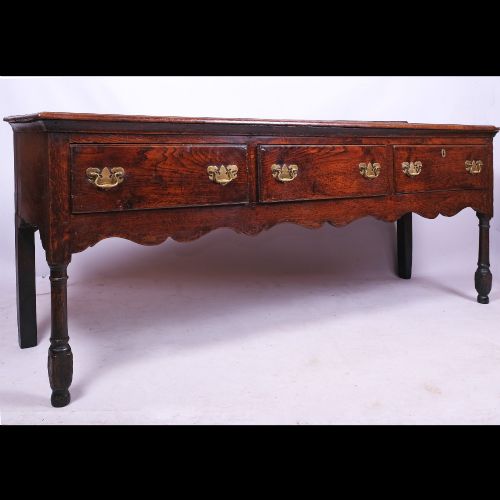
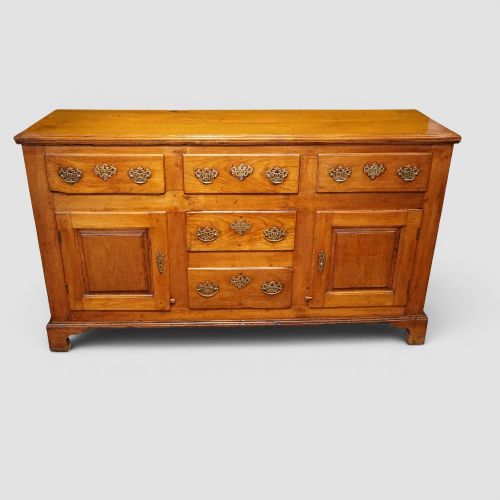
18th Century Oak Credenza
An 18th century oak credenza brings substantial timber storage into a room, joining sturdy utility with period character.
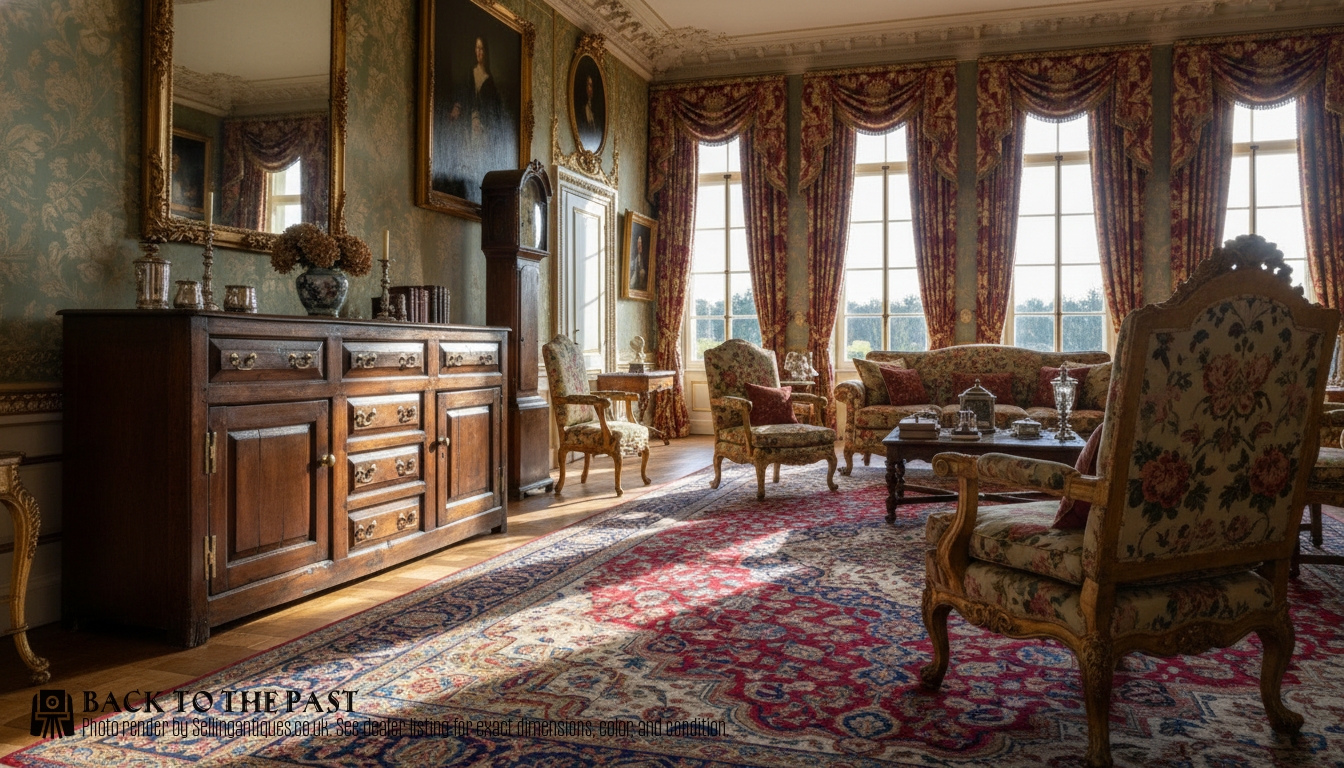
18th Century Oak Credenza
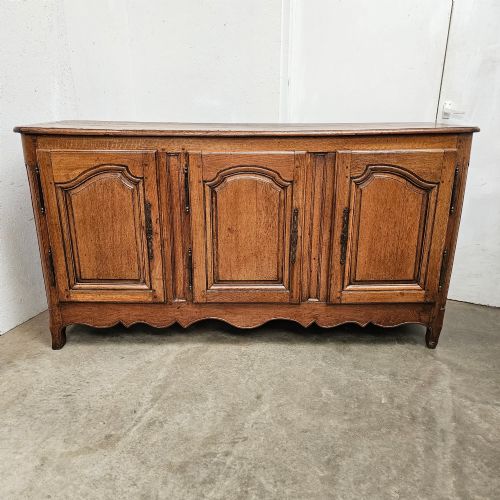
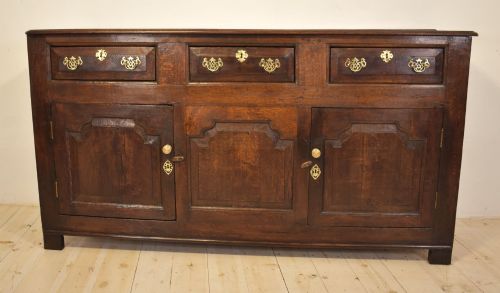
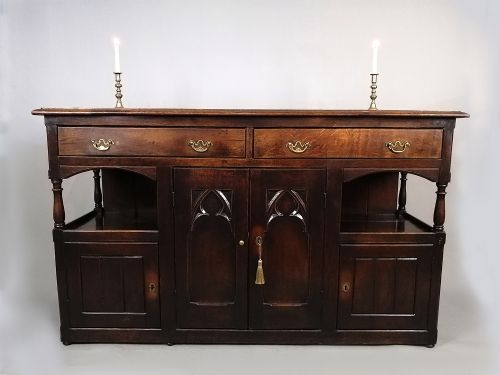
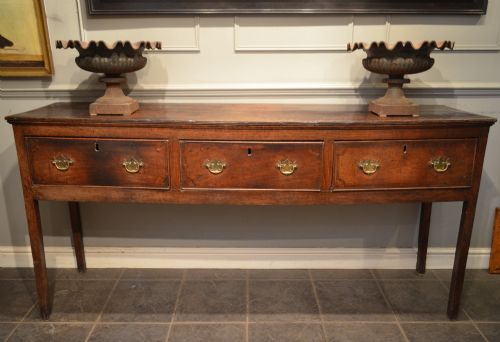
Buyers seeking an 18th century oak credenza frequently encounter sturdy dresser bases, sideboards, and low buffets originating from English, Welsh, French, and Dutch workshops. These robust forms provide practical surface space and enclosed storage suited for modern domestic interiors.
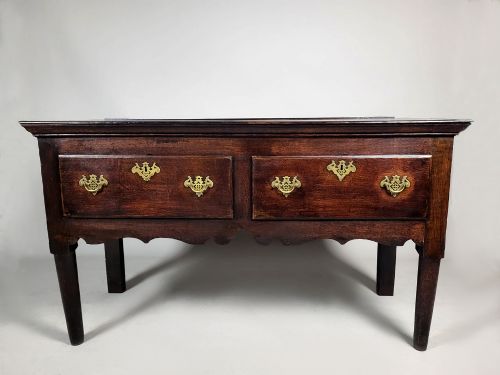
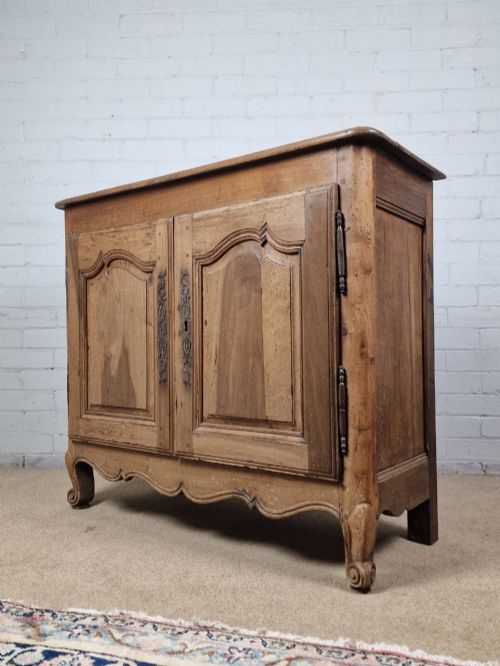
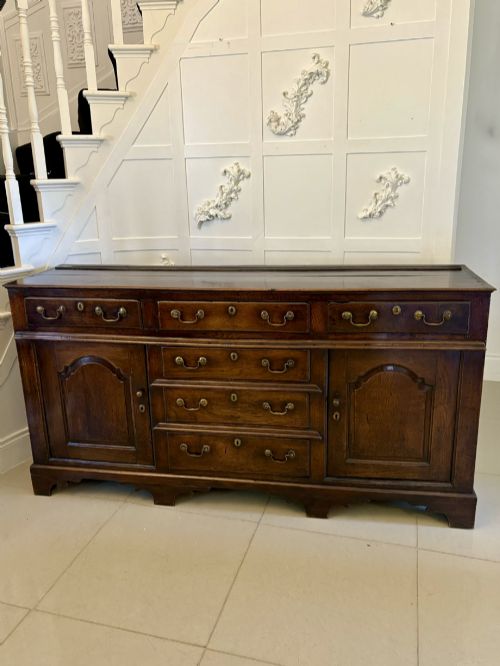
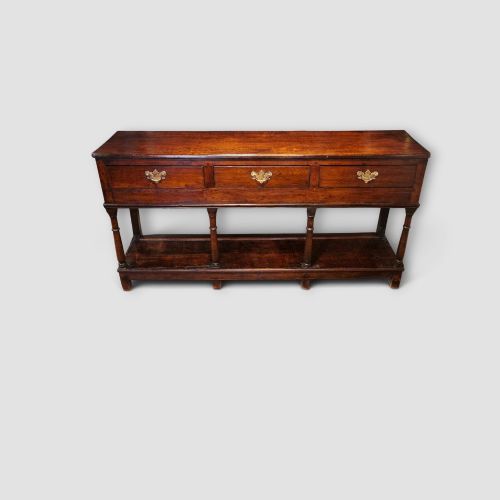
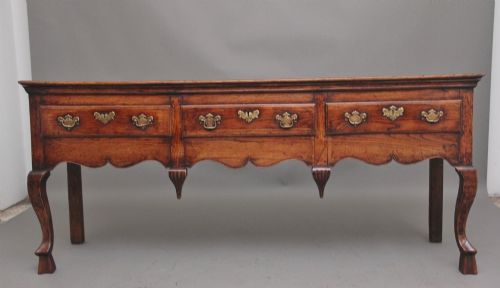
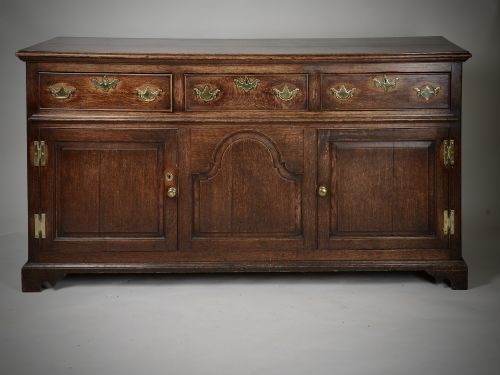
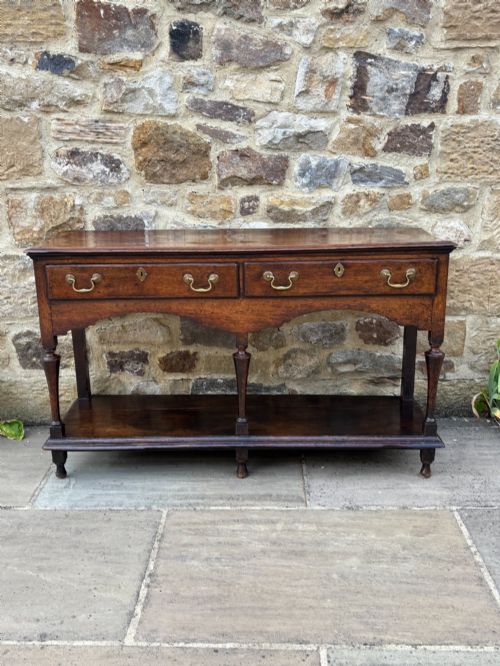
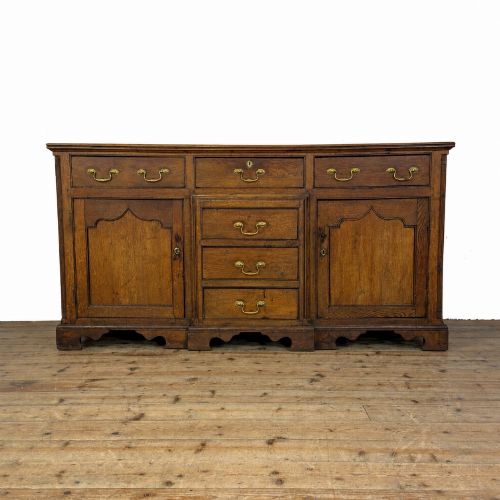
The pieces appearing here span the Georgian and Queen Anne eras, alongside later revivals, reflecting diverse regional furniture traditions. English and Welsh examples often feature open potboards or multiple drawers, while continental pieces lean toward low buffets and enfilades.
Selecting the right piece involves examining how the proportions fit a specific room, whether as a serving table in a dining space or a low cabinet in a hallway. The enduring utility of these items stems from their solid construction and utilitarian origins.
Materials and construction methods
Makers relied primarily on solid oak, frequently supplemented with fruitwood, elm, or walnut for secondary framing and specific decorative elements. Iron and wrought iron hardware, along with brass handles and escutcheons, secure the operational joints and doors.
Joinery techniques prioritize durability, utilising pegged mortise and tenon frames to support heavy timber tops and internal shelving. Surfaces often retain traces of historic paint, wax finishes, or simple hand-carved detailing developed through traditional bench work.
Listings feature oak alongside fruitwood and walnut, spanning Georgian and 19th-century periods.
Assessing quality and craftsmanship
Distinction across the range relies on the integrity of the timber, the crispness of any carved mouldings, and the retention of original brass hardware. Finer pieces demonstrate careful selection of grain patterns and balanced proportions across the drawer arrangements.
Structural honesty and the preservation of original potboards or legs dictate the overall merit of a piece. Alterations to feet or replacement timbers alter the historical consistency, distinguishing standard vernacular items from superior examples.
The 18th Century Oak Credenza Glossary
- Potboard
- An open lower shelf beneath a dresser base traditionally utilised for storing heavy pottery and kitchen utensils. This lower tier provides structural stability to the upright legs.
- Dresser base
- A low rectangular cabinet fitted with drawers and cupboards, serving as a sideboard or serving table. These pieces form the primary category for this search.
- Enfilade
- A long sideboard or buffet featuring a sequence of adjacent cabinet doors spanning the front facade. This continental form offers extensive interior storage.
- Cabriole leg
- A furniture leg that curves outward in a convex arc before tapering inward to a foot. This style appears on several Georgian examples.
- Welsh dresser
- A regional form combining a lower storage base with upper shelving racks, though many surviving examples now exist as the base alone.
18th Century Oak Credenza: Frequently Asked Questions
How were these cabinets originally used?
These low timber cabinets served primarily in kitchens and dining spaces for food preparation, serving meals, and storing heavy ceramic tableware.
Over generations, their practical proportions allowed them to transition easily into living rooms and hallways as general storage furniture.
How do I distinguish regional styles?
English and Welsh examples frequently display linear drawer configurations, bracket feet, or open potboards constructed from native oak.
Continental pieces from France and the Netherlands often incorporate panelled doors, fruitwood accents, and cabriole legs.
Are these pieces suitable for modern homes?
Their low profiles and generous surface areas make them exceptionally practical for use as sideboards, media consoles, or hallway tables.
The durable oak construction handles daily use while adding natural warmth and texture to contemporary interiors.